
Age-Related Macular Degeneration: Understanding Central Vision Loss and Anti-VEGF Treatment
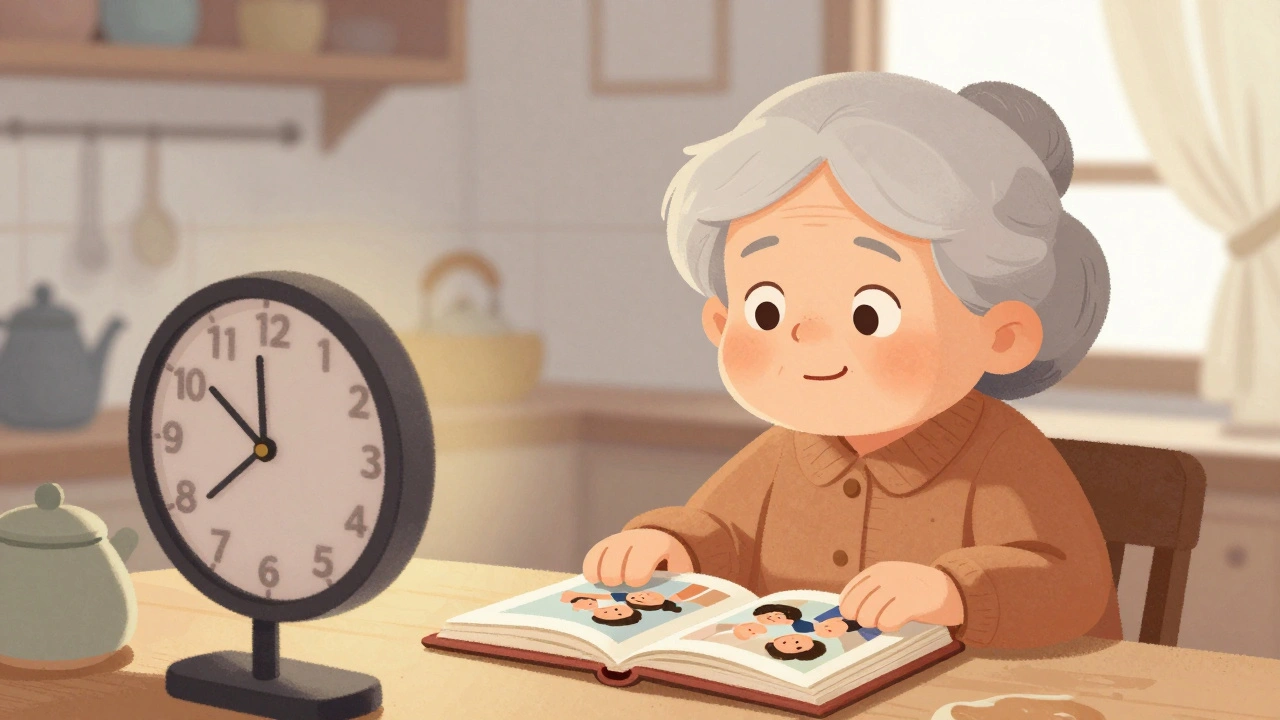
Imagine looking at a loved one’s face and not being able to make out their eyes or smile. Or trying to read the clock on the wall, but the numbers blur together like watercolor paint. This isn’t just aging-it’s age-related macular degeneration, or AMD, the leading cause of central vision loss in Americans over 65. It doesn’t take away your peripheral sight-you can still walk around, notice movement, see the outline of things-but the center of your vision, the part you use to read, drive, recognize faces, or watch TV, slowly fades. And for millions, it happens without warning.
What Exactly Is AMD?
AMD is a degenerative eye disease that attacks the macula, a tiny spot in the center of your retina packed with light-sensitive cells. This is the part of your eye that gives you sharp, detailed vision. When the macula breaks down, central vision goes first. It’s not like cataracts, where everything gets cloudy. With AMD, it’s like a dark spot grows in the middle of your view, while the edges stay clear. There are two main types: dry and wet. About 90% of people with AMD have the dry form. It starts with tiny yellow deposits called drusen building up under the retina. Over time, these cause the retinal tissue to thin out. This is slow-sometimes taking years. But in about 10-15% of cases, dry AMD turns into wet AMD. And that’s where things get urgent. Wet AMD happens when abnormal blood vessels grow under the macula. These vessels leak fluid and blood, scarring the retina and destroying photoreceptor cells fast. Vision can drop from 20/40 to 20/200 in just a few months. That’s the difference between reading a menu and seeing only blurry shapes. And once this happens, it’s considered late-stage disease. There’s no going back-but there is a way to stop it.Why Anti-VEGF Is the Gold Standard
The key to stopping wet AMD? Blocking a protein called VEGF-vascular endothelial growth factor. This protein tells your body to grow new blood vessels. In a healthy eye, that’s fine. But in wet AMD, VEGF goes haywire, triggering a chaotic network of fragile, leaky vessels under the macula. Anti-VEGF therapy works by injecting medicine directly into the eye to shut down that signal. These injections stop the leaks, reduce swelling, and sometimes even let vision improve. Drugs like ranibizumab, aflibercept, and brolucizumab have become the go-to treatments because they’re proven. Studies show that without treatment, nearly all patients with wet AMD lose significant vision within a year. With anti-VEGF, up to 90% stabilize their vision, and about 30-40% actually gain back some sight. It’s not a cure. You can’t reverse the damage already done. But you can stop it from getting worse. That’s huge. For someone who can no longer read their grandchild’s handwriting, even a small improvement means everything.What the Treatment Actually Feels Like
People often worry about the injections. They sound scary. But here’s what really happens: your eye is numbed with drops. A tiny clamp holds your eyelid open. The doctor uses a very fine needle-smaller than a human hair-and injects the medicine into the white part of your eye. The whole thing takes less than a minute. You might feel pressure, maybe a brief sting, but not sharp pain. Most patients say it’s less uncomfortable than a dental filling. The hard part isn’t the injection-it’s the schedule. You start with monthly shots for three months. Then, depending on how your eye responds, you might go every 6 to 8 weeks. Some need injections every month for over a year. That’s 10, 15, even 20 visits a year. For older adults, especially those without reliable transportation or family support, this becomes a massive burden. One patient on a support forum wrote: “I’ve had 14 injections. My knees hurt from sitting in the waiting room. But I can still see my husband’s face. I’ll do it again.”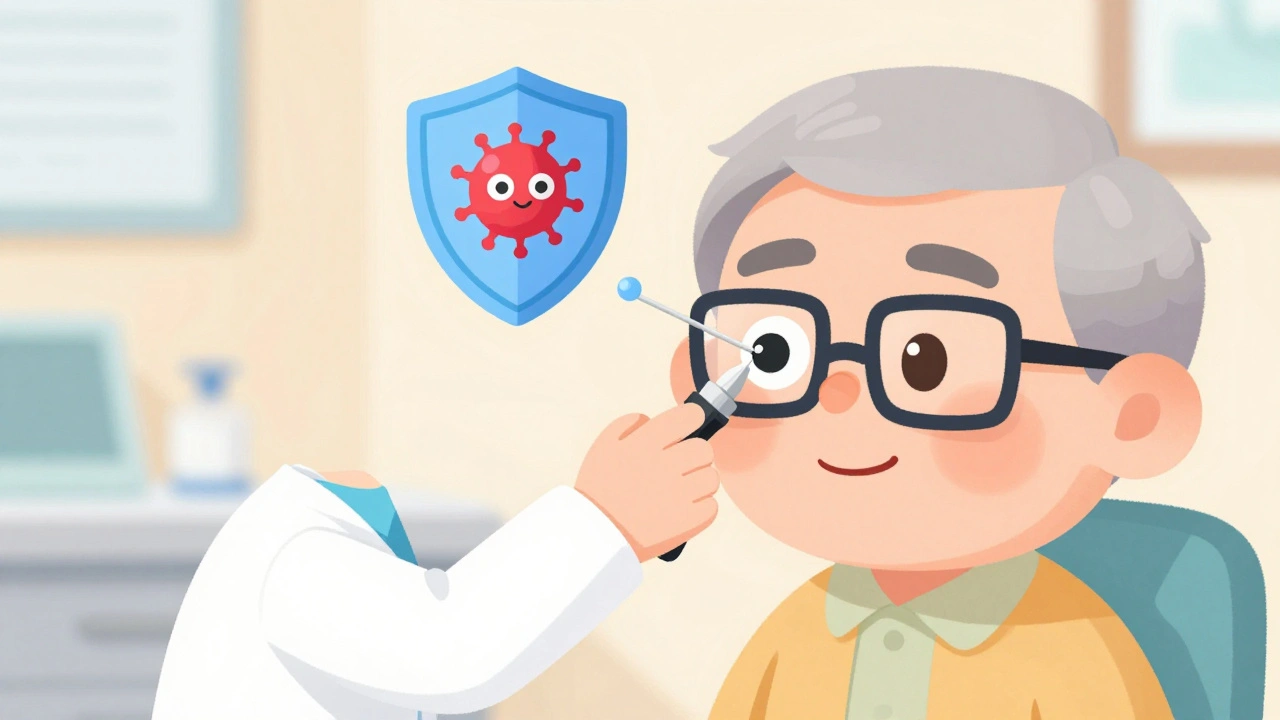
Who’s at Risk-and Why It’s Not Just About Getting Older
Yes, age is the biggest risk. If you’re over 75, your chance of having AMD jumps to 35%. But it’s not just about age. Smoking is the number one modifiable risk. Smokers are nearly four times more likely to develop AMD than non-smokers. Quitting doesn’t undo the damage, but it cuts your risk in half within a few years. Genetics matter too. If a parent or sibling has AMD, your risk goes up 3 to 6 times. And race plays a role: White Americans are more than twice as likely to develop AMD as African Americans. High blood pressure, high cholesterol, and obesity also increase your odds. One study found that people with a BMI over 30 had more than double the risk. There’s also a link to diet. The AREDS2 formula-a specific mix of vitamins C and E, zinc, copper, lutein, and zeaxanthin-has been shown to reduce progression from intermediate to advanced AMD by 25%. It doesn’t help everyone, but for those with early signs of drusen, it’s one of the few proven ways to slow things down.How to Catch It Early
The scariest thing about AMD? It often has no symptoms at first. You don’t feel pain. You don’t notice the loss until it’s advanced. That’s why annual eye exams after 65 are non-negotiable. If you have intermediate dry AMD, your doctor might recommend checking your vision every 3 to 6 months. At home, you can use the Amsler grid-a simple chart with a dot in the center and straight lines around it. Cover one eye and stare at the dot. If the lines look wavy, blurry, or missing, that’s a red flag. About 40% of patients catch wet AMD early using this method before their next appointment. It’s free, it’s quick, and it could save your vision.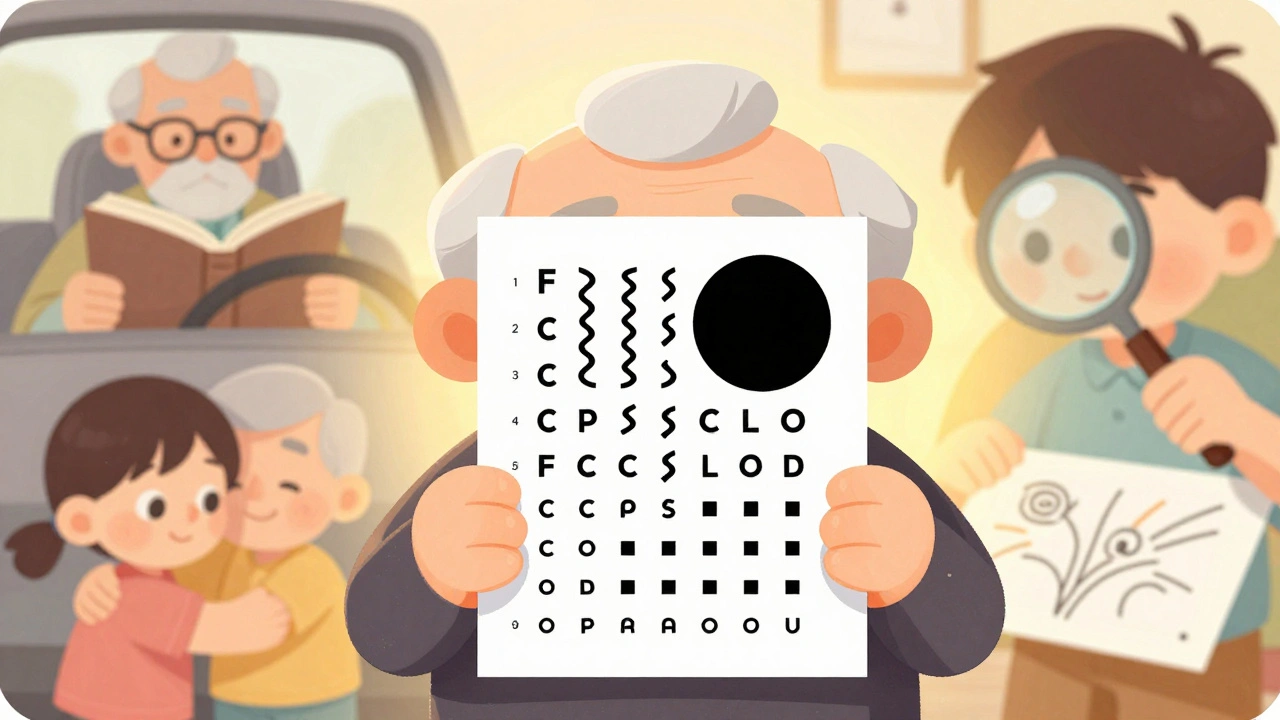
What’s Next for AMD Treatment
The good news? The field is moving fast. In 2021, the FDA approved Susvimo, a tiny implant that delivers ranibizumab continuously for up to six months. That cuts down visits from monthly to twice a year. Then in 2022, Vabysmo came out-a new drug that blocks two proteins at once (VEGF and angiopoietin-2), which may mean fewer injections and better results. Researchers are also testing gene therapies that target the immune system’s role in AMD. Since half to 70% of AMD risk comes from genetics, turning off faulty genes could be the next big leap. Early trials are promising. For now, anti-VEGF remains the most effective tool we have. And while it’s not perfect, it’s changed the game. In 2005, only 15% of doctors used these injections. Today, 92% do. That’s because patients who stick with treatment keep their vision. Those who miss appointments? They lose 30% more vision on average.Living With AMD
AMD doesn’t mean you lose your life. It means you adapt. Low-vision aids-magnifiers, screen readers, high-contrast lighting-can help you keep reading, cooking, and staying connected. Support groups and occupational therapists trained in vision rehabilitation can teach you new ways to do everyday tasks. The emotional toll is real. A 2022 survey found that 78% of AMD patients struggled with reading, 65% couldn’t recognize faces, and over half said driving had become impossible. Loneliness and depression are common. But so is hope. One woman in her 80s told her doctor: “I can’t see the stars like I used to. But I still see my grandkids’ faces when they hug me. That’s enough.”What You Can Do Today
If you’re over 65: get a full eye exam. Even if you think your vision is fine. AMD doesn’t shout-it whispers. And by the time you hear it, it’s often too late. If you smoke: quit. No other single change reduces your AMD risk faster. If you have a family history: talk to your doctor about AREDS2 supplements. They’re not magic, but they’re backed by science. If you’ve been diagnosed: don’t skip your injections. Every missed visit costs you vision you can’t get back. AMD is not a death sentence. It’s a challenge-and one we now have the tools to manage. The science is here. The treatments work. What’s left is showing up-for your eyes, for your life, for the faces you love.Can you go blind from AMD?
AMD doesn’t cause total blindness. It destroys central vision, but peripheral vision remains intact. You’ll still be able to see shapes, movement, and navigate your surroundings. But you won’t be able to read, recognize faces, or drive without assistance. That’s why early treatment is critical-it preserves the vision you need for daily life.
Are anti-VEGF injections painful?
Most patients report little to no pain. The eye is numbed with drops before the injection. You may feel pressure or a brief sting, but the needle is extremely thin and the procedure takes under a minute. Many patients say it’s less uncomfortable than a routine dental visit.
How often do you need anti-VEGF injections?
Initially, you’ll get injections every 4 weeks for 3 months. After that, your doctor will monitor your eye with an OCT scan and adjust the schedule based on how your eye responds. Many patients go every 6 to 8 weeks, and some can extend to every 3 months as treatment stabilizes. Newer options like the Susvimo implant can reduce visits to twice a year.
Can diet help prevent AMD?
Yes. The AREDS2 formula-containing vitamin C, vitamin E, zinc, copper, lutein, and zeaxanthin-has been shown to reduce the risk of progression from intermediate to advanced AMD by 25%. Eating leafy greens, fish rich in omega-3s, and colorful fruits and vegetables also supports eye health. But supplements alone won’t stop AMD if you smoke or have uncontrolled blood pressure.
Is there a cure for AMD?
There is no cure yet. But treatments like anti-VEGF injections can stop or slow progression, and in many cases, improve vision. For dry AMD, lifestyle changes and supplements can delay advancement. For wet AMD, timely treatment can preserve vision for years. Research into gene therapy and longer-lasting drugs offers real hope for the future.
13 Comments
So let me get this straight-we’re injecting poison into people’s eyeballs to keep them from seeing their grandkids’ faces clearly, but we won’t fix the fact that Medicare won’t cover transportation to these appointments? Classic.
I had my third injection last week. Honestly? The worst part isn’t the needle-it’s the waiting room. Old people coughing, TVs blaring news about inflation, and the nurse who says ‘you’ll be fine’ like she’s reading from a script written by a robot who’s never seen a human cry. But I do it. Because last Tuesday, I saw my granddaughter’s freckles. And that’s worth every damn minute.
While the clinical efficacy of anti-VEGF agents in mitigating choroidal neovascularization is statistically significant (p < 0.001 in multiple RCTs), the cost-benefit analysis remains ethically ambiguous when contextualized within the broader socioeconomic determinants of healthcare access. The persistence of treatment burden-particularly among geriatric populations lacking logistical support-constitutes a systemic failure of distributive justice rather than a pharmacological limitation.
Oh wow. Another article that treats AMD like it’s a TED Talk and not a slow-motion tragedy. Did you mention the 60% of patients who can’t afford the injections? Or the fact that ‘improvement’ means going from seeing nothing to seeing blurry blobs? Please. We’re not talking about a bad Wi-Fi signal here.
It is deeply concerning how the medical-industrial complex has co-opted the language of hope to mask the reality of perpetual dependency. Anti-VEGF therapy is not a cure-it is a maintenance protocol that transforms patients into recurring revenue streams for pharmaceutical corporations. The emotional manipulation embedded in phrases like ‘see your grandkids’ faces’ is not compassionate; it is exploitative. True dignity lies in acceptance, not in chemical tethering to a syringe.
I’ve been watching my dad go through this for two years now. He doesn’t talk about it much. But last night, he sat by the window and just stared at the sunset. Said it looked like watercolor again. He didn’t cry. He just sighed. I didn’t say anything. Sometimes, you don’t need to. You just need to be there. The injections? They’re not magic. But they’re the only thing keeping him from disappearing into the dark. And that’s enough for now.
Anti-VEGF? Please. This is just Big Pharma’s way of keeping old people hooked on monthly shots while they ignore the real cause: glyphosate in our food, 5G radiation, and the fact that we’ve stopped eating real food. If you want to save your vision, stop taking pills and start eating kale. And maybe stop staring at screens for 14 hours a day. Oh wait-you’re already blind to that, aren’t you?
I lost my husband to AMD. He refused the shots. Said he’d rather go blind than be poked like a lab rat. He died last year. I still see his face. Every morning. I don’t need an injection to remember him. I just need silence. And a photo album. 🥺
Just had my 12th injection today. 🥲 The nurse gave me a sticker with a cat on it. I’m keeping it. I’ve got 11 more stickers. Each one’s a tiny victory. I can still read the time on my microwave. That’s something. 😊
in india we dont have this treatment easily. my mother has amd. she uses magnifying glass and talks to god every day. she says she sees him clearer than the tv. 🙏
My father had AMD. He stopped driving. Learned braille. Still made chai for us every morning. Vision is not everything. Presence is.
From a public health epidemiological standpoint, the VEGF inhibition paradigm represents a targeted molecular intervention that addresses the angiogenic cascade in late-stage neovascular AMD. However, the lack of scalable delivery infrastructure in low-resource settings renders this therapeutic modality inequitable. The current model is predicated on high-income healthcare ecosystems and fails to account for the global burden of disease. We need decentralized, low-cost, sustained-release platforms.
They say anti-VEGF saves vision. But what about the people who can’t afford the $2,000 per shot? Or the ones who live 200 miles from the nearest retina specialist? You write like this is a choice. It’s not. It’s a privilege. And you’re not helping. You’re just making people feel guilty for not being able to afford to see their own grandchildren.