
Amblyopia (Lazy Eye): Vision Development, Patching Therapy, and Treatment Options
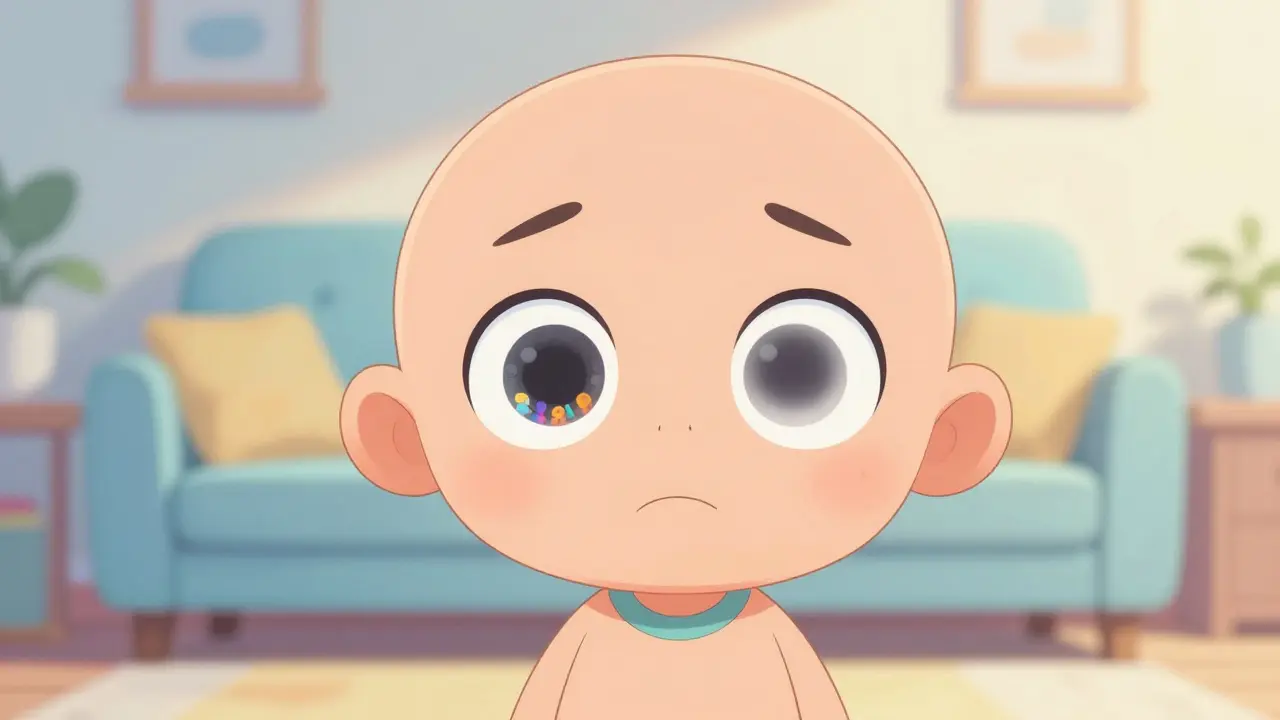
Imagine your child sees the world through a foggy window in one eye while the other remains crystal clear. They might not complain because their brain has simply learned to ignore the blurry image. This is Amblyopia, commonly known as lazy eye. It is the leading cause of vision loss in children, affecting roughly 2% to 4% of the pediatric population. Unlike simple nearsightedness or farsightedness, amblyopia is not just an eye problem-it is a brain problem. The visual cortex fails to develop properly because it receives poor-quality signals from one eye during early childhood.
The good news? Amblyopia is highly treatable if caught early. With the right approach, most children can achieve normal vision. But time is critical. The window for effective treatment narrows significantly as a child grows older. Understanding how vision develops and why standard glasses aren't always enough is the first step toward protecting your child's sight.
How Vision Develops and Why Amblyopia Occurs
To understand amblyopia, you have to look at how the brain learns to see. From birth until about age 7, the visual system is incredibly plastic. The eyes send images to the brain, and the brain builds the neural pathways needed to process them. If both eyes send sharp, aligned images, the brain integrates them into a single, three-dimensional view. This is called binocular vision.
Amblyopia happens when this process goes wrong. If one eye sends a consistently blurry or misaligned image, the brain decides that input is unreliable. To avoid confusion or double vision, the brain suppresses-or ignores-the signal from the weaker eye. Over time, the neural connections for that eye weaken. Even if you later put corrective lenses on the eye, the vision may remain poor because the brain has stopped listening to it.
This condition typically falls into three main categories:
- Strabismic Amblyopia: This accounts for about 50% of cases. It occurs when the eyes are misaligned (crossed or turned out). Because the eyes point in different directions, the brain receives two conflicting images and shuts down the one from the deviating eye.
- Anisometropic Amblyopia: Making up roughly 30% of cases, this happens when there is a significant difference in refractive error between the two eyes. For example, one eye might be perfectly normal while the other is severely farsighted. The brain prefers the clear image and ignores the blurry one.
- Deprivation Amblyopia: This is the most severe form, accounting for 10-15% of cases. It results from physical obstructions like congenital cataracts, droopy eyelids (ptosis), or corneal scars that block light from entering the eye entirely. This requires urgent medical attention.
Risk factors include premature birth, low birth weight (under 2,500 grams), and a family history of amblyopia, which increases risk by 30-40%. Early detection is key, which is why comprehensive pediatric eye exams are recommended before age 3.
Patching Therapy: The Gold Standard Treatment
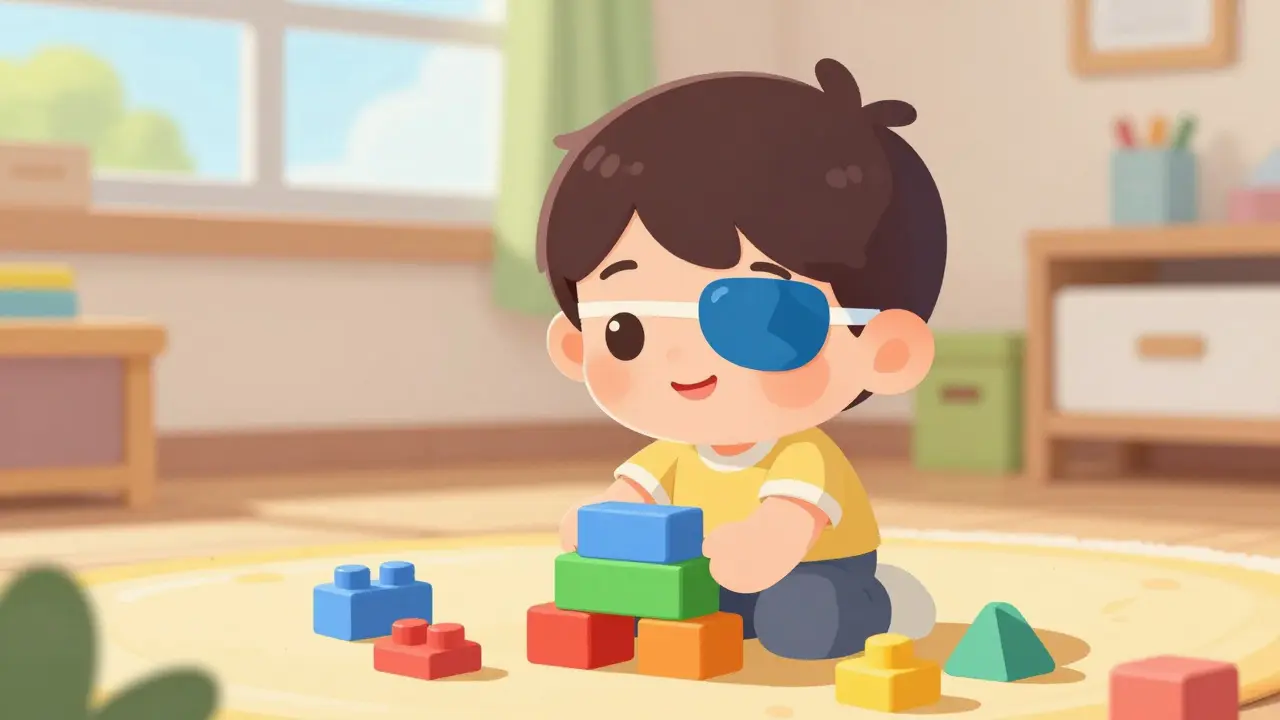
Once diagnosed, the primary goal of treatment is to force the brain to use the weaker eye. The most established method is patching therapy. By covering the stronger eye with an adhesive patch, you eliminate its input. The brain, desperate for visual information, is forced to rely on the amblyopic eye. This stimulates the dormant neural pathways to strengthen and mature.
| Severity of Amblyopia | Visual Acuity Range | Recommended Daily Patching Time |
|---|---|---|
| Mild | 20/30 to 20/40 | 1 hour per day |
| Moderate | 20/50 to 20/100 | 2 hours per day |
| Severe | Worse than 20/100 | 6 hours per day |
You might wonder why more isn't better. Landmark research from the Amblyopia Treatment Study (ATS) showed that for moderate amblyopia, 2 hours of daily patching produced the same results as 6 hours. Longer durations did not improve outcomes but did increase side effects like skin irritation and social stigma. Therefore, doctors tailor the prescription to the severity of the condition.
Alternatives to Patching: Atropine and Filters
Patching works, but compliance is a major hurdle. Studies show that only 40-60% of children aged 3-7 adhere strictly to patching schedules. Parents often struggle with resistance, social embarrassment at school, or skin allergies to the adhesive. Fortunately, there are effective alternatives.
Atropine Penalization involves placing 1% atropine sulfate drops in the stronger eye once daily. Atropine temporarily paralyzes the eye's focusing muscle, blurring near vision. Since distance vision remains clear, the child can still navigate the classroom, but for reading or playing games, they must use their weaker eye. The ATS found that atropine was equally effective as patching for moderate amblyopia, with 79% of children achieving 20/30 vision or better after six months. Recent studies also suggest weekend-only dosing can maintain gains with less impact on daily life.
Another option is the Bangerter Filter. This is a frosted sticker applied to the lens of the glasses over the strong eye. It creates a controlled blur similar to atropine but without the chemical side effects like light sensitivity. It is less visible than a patch, making it a popular choice for older children who are self-conscious about wearing an eye patch. Efficacy rates range from 60-70%, though it is generally best suited for milder cases or older kids.
The Role of Vision Therapy and Digital Tools
While patching or atropine forces the weak eye to open, vision therapy teaches it how to work effectively. Vision therapy consists of supervised exercises designed to improve focusing, tracking, and binocular coordination. When combined with occlusion therapy, studies indicate a 15-20% greater improvement in stereopsis (depth perception) compared to patching alone.
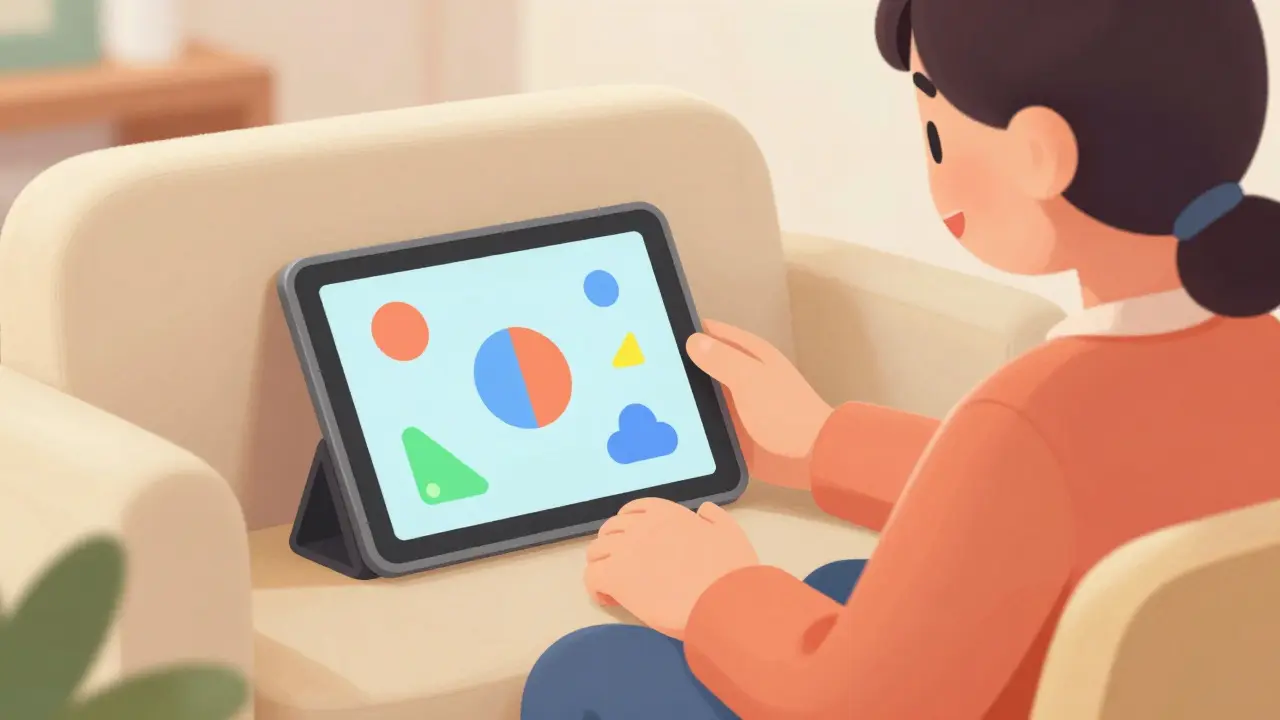
Traditional vision therapy involves 45-60 minute sessions, 2-3 times a week for 12-24 weeks, followed by home exercises. However, technology is changing the landscape. Digital therapeutic platforms like AmblyoPlay, which received FDA clearance in 2021, use gamified exercises tailored to the child's specific visual deficits. Real-world data from European clinics shows these apps achieve 75% compliance rates, significantly higher than traditional methods. The interactive nature keeps children engaged, turning treatment into play rather than a chore.
Emerging treatments are also on the horizon. Transcranial random noise stimulation (tRNS), currently in phase 2 trials, uses mild electrical currents to stimulate the visual cortex. A 2023 study published in the British Journal of Ophthalmology found that combining tRNS with patching resulted in 40% greater visual acuity improvement than patching alone. While not yet widely available, it offers hope for stubborn cases.
Timing Is Everything: Critical Periods and Outcomes
The success of amblyopia treatment hinges on timing. The brain's visual system is most adaptable during the "critical period," which spans from birth to approximately age 7. Expert consensus emphasizes that intervention before age 5 yields the best results.
Clinical data from the Colorado Eye Clinic indicates that children treated before age 5 achieve vision recovery rates of 85-90%. In contrast, those treated between ages 5 and 7 see recovery rates drop to 50-60%. After age 8, the returns diminish further, though treatment is never truly futile. The American Academy of Ophthalmology states that 97% of children will show *some* improvement with appropriate treatment, even if complete normalization (which occurs in 65-75% of cases) is not achieved.
Historically, it was believed that adults could not benefit from amblyopia treatment due to reduced neuroplasticity. However, recent evidence suggests that intensive perceptual learning protocols can yield modest improvements in adults. While the gains are smaller than in children, they can still enhance quality of life. This challenges the old dogma that the door closes completely after childhood.
Practical Tips for Parents Managing Treatment
Treating amblyopia is a marathon, not a sprint. Most children require 6-12 months of consistent therapy. Here is how to make the journey smoother:
- Start Small: If your child is resistant, begin with shorter intervals. Start with 30 minutes of patching and gradually increase to the prescribed duration. Use a timer so the child knows exactly when the break comes.
- Create a Routine: Integrate patching into daily activities they already enjoy, such as watching cartoons, playing video games, or doing puzzles. This associates the patch with positive experiences.
- Use Rewards: Implement a sticker chart or small rewards for successful days. Positive reinforcement works wonders for young children.
- Address Social Stigma: Talk to teachers and caregivers about the importance of patching. Some parents organize "patching parties" where friends wear patches too, reducing feelings of isolation.
- Track Progress: Use digital apps like LazyEye Tracker to log adherence. Seeing progress visually can motivate both parent and child.
- Stay Consistent: Skipping days resets progress. Regular follow-ups every 4-8 weeks allow doctors to adjust the treatment plan based on visual acuity measurements.
Parental education is crucial. Data shows that when parents receive comprehensive counseling on the neuroplasticity basis of treatment, adherence rates jump to 89%, compared to 45% with minimal education. Understanding *why* you are doing this helps you stay committed when things get tough.
When Surgery Is Necessary
In cases of strabismic amblyopia caused by significant eye misalignment, surgery may be required to straighten the eyes. However, surgery alone does not cure amblyopia. It corrects the alignment, but the brain still needs to learn to use both eyes together. Typically, 70-80% of patients requiring strabismus surgery will also need subsequent patching or atropine therapy to achieve optimal visual outcomes. Surgery is usually performed after some initial patching to ensure the weaker eye has sufficient potential to improve.
Can amblyopia be cured in adults?
While the critical period for visual development ends around age 7-8, recent studies suggest that adults can achieve modest improvements in vision through intensive perceptual learning and vision therapy. However, the results are generally less dramatic than in children, and complete normalization of vision is rare. Early treatment in childhood remains the most effective strategy.
How long does patching therapy take to work?
Most children require 6 to 12 months of consistent treatment. Progress is monitored every 4-8 weeks. Some children may see improvements within a few weeks, while others take longer. The duration depends on the severity of the amblyopia and the child's age. Consistency is key; skipping days can delay results.
Is atropine safer than patching?
Both treatments are safe and effective. Atropine avoids the social stigma and skin irritation associated with patches but can cause side effects like light sensitivity and difficulty focusing up close. Patching has no systemic side effects but can be socially challenging for children. The choice often depends on the child's lifestyle and preference.
What are the signs of amblyopia in toddlers?
Toddlers rarely complain about vision problems. Signs may include squinting, tilting the head, closing one eye, bumping into objects, or holding toys very close to the face. An obvious eye turn (strabismus) is a clear indicator. Since symptoms are subtle, regular pediatric eye exams before age 3 are essential for early detection.
Does insurance cover amblyopia treatment?
Coverage varies by provider and plan. Many insurance plans cover the diagnostic exams and basic treatments like patching materials or atropine drops. However, vision therapy sessions and specialized digital therapeutics may require prior authorization or have limited coverage. It is important to check with your specific insurer and discuss financial options with your ophthalmologist.