
Black Box Warnings: What They Mean and Why You Should Care

Black Box Warning Patient Readiness Checker
Assess Your Preparedness
Answer these questions to see if you are fully informed about your prescription.Complete the checklist to receive a personalized readiness assessment and action plan.
Imagine picking up a prescription bottle and seeing a stark, black-bordered box on the label. It’s not just a design choice; it is a direct signal from the U.S. Food and Drug Administration (FDA) that this medication carries serious risks of death or severe injury. This is what we call a black box warning, and it represents the highest level of safety alert for any drug approved in the United States.
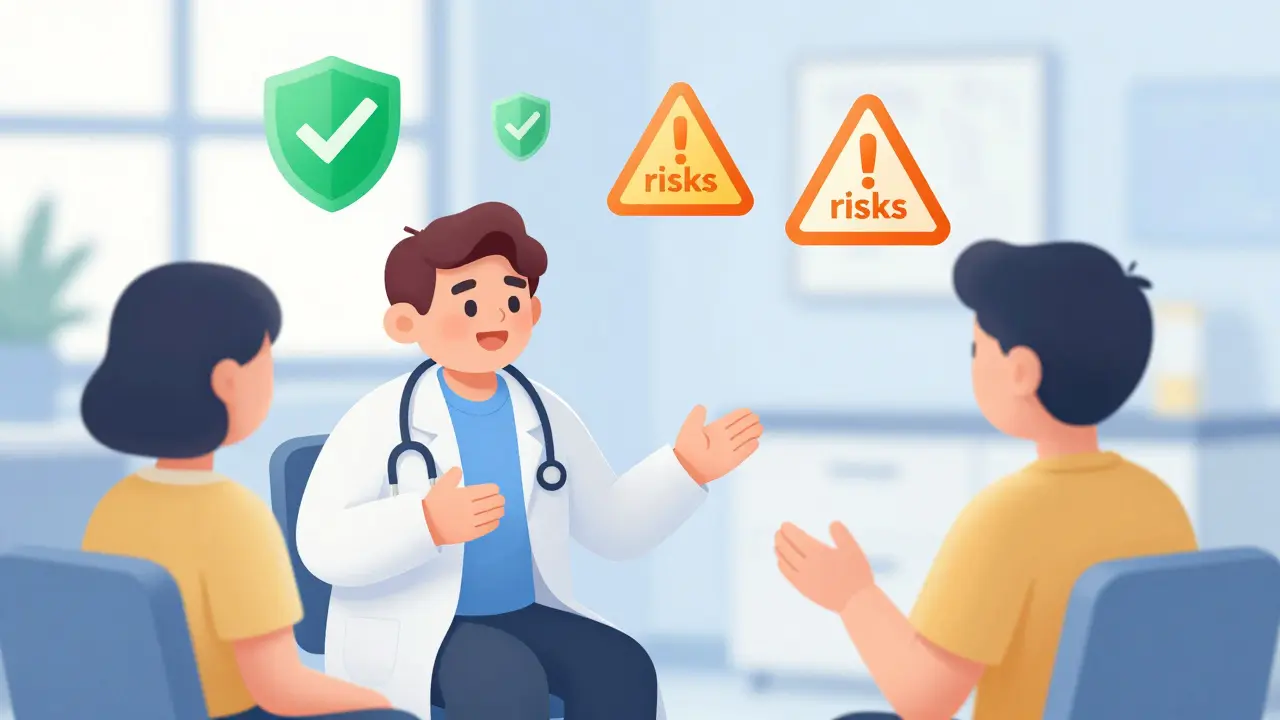
If you have ever been prescribed a medication with this label, you might have felt a mix of confusion and fear. Does this mean you shouldn’t take the drug? Is it dangerous? The short answer is no-it doesn’t automatically mean the drug is unsafe for you. However, it does mean that your healthcare provider needs to weigh the benefits against significant potential harms very carefully. Understanding these warnings helps you participate more actively in your own health decisions.
What Exactly Is a Black Box Warning?
A boxed warning is the most serious type of warning mandated by regulatory bodies for pharmaceutical products. Unlike standard "warnings" or "precautions" sections found in package inserts, which list common side effects like drowsiness or nausea, a black box warning highlights risks that are life-threatening or can cause permanent damage. These warnings appear at the very beginning of a drug’s package insert, ensuring that doctors and pharmacists see them immediately before prescribing or dispensing the medication.
The visual format is intentional. The distinctive black border creates a visual break that demands attention. According to guidelines established after the Kefauver-Harris Amendments of 1962, the FDA requires manufacturers to highlight these critical safety issues prominently. While the specific graphic style has evolved over decades, the purpose remains unchanged: to ensure that prescribers and patients are fully aware of the most severe potential adverse events associated with a drug.
As of recent data from 2022, over 400 medications currently carry these warnings. This includes drugs across various categories, such as certain antidepressants, opioid pain relievers, diabetes medications, and blood thinners. Seeing one on your prescription doesn't mean the drug is "bad," but it does mean it requires extra vigilance.
Why Does the FDA Issue These Warnings?
The decision to add a black box warning is not made lightly. The FDA typically considers three main situations before implementing this strongest safety communication:
- Risk Outweighs Benefit for Some: When a risk is so serious that it must be considered during the prescribing process, potentially outweighing the therapeutic benefits for certain patient populations.
- Preventable Harm: When serious side effects could be reduced through appropriate medication use, such as strict monitoring, avoiding specific drug interactions, or adhering to dosage limits.
- Required Restrictions: When specific restrictions must be applied to ensure safe use, such as requiring special training for prescribers or limiting use to specific medical settings.
Most black box warnings are added after a drug has already entered the market. During clinical trials, drugs are tested on thousands of participants, but rare side effects often only emerge when millions of people start using the medication. The FDA relies on post-marketing surveillance systems, specifically the FDA Adverse Event Reporting System (FAERS), to track these signals. If a pattern of severe reactions emerges, the agency may mandate a label change, including a boxed warning.
How Black Box Warnings Compare to Other Alerts
Not all safety notices are created equal. To understand the gravity of a black box warning, it helps to compare it to other types of FDA communications. Here is how they stack up:
| Type of Alert | Severity Level | Typical Content | Placement |
|---|---|---|---|
| Boxed Warning | Highest | Risk of death, serious injury, or irreversible harm | First page of package insert, prominent black border |
| Warning | High | Significant side effects that require caution | Dedicated section in labeling |
| Precaution | Moderate | Situations where careful use is needed (e.g., pregnancy) | Dedicated section in labeling |
| Safety Communication | Variable | Newly identified risks or updates on known risks | FDA website, press releases, Dear Healthcare Provider letters |
This hierarchy shows that while a "Warning" or "Precaution" is important, a Boxed Warning is reserved for the most critical scenarios. For example, research cited in medical literature showed that an FDA-mandated boxed warning for the diabetes drug rosiglitazone decreased its use by 70%. In contrast, similar advisories for other drugs without the same media attention or boxed warning status did not result in comparable declines. This demonstrates that the boxed warning serves as a powerful tool to influence prescribing behavior.
Common Medications with Black Box Warnings
You might be surprised to learn that many commonly prescribed drugs carry these warnings. Here are a few examples to illustrate how widespread they are:
- Opioid Pain Relievers: Most opioids carry warnings about addiction, abuse, misuse, life-threatening respiratory depression, and accidental exposure.
- SSRI Antidepressants: Selective serotonin reuptake inhibitors often include warnings about increased risk of suicidal thinking and behavior in children, adolescents, and young adults.
- Blood Thinners (Anticoagulants): Drugs like warfarin and newer DOACs carry warnings about the risk of fatal bleeding.
- Certain Diabetes Drugs: Some medications have been linked to heart failure or pancreatic cancer, leading to boxed warnings.
- Isotretinoin (Accutane): Used for severe acne, it carries a strict warning due to the high risk of severe birth defects if taken during pregnancy.
Seeing these names on a list doesn't mean you should stop taking them abruptly. It means that for each of these conditions, the benefit of treating the disease is deemed significant enough to justify the risk, provided the drug is used correctly under medical supervision.
What Should Patients Do?
When you receive a prescription with a black box warning, your role shifts from passive recipient to active partner in your care. Dr. Meghan Lehmann, a registered pharmacist and drug information specialist at Cleveland Clinic, emphasizes that a medication carrying a black box warning doesn't necessarily mean it shouldn't be taken. Instead, it necessitates a deeper conversation between you and your provider.
Here is a practical checklist for navigating these prescriptions:
- Ask About Alternatives: Are there other drugs for your condition that do not carry this warning? Sometimes, a slightly less effective drug with a safer profile is a better choice.
- Understand the Specific Risk: Ask your doctor, "What exactly is the risk here?" Knowing whether the danger is bleeding, mood changes, or organ damage helps you monitor for symptoms.
- Discuss Monitoring Plans: Many boxed warnings require regular blood tests, liver function checks, or mental health assessments. Ensure you know the schedule for these tests.
- Review Your History: Share your full medical history, including other medications and supplements, to avoid interactions that might trigger the warned-against side effects.
- Know the Red Flags: Ask your provider to list the specific symptoms that would require you to seek immediate medical attention.
The American Academy of Family Physicians recommends using the STEPS approach (Safety, Tolerability, Effectiveness, Price, Simplicity) when considering drugs with boxed warnings. This framework helps both doctors and patients evaluate whether the complexity and risk of a drug are worth the expected outcome.

The Impact on Prescribing Behavior
While black box warnings are designed to protect patients, their effectiveness varies. Studies show that they significantly raise awareness among healthcare providers. However, they do not always stop prescribing entirely. In some cases, doctors may become more cautious, restricting use to patients who have failed other treatments. In other cases, the warning may lead to improved monitoring rather than discontinuation.
It is also important to note that the presence of a black box warning can affect insurance coverage and out-of-pocket costs. Some insurers may require prior authorization for drugs with severe warnings, ensuring that a specialist has reviewed the necessity of the treatment. This adds a layer of administrative review that further ensures the drug is appropriate for your specific case.
Reporting Side Effects
Your experience matters. If you suspect a side effect from a medication with a black box warning-or any medication-you can report it directly to the FDA through the MedWatch program. This data feeds into FAERS, helping the FDA identify new safety signals. Patient reports are crucial because clinical trials cannot capture every possible reaction. By reporting, you contribute to the safety of future patients.
Remember, a black box warning is a tool for transparency, not a reason for panic. It empowers you with information so you can make informed decisions alongside your healthcare team. Always consult your doctor before making any changes to your medication regimen.
Does a black box warning mean I should not take the medication?
No. A black box warning indicates that the drug carries serious risks, but it does not mean the drug is unsafe for everyone. For many patients, the benefits of the medication outweigh the risks. Your doctor will evaluate your individual health situation to determine if the drug is right for you.
Can a black box warning be removed from a drug label?
Yes, though it is rare. If new evidence shows that the risk was overstated or if the drug is used differently than originally thought, the FDA may remove or modify the warning. Conversely, warnings can also be added later if new risks are discovered.
How do I find out if my medication has a black box warning?
You can ask your pharmacist or doctor. Additionally, you can look up the drug's official prescribing information on the manufacturer's website or on the FDA's DailyMed database. The warning will be clearly marked with a black border near the top of the document.
Are over-the-counter drugs subject to black box warnings?
Generally, no. Black box warnings are primarily used for prescription medications. Over-the-counter drugs have different labeling requirements, focusing on directions for use and common side effects, but they do not use the black box format.
What happens if I ignore a black box warning?
Ignoring a black box warning can lead to severe health consequences, including hospitalization or death, depending on the specific risk involved. These warnings are placed there because the potential harm is significant. Always follow your doctor's instructions and monitoring plans closely.