
Finding Pharmacies and Medication Help Abroad: A Traveler’s Guide
Before You Leave: Prepare Your Medication Kit
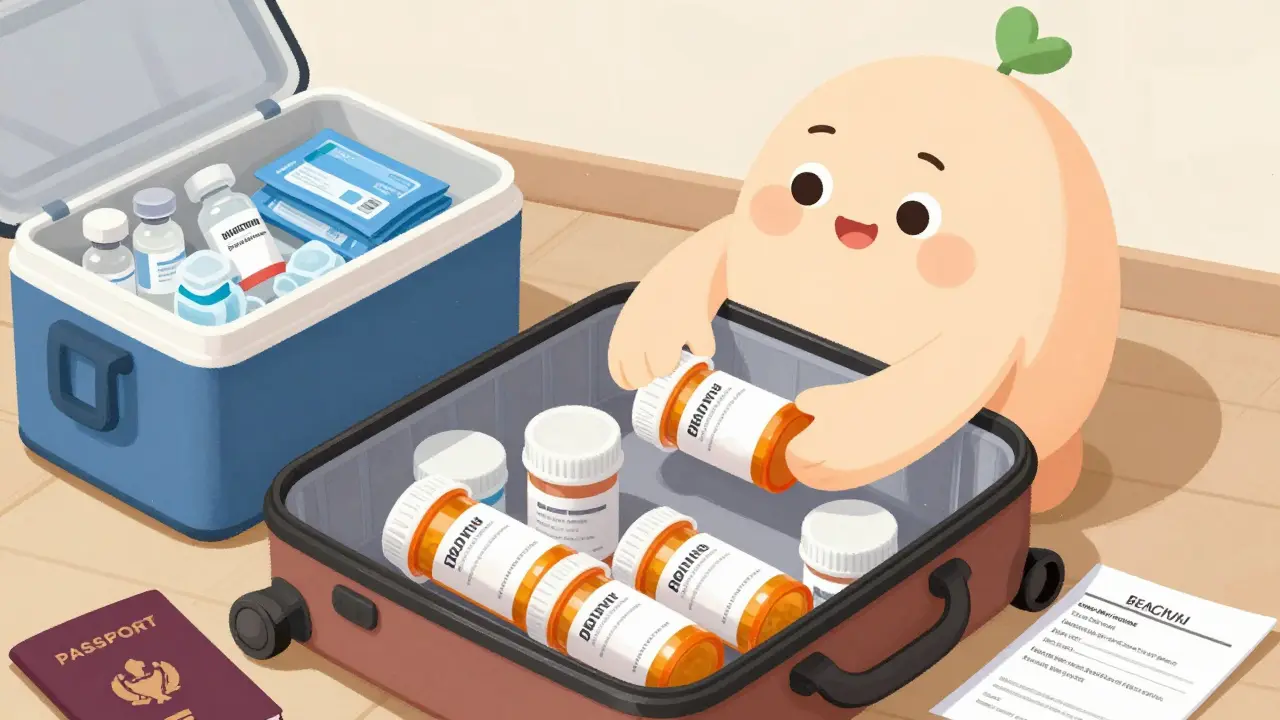
Proper preparation is your first line of defense. Start by carrying all medications in their original containers with pharmacy labels showing your name, doctor's name, and drug details. Customs officials in 89% of Schengen Area countries require this. A 2022 Johns Hopkins study found that travelers with translated doctor's letters reduce confiscation incidents by 73%. Also, include the generic name of your medication-brand names like "Lexapro" may confuse foreign pharmacists, while "escitalopram" is universally recognized.
Bring at least a 10-day surplus beyond your trip duration. The International Society of Travel Medicine's 2022 Position Paper states this reduces medication-related disruptions by 65%. For temperature-sensitive drugs like insulin, use a cooler with ice packs. The International Air Transport Association specifies insulin must stay between 2°C and 8°C during transit.
Understanding Pharmacy Systems Around the World
Every country has different rules. Understanding how international pharmacies operate in different countries is crucial for travelers. In the UK, the National Health Service (NHS) allows travelers to access emergency prescriptions for a £9.65 fee (as of April 2023), though U.S. citizens typically pay full price unless covered by reciprocal agreements. France's Public Health Code lets pharmacists provide 72-hour emergency supplies without prescriptions for certain conditions. Japan has only 24 pharmacies certified to serve foreigners. Southeast Asia is riskier: WHO reports 68% of medications in open markets in Cambodia and Thailand are counterfeit.
| Country | Prescription Rules | Emergency Access | Common Issues |
|---|---|---|---|
| United Kingdom | Requires valid prescription; NHS charges £9.65 per prescription | Available at any NHS pharmacy with doctor's note | U.S. prescriptions often not accepted without translation |
| France | Pharmacies can provide 72-hour emergency supply without prescription for certain conditions | 24-hour pharmacies available in major cities | Language barriers; French medical terms may differ |
| Japan | Only 24 certified pharmacies serve foreign patients | Requires appointment; limited availability | Strict regulations on medications; many U.S. drugs prohibited |
| Australia | Pharmaceutical Benefits Scheme (PBS) for reciprocal countries; Americans pay full price | Emergency prescriptions available through local doctors | High cost for non-reciprocal travelers |
| Thailand/Cambodia | Open markets common; high counterfeit risk | Available but unreliable | 68% of medications in open markets are counterfeit (WHO 2023) |
Handling Medication Emergencies While Traveling
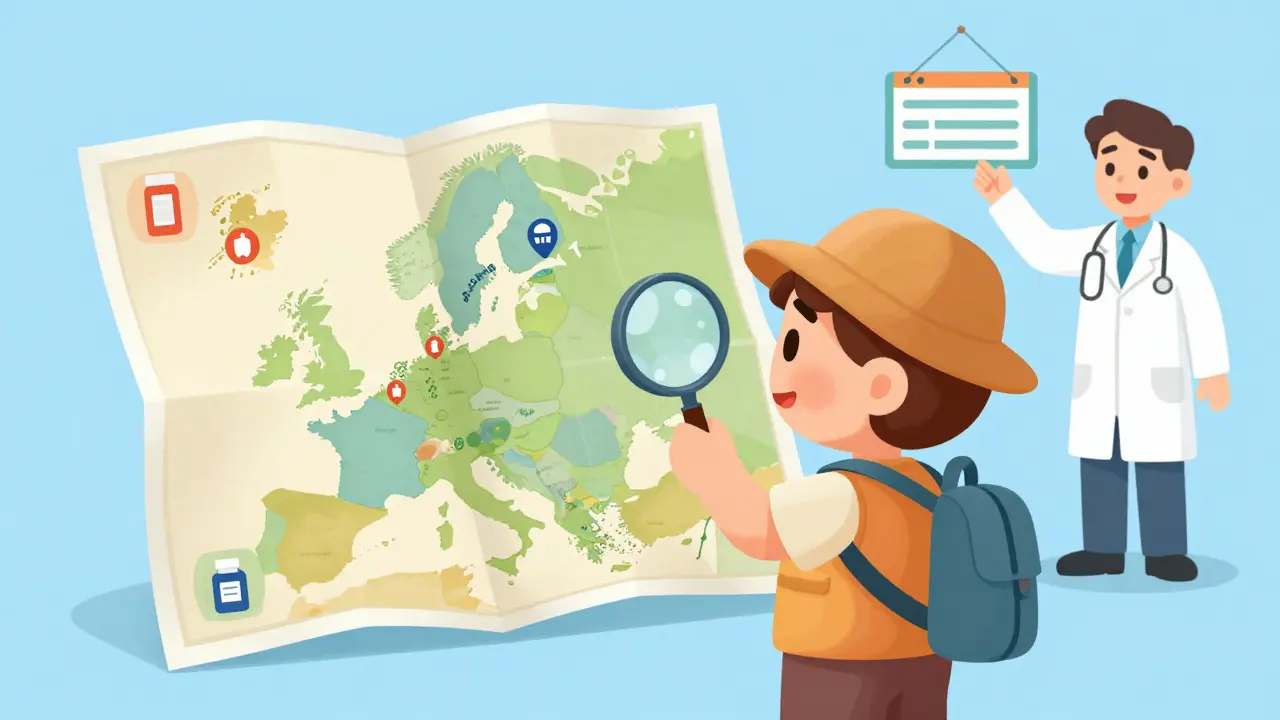
If you run out of meds, use trusted resources. The IAMAT offers a free physician referral service connecting travelers with 1,200 pre-vetted doctors in 110 countries. Their 2022 survey showed 89% satisfaction among users. Walgreens operates an international partner network in 18 countries with 3,200 locations, as of March 2023. This service helps travelers fill prescriptions when local pharmacies can't. The CDC Travelers' Health provides country-specific medication regulations through the MedAbroad digital tool, launched in May 2023. This free resource covers 195 nations and is updated quarterly. Always contact your country's embassy-they can help navigate local systems and provide emergency contacts.
Avoiding Counterfeit Drugs: What to Watch For
Counterfeit medications are a serious risk, especially in Southeast Asia and Latin America. The World Health Organization reports that 68% of medications in open markets in Cambodia and Thailand are fake. To stay safe:
- Only buy from licensed pharmacies with visible government permits
- Check for proper packaging, spelling, and expiration dates
- Avoid street vendors or unmarked clinics
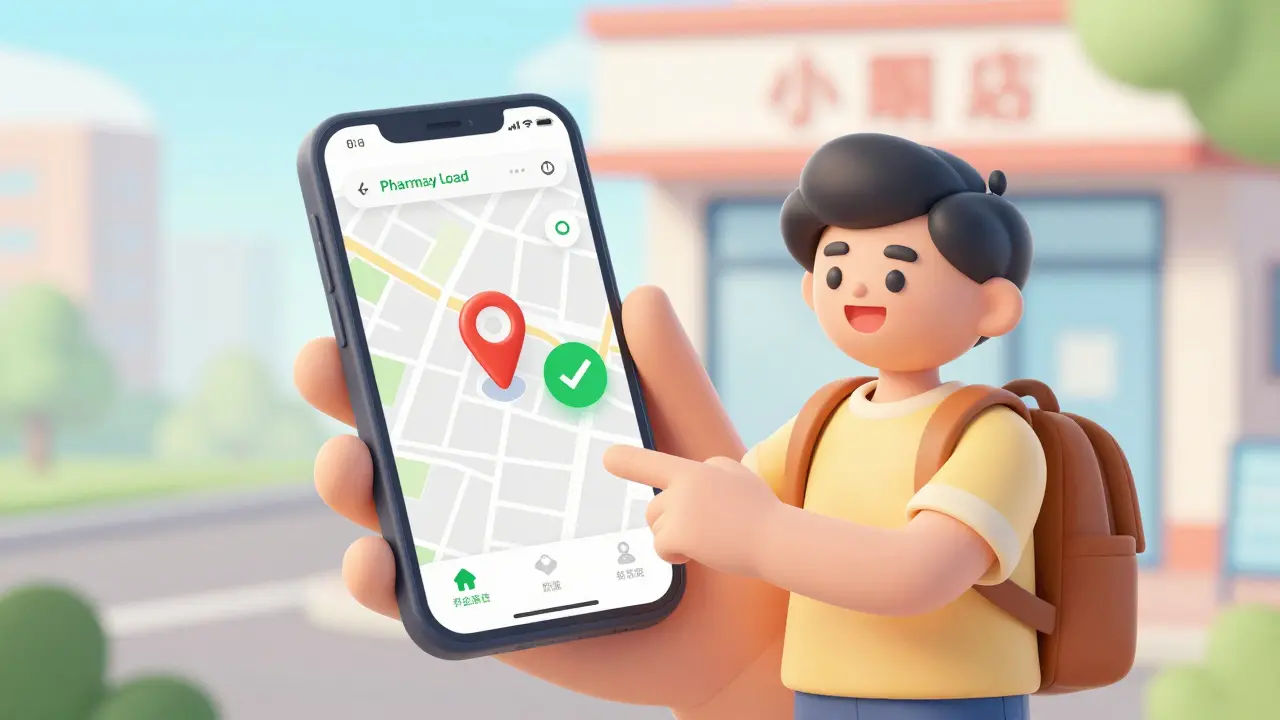
- Use the International Pharmaceutical Federation's global pharmacy locator API (integrated with Google Maps as of June 2023) to find verified pharmacies
Managing Time Zone Changes for Your Medication
Time zone shifts can throw off your medication schedule. For once-daily medications, take the dose at the same clock time as home for the first 2-3 days (effective for 78% of travelers per Johns Hopkins' 2022 study). For insulin, split doses during transition periods. Anticoagulants like warfarin require precise timing adjustments-consult your doctor before travel. The CDC's 2023 Travelers' Health Manual notes that 47% of travelers experience time zone changes affecting medication schedules, requiring strategic planning for time-sensitive drugs.
Essential Resources for Travelers in Need
Before your trip, research these resources:
- CDC Travelers' Health - Use their MedAbroad tool for country-specific rules
- IAMAT - Free physician referrals in 110 countries
- U.S. Department of State - Check their travel advisories for medication regulations
- European Medicines Agency - Provides guidelines for EU travel medication rules
Travel insurance is also critical. World Nomads' 2023 policy covers up to $2,000 for emergency medication purchases, but note that Medicare Advantage plans explicitly exclude international coverage per CMS's 2023 policy manual. Always verify your insurance before traveling.
Can I bring prescription medications on a plane?
Yes, but you must carry them in original containers with pharmacy labels showing your name, doctor's name, and drug details. The TSA recommends arriving 3 hours early for international flights to allow time for medication screening. Over 12% of travelers face delays due to medication checks, according to TSA's 2022 data.
What if my medication is banned in the country I'm visiting?
Check the destination country's regulations before travel. For example, Japan prohibits many ADHD medications, while some European countries restrict opioids. Contact the country's embassy for clarification. If your medication is restricted, work with your doctor to find alternatives and carry a letter explaining the medical necessity.
How do I handle insulin during travel?
Insulin must stay between 2°C and 8°C (36°F to 46°F) during transit. Use a cooler with ice packs, but never freeze it. Carry a doctor's letter explaining your need for insulin. When crossing time zones, split doses during the transition period to maintain stable blood sugar levels. The International Air Transport Association's 2023 guidelines confirm these storage requirements for safe travel.
Are there apps to find pharmacies abroad?
Yes, the International Pharmaceutical Federation launched a global pharmacy locator API in June 2023, integrated with Google Maps. This tool shows verified pharmacies in 195 countries. For U.S. travelers, Walgreens' international network app also helps locate partner pharmacies in 18 countries. Always verify the pharmacy's legitimacy before purchasing.
What should I do if I experience side effects from medication abroad?
Contact a local doctor immediately. Use the IAMAT physician directory for pre-vetted medical professionals. For severe reactions, go to the nearest hospital. Always carry a list of your medications and allergies. The CDC reports that 29% of medication-related emergencies involve anticoagulant timing errors, so knowing how to adjust doses is critical.
8 Comments
Hey all, just wanted to share that having your meds in original containers is a lifesaver.
I've been to Europe a few times and the customs are strict but if you have the labels, no issues.
Also, always bring a copy of the generic name.
Like, Lexapro is escitalopram, so when you're in Spain, they know what it is.
Oh and don't forget the 10 day surplus.
I once ran out in Japan and it was a mess.
Pro tip: check the country's specific rules before you go.
For example, Japan has only 24 pharmacies that serve foreigners.
So plan ahead.
Also, the WHO says 68% of meds in open markets in Thailand are fake.
So be careful.
Use the IPF's pharmacy locator app.
It's cool. Just type in the location and it shows verified ones.
I've used it before.
Also, for insulin, keep it cool but not frozen.
I remember once my insulin got too hot in a car and it was ruined.
So coolers are a must.
And always have a doctor's letter.
It's saved me a few times.
Oh, and don't forget to check your insurance coverage.
Medicare doesn't cover abroad.
So get travel insurance.
World Nomads is good.
But check the fine print.
Anyway, travel safe!
Great advice Lana I always check the country's rules before traveling Especially for things like insulin The TSA says 12% of travelers face delays with meds so arriving early is key Also the CDC's MedAbroad tool is a lifesaver I've used it for Japan and it worked well Just remember to have your prescriptions in order
I don't trust these WHO stats they're probably government propaganda 68% fake meds more like 10% but they want us to panic Also the FDA is the real authority Always check with them And why do we need a pharmacy locator Just go to a hospital They know what they're doing
Lana's advice is decent but let's be real. Big Pharma's the real villain here. They're pumping out fake meds. WHO stats are just propaganda. Check the manufacturer's site directly. Skip pharmacies altogether. The internet's full of legit sources. Just type 'pharmacy verified' and boom-you're set. No more hassles.
This is why Americans think they're special! Every country has its own rules. You can't just expect everyone to accommodate your medication needs! The U.S. is the only country that doesn't have universal healthcare, so of course you're unprepared! Always check the local regulations. For example, in the UK, the NHS has strict rules! And Japan? They have very strict laws! You need to respect that! Also, the idea that 'travel insurance covers emergency meds' is ridiculous! Most policies have exclusions! Always read the fine print!
This is really helpfull!
All this 'helpful' info is just corporate propaganda. The WHO and CDC are controlled by Big Pharma. They want you to buy their meds. And the 'pharmacy locator' is a scam. Real pharmacies don't need apps. Just go to the hospital. Also, the 'counterfeit meds' stats are made up. The real problem is the government's lack of regulation. They should be held accountable. And why is everyone so worried about travel meds? Just stay home. It's safer.
The information presented is quite informative However one must consider the cultural context of each nation For example Japan's strict regulations stem from historical pharmaceutical practices The reliance on digital tools may not be sufficient Physical verification is necessary Also insurance coverage varies widely It is advisable to consult local authorities