
Herbal Teas and Medications: Potential Interactions to Review
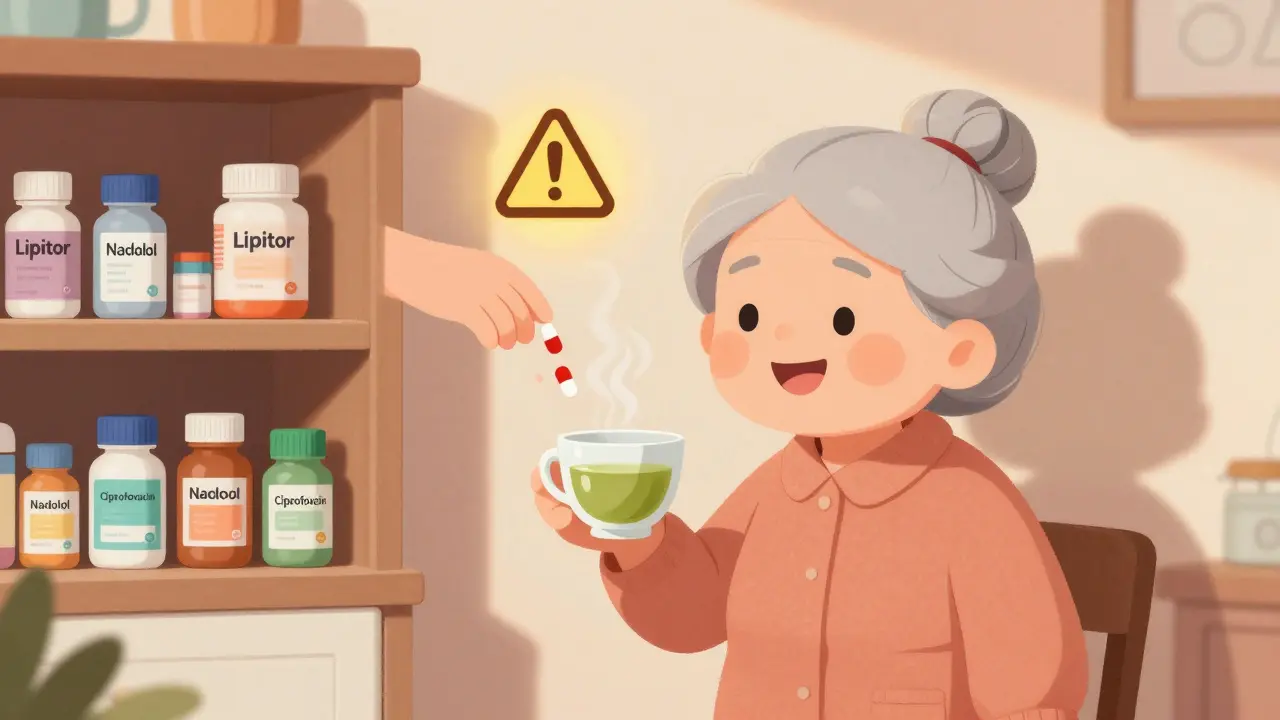
Many people reach for herbal teas thinking they’re harmless-just a warm, soothing drink. But if you’re taking prescription medications, that cup of chamomile, green tea, or hibiscus might be doing more than calming your nerves. It could be interfering with how your drugs work, sometimes in dangerous ways.
Why Herbal Teas Aren’t Just ‘Natural’
Herbal teas aren’t tea in the traditional sense. They don’t come from the Camellia sinensis plant. Instead, they’re made from roots, flowers, leaves, or seeds of other plants-chamomile, peppermint, ginger, hibiscus, St. John’s wort, and more. People drink them for sleep, digestion, immunity, or just because they taste good. But unlike prescription drugs, herbal teas aren’t tested for safety before they hit the shelf. The FDA treats them as food, not medicine. That means no required clinical trials, no standardized dosing, and no warning labels about interactions.That’s a problem because many of these plants contain powerful compounds that interact with your body’s drug-processing systems. These interactions aren’t theoretical. They’ve been seen in real patients. A 2023 study found that drinking three cups of strong green tea daily cut the blood levels of the beta-blocker nadolol by 85%. That’s not a small drop-it’s enough to make the drug useless. And if your blood pressure spikes because the medication isn’t working, you could end up in the hospital.
Green Tea: The Silent Drug Thief
Green tea is one of the most popular herbal teas in the U.S., often consumed for its antioxidants. But its active ingredient, epigallocatechin gallate (EGCG), doesn’t just fight free radicals-it blocks the transporters your body uses to absorb certain medications.Studies show green tea can reduce the effectiveness of:
- Atorvastatin (Lipitor): Blood levels drop by 31-39%
- Nadolol (Corgard): Bioavailability drops by up to 85%
- Simvastatin: Concentrations spike 2.3-fold due to P-glycoprotein inhibition, raising the risk of muscle damage
- Fluoroquinolone antibiotics (like ciprofloxacin): Absorption is blocked
These aren’t lab guesses. These are results from human trials. The mechanism? Green tea inhibits OATP1A1 and OATP1A2-proteins that help move drugs into your bloodstream. If those proteins are blocked, your medication doesn’t get absorbed. You’re paying for a drug that’s not working.
St. John’s Wort: The Mood Booster That Kills Other Medications
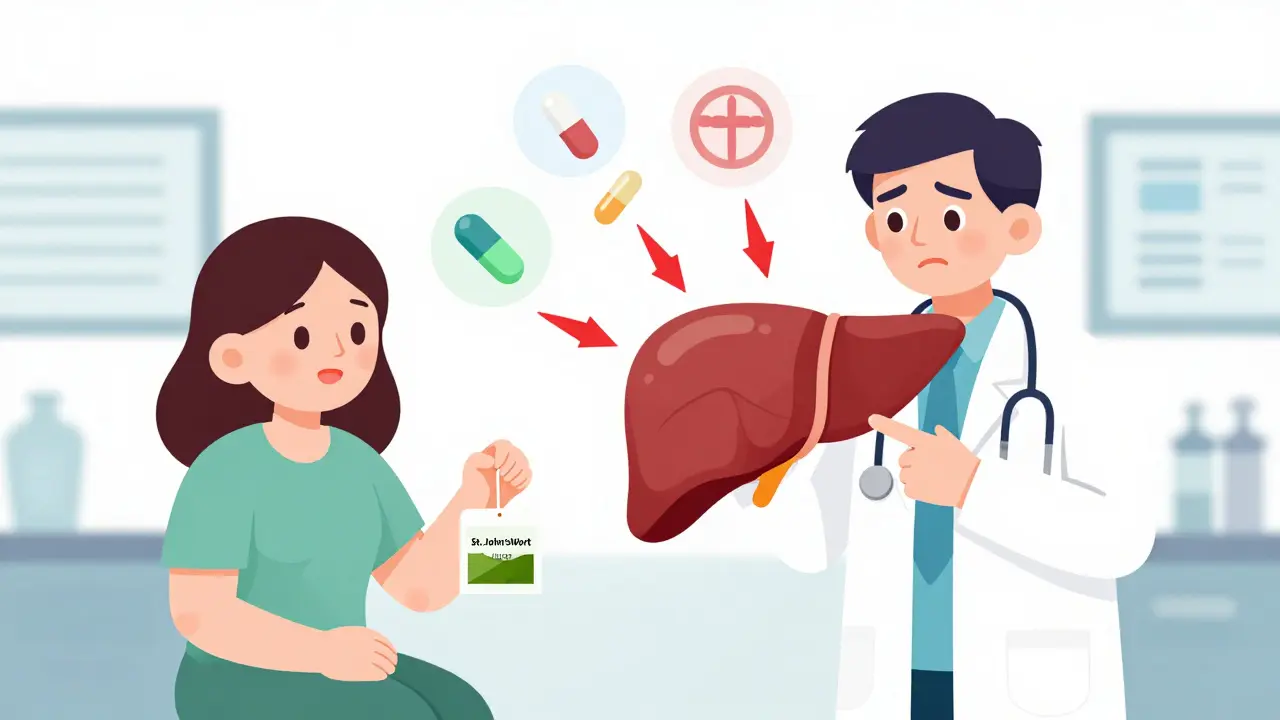
St. John’s wort is often used for mild depression. But it’s one of the most dangerous herbal teas when mixed with prescription drugs. It triggers enzymes in your liver-CYP3A4 and CYP2D6-that break down medications too fast. The result? Your drugs get flushed out before they can do their job.Dr. Craig Hopp from the National Center for Complementary and Integrative Health says: “St. John’s wort speeds up processes that change the drug into inactive substances, leading to decreased drug levels in your body.”
That’s deadly with:
- Warfarin: Reduced effectiveness increases stroke risk
- Cyclosporine: Organ transplant patients can reject their new organ
- Birth control pills: Breakthrough bleeding and unintended pregnancy
- Antiretrovirals: HIV treatment fails
- Antidepressants: Risk of serotonin syndrome
Even if you’re not taking these drugs now, you might be soon. If you’re on St. John’s wort tea and your doctor prescribes a new medication, you need to speak up-before you take the first pill.
Chamomile, Hibiscus, and Blood Pressure
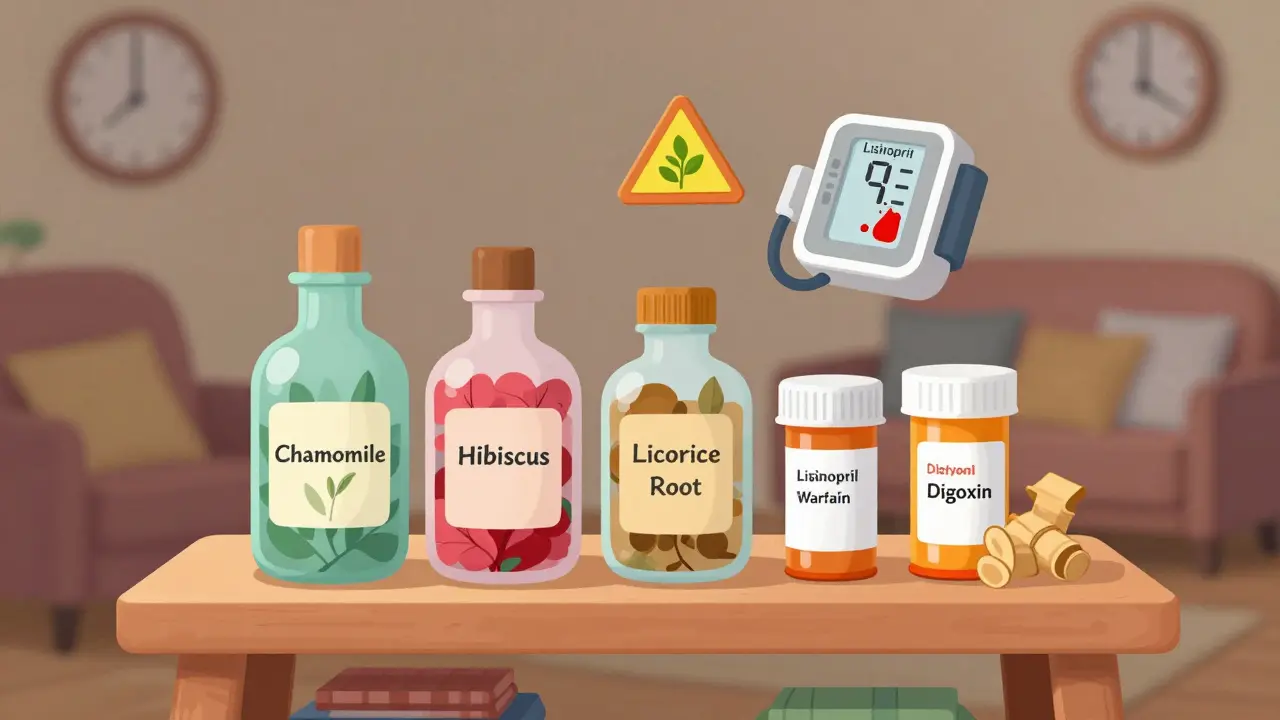
Chamomile tea is a bedtime staple. But it contains apigenin, a compound that can interfere with how your liver breaks down drugs. Early research suggests it might reduce the effectiveness of oral contraceptives and some antidepressants.Hibiscus tea, on the other hand, is marketed for lowering blood pressure. And it works. But if you’re already taking lisinopril, enalapril, or another ACE inhibitor, hibiscus can push your blood pressure too low. There are documented cases of systolic pressure dropping below 90 mmHg-leading to dizziness, fainting, or even falls in older adults.
And it’s not just hibiscus. Licorice root tea can lower potassium levels, which is dangerous if you’re on diuretics or heart medications. Ginger and garlic teas can thin your blood. If you’re on warfarin, even small amounts can raise your INR and cause internal bleeding.
Who’s at the Highest Risk?
Not everyone who drinks herbal tea is in danger. But certain groups are at much higher risk:- Older adults: 70% of adults over 65 use herbal supplements, but only 25% tell their doctors
- People on multiple medications: Polypharmacy increases interaction chances exponentially
- Patients with narrow therapeutic index drugs: These are medications where the difference between a helpful dose and a toxic one is tiny. Warfarin, digoxin, cyclosporine, lithium, and theophylline fall into this category. Even small changes in drug levels can be life-threatening
- People with kidney or liver disease: Their bodies can’t process herbs or drugs as efficiently
These aren’t edge cases. They’re common. In the U.S., over 40% of adults take at least one prescription drug. Nearly a quarter take herbal supplements. The overlap is huge-and mostly unmonitored.
What You Should Do Right Now
You don’t need to stop drinking herbal tea. But you need to be smart about it.- Make a list. Write down every herbal tea you drink, how often, and how much. Include blends with multiple herbs-many store-bought teas contain 5-10 ingredients you’ve never heard of.
- Bring it to every doctor’s visit. Don’t wait for them to ask. Say: “I drink chamomile tea every night and green tea in the morning. Are these safe with my meds?”
- Avoid herbal teas if you’re on warfarin, digoxin, cyclosporine, or theophylline. The risk isn’t worth it. Stick to plain water or decaf black tea.
- Don’t assume “natural” means safe. The FDA has issued multiple warnings: “Natural does not mean safe.”
- Watch for warning signs: Unusual bruising, dizziness, rapid heartbeat, confusion, or sudden changes in how you feel after starting a new tea. These could be signs of an interaction.
What Your Doctor Should Be Asking
Most doctors don’t ask about herbal teas because they assume patients won’t mention them. But patients don’t think of tea as a “supplement.” They think of it as a drink.Healthcare providers need to ask directly: “Do you drink any herbal teas? Even just once a week?”
And they need to check for interactions using updated tools. The FDA and European Medicines Agency have both added interaction warnings for 17 common herbal teas. But many clinics still rely on outdated databases.
If your doctor doesn’t know about hibiscus and lisinopril interactions-or green tea and nadolol-it’s up to you to bring the information. Print out a simple list. Show it to them. Your life might depend on it.
The Bigger Picture
The herbal tea market is booming. It’s projected to hit $11 billion by 2027. Companies are marketing blends for “heart health,” “liver detox,” and “immune support.” But none of these claims are reviewed by the FDA. And none of them come with interaction warnings.Meanwhile, the number of Americans taking five or more prescription drugs is rising. Older adults are drinking herbal teas to feel better. But they’re not telling anyone. That’s a recipe for disaster.
The science is still catching up. Only 17% of known herb-drug interactions have been confirmed in human trials. That means there are probably dozens more we don’t know about yet. But we know enough to be cautious.
You don’t have to give up your tea. But you do have to be informed. Your medications are carefully dosed for a reason. Herbal teas can change that balance-and you won’t always feel it until it’s too late.
Can I drink chamomile tea while taking blood pressure medication?
Chamomile tea is generally low-risk for most people, but it can interfere with how your liver processes certain drugs. If you’re on ACE inhibitors like lisinopril or beta-blockers like metoprolol, it’s best to avoid chamomile. It may lower blood pressure further, causing dizziness or fainting. Talk to your doctor before combining them.
Is green tea safe with statins?
No. Green tea significantly reduces the absorption of statins like atorvastatin and simvastatin. Studies show blood levels can drop by up to 39%, making the drug ineffective. If you’re taking a statin, switch to decaf black tea or water. Avoid green tea entirely, especially in concentrated forms like extracts or powders.
Does hibiscus tea interact with warfarin?
Hibiscus tea doesn’t directly interact with warfarin like ginkgo or garlic do. But it can lower blood pressure, which may be dangerous if you’re also on antihypertensive drugs. If you’re on warfarin, avoid hibiscus tea unless your doctor approves it. Monitor your INR closely if you continue drinking it.
What herbal teas should I avoid if I’m on antidepressants?
Avoid St. John’s wort tea completely. It can cause serotonin syndrome when mixed with SSRIs or SNRIs. Also avoid licorice root tea, which can interfere with liver enzymes that metabolize many antidepressants. Stick to plain peppermint or ginger tea-these are generally safer, but still mention them to your doctor.
Are herbal tea bags safer than loose herbs?
No. The risk comes from the active compounds in the plant, not the form. A tea bag of St. John’s wort has the same interaction potential as loose leaves. The concentration might vary slightly, but even weak brews can affect medications over time. Don’t assume packaging makes it safer.
Can I drink herbal tea if I’m on antibiotics?
Avoid green tea and goldenseal tea while on antibiotics. Green tea blocks absorption of fluoroquinolones like ciprofloxacin. Goldenseal inhibits liver enzymes that break down many antibiotics, leading to unpredictable levels. Stick to plain water during your antibiotic course unless your doctor says otherwise.
11 Comments
Yo, I just started drinking green tea every morning thinking it was helping my cholesterol, and now I find out it’s basically sabotaging my Lipitor? 😳 I’m switching to decaf black tea tomorrow-no more guessing games with my meds. Thanks for the wake-up call.
Also, why is no one talking about how companies market these teas like they’re magic potions? ‘Immune boost!’ ‘Detox!’ Bro, it’s just leaves in hot water.
My grandma drinks chamomile tea every night and takes blood pressure meds. I’m printing this out and taping it to her fridge.
People need to stop treating herbal stuff like harmless candy. This is real science, not yoga retreat vibes.
Let me be the first to say this: if you’re drinking herbal tea while on prescription meds, you’re not ‘natural,’ you’re just irresponsible. The FDA doesn’t regulate these because they’re not supposed to be medicines-yet people treat them like they’re FDA-approved pharmaceuticals.
St. John’s wort isn’t ‘mild depression relief’-it’s a biochemical grenade tossed into your cytochrome P450 system. And you wonder why your antidepressant stopped working?
‘Natural’ is the most dangerous word in wellness marketing. It’s the loophole that lets snake oil salesmen sell poison with a smile.
Also, ‘tea bags are safer’? No. A tea bag is just a fancy paper envelope for plant murder. The active compounds don’t care if you steep them in a muslin sack or a burlap sack.
Stop romanticizing plants. They’re not your friends. They’re pharmacologically active organisms with agendas.
Thank you for this. I’ve been drinking hibiscus tea for years because my mom said it ‘cleanses’ me. I didn’t know it could drop my BP too low-especially since I’m on lisinopril. I’ll stop immediately.
I’m also going to make a list of everything I drink, even the ‘harmless’ ones. I never thought tea counted as a supplement.
Just… thank you for saying it plainly. I feel less stupid now.
My dad’s on warfarin and drinks chamomile tea every night. I just called him and made him stop until he talks to his cardiologist. He didn’t even know there was a risk.
People need to realize: if you’re taking meds, your tea isn’t just a drink. It’s a variable in a life-or-death equation.
Also-why don’t pharmacies have little signs next to herbal teas? Like, ‘Caution: May kill your blood thinner.’
THIS IS SO IMPORTANT!!! 🙌 I’ve been drinking ginger tea for my digestion and didn’t realize it could thin my blood-my uncle had a bleed last year and it was from garlic + warfarin 😱
Print this out. Share it. Tag your grandma. Your life matters more than your tea habit.
PS: I’m switching to plain hot water now. No regrets. 💪🍵
Look, I get it. You’re all scared of herbal tea. But let’s be real-how many people actually die from chamomile? I’ve been drinking green tea with my statin for three years and I’m fine. You’re acting like it’s a chemical weapon.
Maybe it’s not the tea. Maybe it’s your doctor not knowing what they’re doing.
Also, why are we treating every plant like it’s a controlled substance? Next you’ll be telling me not to eat turmeric because it ‘interferes’ with blood thinners. What’s next? No more garlic bread?
I’m not stopping my tea. I’m stopping listening to fearmongers.
Oh sweet jesus, the ‘natural = safe’ delusion is alive and thriving. It’s like people think plants evolved specifically to be pharmaceutical sidekicks.
Green tea inhibits OATP1A1? Cool. So does grapefruit. But we don’t call grapefruit ‘a soothing beverage.’ We call it a drug-interaction hazard and put warning labels on it.
Why don’t herbal tea companies have to do the same? Because capitalism prefers profit over patient safety.
And let’s not forget: the ‘I’ve been drinking it for years and I’m fine’ crowd? That’s called survivorship bias. The ones who got hospitalized? They’re not posting on Reddit.
It’s not about fear. It’s about evidence. And the evidence says: stop treating your liver like a buffet.
As someone from Indonesia where herbal teas are part of daily life-I can’t believe how little this is discussed in the US. We’ve been using ginger, turmeric, and kencur for centuries, but we also know the rules: don’t mix with blood pressure meds, don’t drink with anticoagulants, always ask the elder or the healer.
It’s not that herbal teas are dangerous. It’s that we stopped respecting their power.
In my village, we say: ‘The plant remembers what it’s done. You must remember what you’re taking.’
Maybe we need to bring back that wisdom-not fear, not hype, but respect.
Key point missed: the dose matters. One cup of hibiscus tea? Probably fine. Three cups daily? Risky. One tea bag of St. John’s wort? Maybe low risk. Extracts? Dangerous. But no one ever says ‘how much’-they just say ‘avoid.’
Also, most studies are on concentrated extracts, not brewed tea. The actual concentration in a cup? Often negligible.
Don’t panic. But don’t ignore. Measure. Track. Consult. Don’t assume.
So… I’ve been drinking chamomile tea every night for 10 years while on metoprolol. I’ve never had a problem. But now I’m paranoid. Did I just slowly sabotage my heart meds? Am I going to have a heart attack tomorrow?
Why do these articles make me feel like I’m one sip away from dying? I’m not a scientist. I just want to relax with a warm drink.
Also, why does the author sound like a pharmaceutical rep? ‘Avoid everything!’ No nuance. No ‘it depends.’ Just fear.
…I’m gonna keep drinking it. But now I’m gonna Google ‘chamomile metoprolol interaction’ every night before bed. Thanks for the anxiety.
How is this even a topic? People who drink herbal tea while on meds are just dumb. You think your body is a magic potion cauldron? You’re not a witch. You’re a patient. Take your pills. Drink water. Stop trying to ‘enhance’ your health with leaf steeping.
Also stop calling it ‘tea’-it’s an herbal supplement. Call it what it is. Then maybe you’ll stop being so casual about it.
And if your doctor doesn’t know this? Find a new one. They’re not qualified if they don’t ask about your ‘tea.’