
How to Discuss Deprescribing Goals with Your Doctor: A Senior's Guide
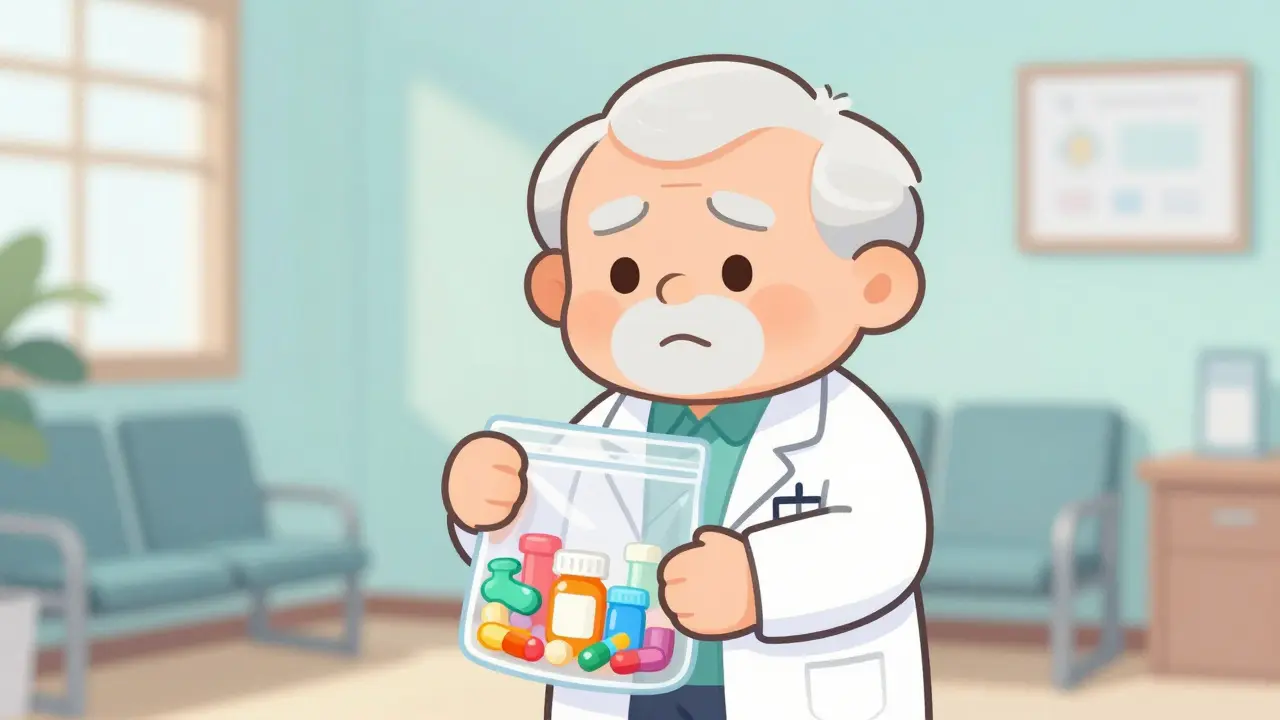
You walk into your doctor’s office clutching a plastic bag full of pill bottles. There are five for blood pressure, two for cholesterol, one for sleep, and another for anxiety. You’ve been taking them for years, but lately, you feel more tired than ever. Maybe you stumble when you stand up too fast. Or perhaps the fog in your brain makes it hard to focus on your grandkids’ stories. You wonder if all these pills are actually helping or just adding weight to your routine.
This is where deprescribing comes in. It isn’t about quitting cold turkey or ignoring medical advice. It’s a supervised process of reducing or stopping medications when the risks start to outweigh the benefits. For older adults dealing with polypharmacy (taking multiple medications simultaneously), this conversation can be life-changing. Yet, most people wait for their doctor to bring it up. The truth? Doctors often don’t initiate these talks unless you do. If you want fewer pills and better energy, you have to lead the charge.
Why Timing Matters More Than Ever
Deprescribing has moved from a niche concept to a standard part of geriatric care. Around 2014, medical literature formally recognized it as essential for good prescribing practices. Today, we know that adverse drug events affect roughly 15% of older adults taking five or more medications. That’s one in seven seniors facing side effects simply because their bodies process drugs differently as they age.
Your body changes. Kidney function slows down. Liver metabolism shifts. A dose that kept your blood pressure stable ten years ago might now drop it too low, causing dizziness and falls. The goal isn’t just to lower numbers on a chart; it’s to align your medication list with what matters to you right now. Do you want to garden without feeling dizzy? Do you want to stay sharp enough to play cards with friends? Those are the goals that drive successful deprescribing.
Preparing for the Conversation: Your Action Plan
Walking into an appointment saying “I want to take fewer pills” rarely works. Doctors hear this often and may dismiss it as non-medical frustration. To get results, you need preparation. Think of yourself as a project manager presenting a case for change. Here is how to build your dossier:
- Create a Master Medication List: Include every prescription, over-the-counter drug, vitamin, and supplement. Note the dosage and frequency. Studies show 23% of patients forget to mention supplements, which can interact dangerously with prescriptions.
- Track Side Effects Specifically: Don’t just say “I feel bad.” Write down details like “Dizziness occurs two hours after my morning dose, leading to near-falls three times a week.” Specificity triggers clinical attention.
- Identify Priority Medications: Pick one or two drugs you suspect are causing issues. Use resources like the Beers Criteria or STOPP/START criteria to see if your meds are flagged as potentially inappropriate for older adults.
- Define Your Quality-of-Life Goals: Connect the medication issue to a daily activity. Instead of “I hate this pill,” try “This pill makes me too tired to walk my dog, which is important for my mental health.”
Bring printed copies of reputable guidelines, such as those from the Canadian Deprescribing Network. Patients who bring evidence-based information increase their success rates by 33%. It shows your doctor you’re informed and serious.
The Right Way to Ask: Communication Strategies
How you phrase your request changes everything. Research published in JAMA Network Open analyzed hundreds of patient responses and found that framing matters immensely. Patients preferred explanations focused on risk reduction and shared decision-making over cost savings or life expectancy statistics.
Avoid phrases that sound like you’re rejecting care. Instead, use collaborative language. Here are some high-performing scripts based on expert consensus:
| Goal | Try This Phrase | Avoid This Phrase |
|---|---|---|
| Initiate Discussion | “Do you feel I’m taking too many, too little, or just enough medications?” | “I want to stop taking these pills.” |
| Highlight Side Effects | “Some of these meds seem to cloud my mind and affect my balance.” | “These drugs are making me crazy.” |
| Propose Change | “Can we work together to slowly reduce the dose over time?” | “Take this off my list immediately.” |
| Connect to Goals | “My goal is to hike with my grandkids, but this med makes me short of breath.” | “I’m tired of being sick.” |
Notice the pattern? These questions invite your doctor into a partnership. They ask for their professional opinion while clearly stating your personal priorities. Dr. Michael Steinman from UCSF notes that framing recommendations around individual goals-like walking your granddaughter to school-is significantly more effective than citing clinical data alone.

Navigating Common Barriers and Fears
It’s normal to feel hesitant. Many seniors worry that asking to stop a medication will make them seem difficult or ungrateful. Others fear their condition will worsen. These concerns are valid, but they shouldn’t silence you. Let’s address the top barriers:
Fear of Worsening Conditions: This is the biggest hurdle. Sixty-seven percent of patients cite this as a reason for not initiating deprescribing. The key is understanding that deprescribing is gradual. It’s not a cliff jump; it’s a slow descent. Most successful cases involve “drug holidays” or tapered reductions over months, not days. Your doctor should monitor you closely during this phase.
Misinterpretation of Care: Some caregivers think discussing cost or reducing meds means the doctor is giving up on them. Avoid framing the conversation around money. Focus on quality of life and symptom management. When you talk about function rather than finance, you maintain trust.
Uncertainty About Which Meds to Drop: You don’t need to know exactly which pill to cut. That’s your doctor’s job. Your job is to flag the symptoms. Use the “ask-tell-ask” technique recommended by medical communicators:
- Ask: “What’s your view on how my current medications are working for me?”
- Tell: Share your specific concerns and side effect logs.
- Ask: “What would be the safest way to evaluate if we could reduce any of these?”
This structure keeps the dialogue open and respectful. It positions you as a partner in your health, not a challenger to your doctor’s authority.
Setting Realistic Expectations for Success
Deprescribing takes time. If you expect immediate results, you’ll be disappointed. Eighty-six percent of successful deprescribing cases involve gradual tapering. Your doctor may suggest lowering the dose by 25% each month and scheduling follow-up appointments to check your vitals and symptoms.
Be prepared to discuss a monitoring plan. Seventy-nine percent of physicians require documented protocols before agreeing to deprescribe. This might include weekly blood pressure checks at home or daily journals tracking mood and energy levels. Having a plan ready shows you’re committed to safety.
Also, recognize that not every medication can be stopped. Some are essential for preventing strokes or managing heart failure. The goal is optimization, not elimination. You might keep the statin but drop the antihistamine that causes drowsiness. Small wins add up.

Leveraging New Tools and Resources
The landscape is shifting in your favor. Medicare’s 2024 Annual Wellness Visit requirements now include “medication optimization discussions” as a billable component. This means your insurance covers dedicated time for this talk. When scheduling, specifically request a “medication review” rather than a general check-up. This ensures your doctor allocates sufficient time-rushed appointments kill complex conversations.
Electronic health records from major systems like Epic and Cerner now flag potentially inappropriate medications for seniors. Your doctor likely sees these alerts before you even sit down. Use this to your advantage. Say, “I noticed my chart flags this medication for older adults. Can we discuss why it’s still necessary?”
Additionally, organizations like the American Geriatrics Society mandate annual deprescribing assessments for patients aged 65+ with five or more medications. If your doctor hasn’t brought it up, remind them gently. “I read that AGS guidelines recommend reviewing meds annually for seniors. Can we do that today?”
When Things Go Wrong: Troubleshooting
Sometimes, despite your best efforts, the conversation stalls. Your doctor might say, “We’ve tried that before,” or “It’s not medically indicated.” Here’s how to handle pushback:
If your doctor dismisses your request, ask for the rationale. “Can you help me understand why continuing this specific dose is safer than trying a reduction?” Sometimes, doctors resist due to liability fears. Reassure them by proposing a trial period. “Could we try reducing the dose for four weeks and see how I feel? If things worsen, we can go back.”
If you hit a wall, consider a second opinion. A geriatrician specializes in complex medication management for older adults. They are trained in deprescribing frameworks and may offer a fresh perspective. Bringing a trusted family member or caregiver to the appointment can also help. They can take notes, provide emotional support, and reinforce your points if you get flustered.
Remember, you are the CEO of your health. Your doctor is the consultant. You hire them for their expertise, but you set the agenda. By preparing thoroughly, communicating clearly, and focusing on your quality-of-life goals, you transform a daunting topic into a manageable, empowering process. Fewer pills, less dizziness, and more life-that’s the real win.
What is the best time to schedule a deprescribing conversation?
Schedule a dedicated “medication review” appointment rather than squeezing it into a routine physical. Medicare covers medication optimization discussions during Annual Wellness Visits. Ensure you have at least 15-20 minutes allocated so the doctor isn’t rushed. Bring your complete medication list and side-effect journal to maximize efficiency.
Will my doctor think I’m difficult if I ask to stop medications?
Not if you frame it correctly. Doctors appreciate engaged patients who prioritize safety. Using collaborative language like “Can we review if these meds are still aligned with my goals?” shows you’re seeking partnership, not conflict. Avoid demanding immediate cessation; instead, propose a gradual evaluation plan.
Is deprescribing safe for everyone?
Deprescribing is a supervised medical process, not self-diagnosis. It is generally safe when done gradually under a physician’s guidance. However, some conditions require lifelong medication. The goal is to remove drugs where risks outweigh benefits, not to eliminate all treatment. Always consult your doctor before changing doses.
How long does the deprescribing process take?
Most successful cases involve tapering over several months. Immediate discontinuation is rare and risky. Expect a timeline of 3-6 months for significant reductions, with regular follow-ups to monitor for withdrawal symptoms or condition recurrence. Patience is key to ensuring stability.
What should I do if my doctor refuses to deprescribe?
Ask for the specific medical reason behind the refusal. Request a trial reduction period to test tolerance. If resistance persists, seek a second opinion from a geriatrician who specializes in complex medication management for older adults. You have the right to explore all options for optimizing your health.