
How to Find Safe Licensed Online Pharmacies
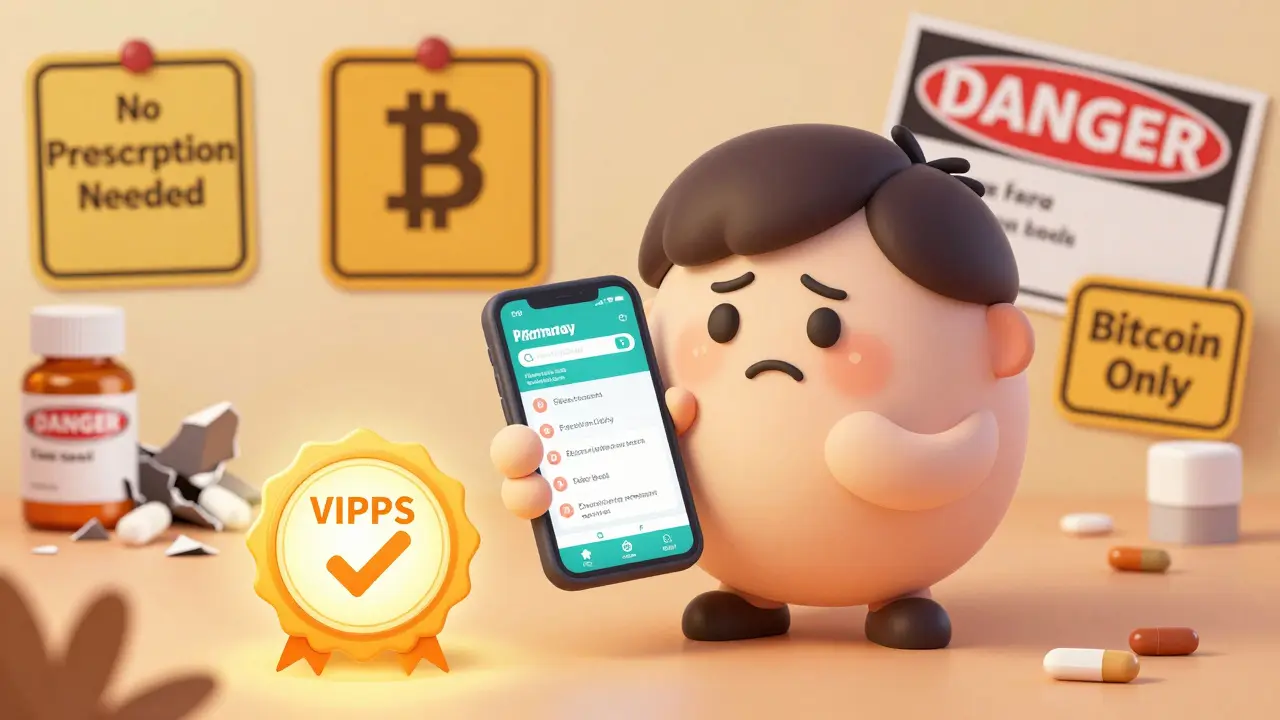
Buying medicine online sounds simple-until you realize how many fake pharmacies are out there. In 2023, the FDA estimated that 96% of online pharmacies are illegal. That means if you just Google "buy pills online," you’re more likely to land on a site selling fake, toxic, or expired drugs than a real, licensed pharmacy. And it’s not just about wasted money. Counterfeit medications have caused thousands of hospitalizations and even deaths. The good news? Safe, licensed online pharmacies exist. You just need to know how to find them.
What Makes an Online Pharmacy Licensed and Safe?
A licensed online pharmacy isn’t just a website with a nice design and a "100% guaranteed" badge. It follows strict rules set by U.S. and international regulators. Legitimate pharmacies must:- Require a valid prescription from a licensed doctor
- Have a physical address in the U.S. (or a verified foreign location)
- Employ licensed pharmacists who can answer your questions
- Be licensed by a state board of pharmacy
- Use secure, encrypted websites (look for https:// and the padlock icon)
- Accept only standard payment methods like credit cards or PayPal
Illegal sites skip all of this. They sell pills without prescriptions, use fake addresses, hide behind offshore servers, and ask for wire transfers or Bitcoin. If a site offers "no prescription needed" or "discounted Viagra without a doctor’s visit," it’s a red flag. The FDA says these are the most common traps.
The VIPPS Seal: Your Best Bet for Safety
The most trusted sign of a safe online pharmacy is the VIPPS seal. That stands for Verified Internet Pharmacy Practice Sites. It’s run by the National Association of Boards of Pharmacy (NABP), a group made up of state pharmacy regulators. To earn VIPPS accreditation, a pharmacy must pass 17 strict checks covering everything from pharmacist availability to data encryption and prescription verification.As of October 2023, only 68 U.S. pharmacies held VIPPS accreditation. That’s not many-but it’s the only seal that means the pharmacy is legally licensed, inspected, and monitored. You can verify it yourself: go to the NABP Safe Site Search Tool, type in the pharmacy’s name, and see if it appears. If it doesn’t, it’s not VIPPS-approved-even if the logo is on the site. Fake seals are common.
PharmacyChecker: Another Reliable Option
If you’re looking at international pharmacies-like those in Canada or the UK-PharmacyChecker is your next best resource. It started in 2003 with just five basic checks. Now, it evaluates pharmacies using 86 safety criteria, including:- Verification of pharmacy licenses in their home country
- Onsite inspections in countries with weaker regulation
- Confirmation that prescriptions are required
- Validation of SSL encryption and contact information
PharmacyChecker also uses mystery shoppers to test how quickly prescriptions are filled and whether pharmacists respond to questions. Their accredited pharmacies are listed on their website, and they update their database daily. Many Canadian pharmacies are legitimate-but many others fake Canadian licensing to appear trustworthy. PharmacyChecker helps you spot the real ones.
The .pharmacy Domain: A Simple Filter
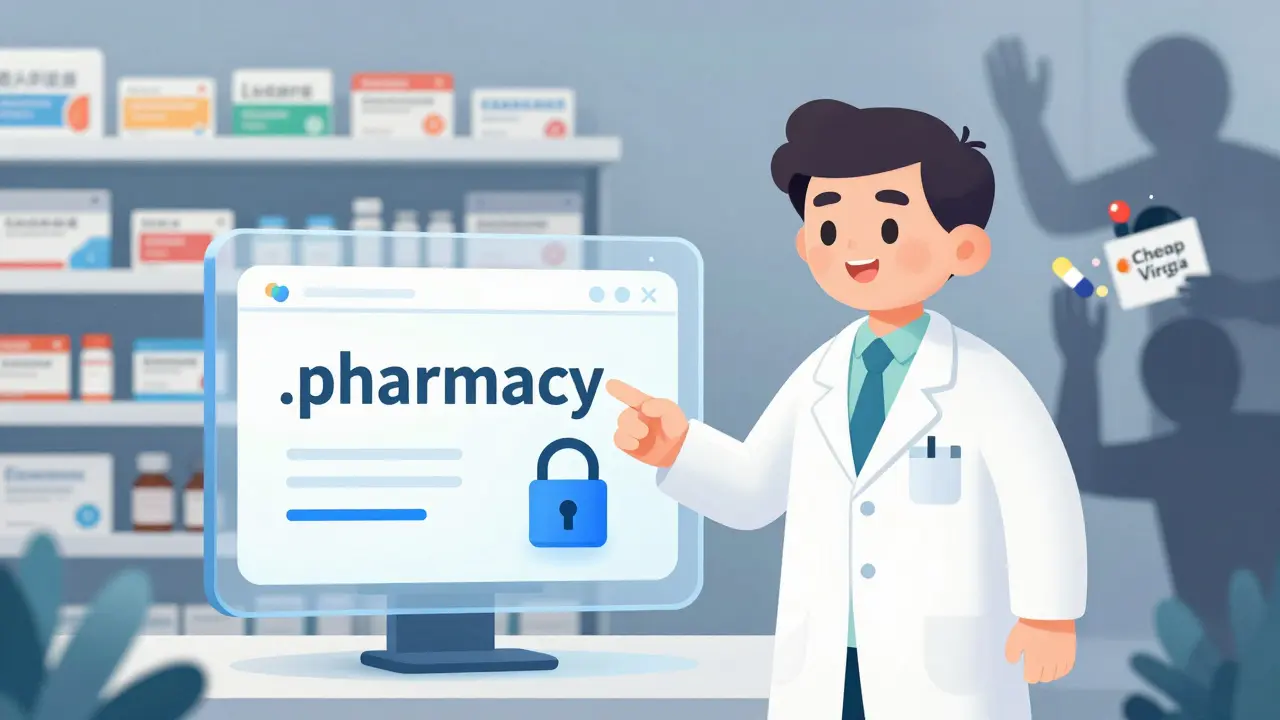
There’s one easy way to spot a licensed pharmacy at a glance: look at the website address. Legitimate U.S. and Canadian pharmacies can use the .pharmacy domain. This isn’t something any business can buy. To get it, a pharmacy must prove it’s licensed by a state or provincial board. You can’t just register .pharmacy like you would .com.If a pharmacy’s URL ends in .pharmacy, it’s a strong sign they’ve passed official checks. But don’t assume a site without .pharmacy is unsafe-some smaller, licensed pharmacies still use .com or .net. The key is to cross-check their name with the NABP or PharmacyChecker directories. The .pharmacy domain is a shortcut, not a guarantee.
Red Flags You Can’t Ignore
Here’s what to watch out for:- No prescription required - Legitimate pharmacies never skip this step. If you can buy opioids or insulin without a doctor’s note, it’s illegal.
- No U.S. address or phone number - If the contact page just says "email us," or lists a PO box in a foreign country, walk away.
- Too-good-to-be-true prices - If brand-name drugs are 80% cheaper than your local pharmacy, they’re likely counterfeit. The FDA found fake Viagra with 200-300% more active ingredient than labeled-enough to cause heart attacks.
- Payment by wire transfer or cryptocurrency - Real pharmacies use credit cards or PayPal. These offer fraud protection. Wire transfers and Bitcoin are untraceable.
- Pop-up ads and spam emails - If you got an ad on Facebook or a random email saying "Click here for cheap Cialis," it’s 99% fake.
In 2022, the FDA received over 1,800 reports of harm from online pharmacy purchases. Two-thirds involved fake drugs. One woman in Texas ordered "generic Adderall" from a site that looked real. It turned out to be a mix of caffeine, chalk, and rat poison. She ended up in the ER.
How to Verify a Pharmacy in 5 Minutes
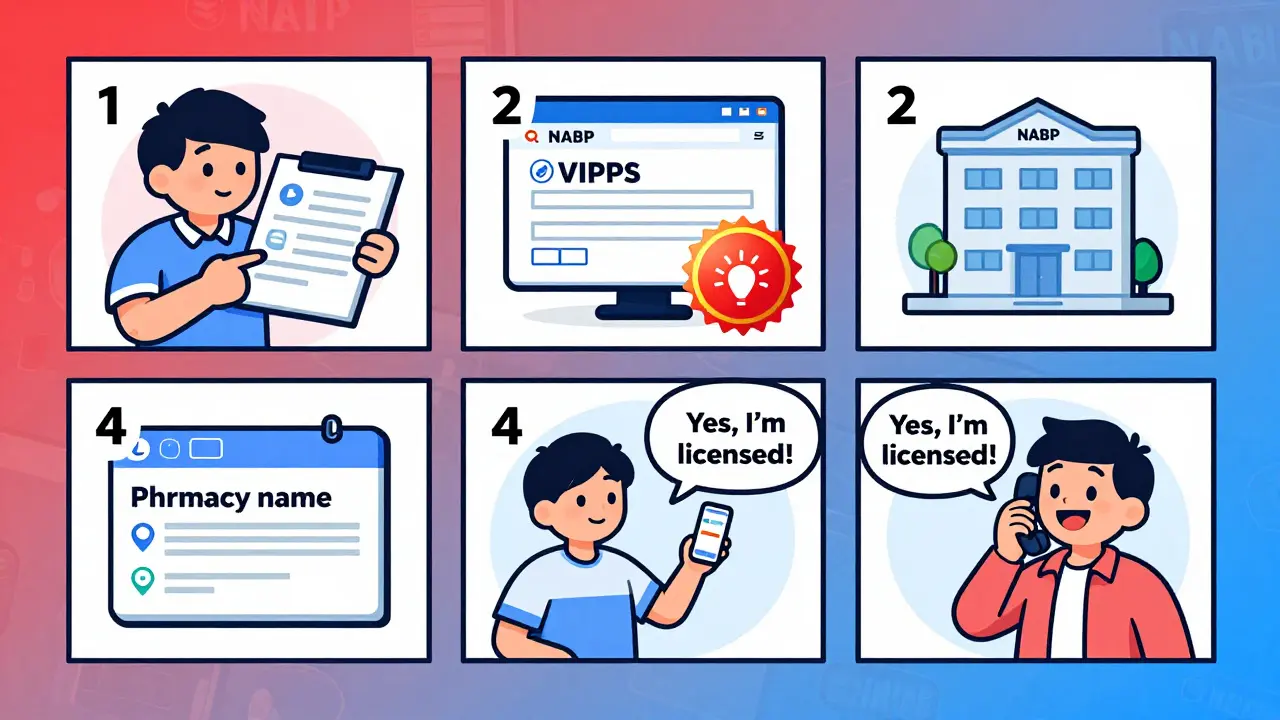
Here’s your step-by-step checklist:- Check for a prescription requirement - If the site lets you buy without one, close the tab.
- Look for the VIPPS or PharmacyChecker seal - Click on it. It should link to the official verification page. If it just shows a graphic, it’s fake.
- Search the NABP Safe Site Tool - Go to NABP’s site and search by name.
- Confirm the physical address - Type the address into Google Maps. Does it show a real pharmacy building? Or just a warehouse or apartment?
- Call their phone number - Ask to speak to a pharmacist. If they can’t connect you or sound scripted, walk away.
It takes 10-15 minutes to verify one pharmacy. But it’s faster than going to the ER because of a fake pill.
What About Canadian Pharmacies?
Many people turn to Canadian pharmacies because prices are lower. But not all Canadian pharmacies are safe. Some are just U.S.-based sites pretending to be Canadian. The North American Pharmacies Regulatory Association (NAPRA) found that in 2022, 42% of websites claiming Canadian licensing were operating from other countries.To check a Canadian pharmacy:
- Verify it’s licensed by a provincial pharmacy board (like Ontario’s College of Pharmacists).
- Check if it’s listed on PharmacyChecker’s site.
- Confirm it has a .pharmacy domain or VIPPS accreditation.
- Call the provincial regulator’s office directly to ask if the pharmacy is registered.
Don’t trust a "Canadian Pharmacy" banner on the homepage. Dig deeper.
Why Legitimate Pharmacies Are Worth the Extra Step
You might think, "Why not just take the risk? It’s cheaper." But here’s what you’re really paying for:- Correct dosage - Fake pills often contain too much or too little active ingredient. One study found counterfeit blood pressure pills had 0% of the required drug.
- Proper storage - Real pharmacies ship with temperature control. Fake ones leave pills in hot warehouses. Heat destroys insulin, antibiotics, and heart meds.
- Pharmacist support - If you have questions about side effects or interactions, a real pharmacy has a pharmacist on call. Fake ones don’t.
- Legal protection - If you get sick from a fake drug, you can’t sue a website in Russia. You can report a U.S.-licensed pharmacy.
According to Trustpilot, VIPPS-accredited pharmacies have an average rating of 4.3 out of 5. The most common praise? "The pharmacist called me to check my meds." The most common complaint? "My order took a week." Not safety issues. Just shipping delays.
What’s Changing in 2026?
The fight against fake pharmacies is getting smarter. In early 2023, PharmacyChecker started using blockchain to track prescriptions-so you can verify a prescription wasn’t copied or altered. The FDA is now working with Interpol to shut down illegal sites in 12 countries. And major platforms like Amazon and Facebook now require all pharmacy ads to be certified by LegitScript before they can run.By 2025, McKinsey predicts that nearly half of all U.S. prescriptions will be filled online. But only the licensed, verified ones will survive. The rest will be shut down.
Frequently Asked Questions
Can I trust online pharmacies that offer free shipping?
Free shipping alone doesn’t mean a pharmacy is safe. Many illegal sites use free shipping as a lure. Always check for the VIPPS seal, a U.S. address, and a requirement for a prescription. If the site skips those, free shipping is just a trap.
Are online pharmacies cheaper than local ones?
Sometimes-but not always. Licensed online pharmacies often match or beat local prices, especially for generic drugs. But if a site offers a 30-day supply of brand-name medication for $10, it’s fake. Real pharmacies pay for licensing, inspections, and pharmacist salaries. That costs money. If it’s too cheap, it’s not real.
What should I do if I already bought from a fake pharmacy?
Stop taking the medication immediately. Contact your doctor and tell them what you took. Report the pharmacy to the FDA through their MedWatch program at fda.gov/medwatch. If you paid with a credit card, dispute the charge. And never use that site again-even if it "looks legit." Fake sites often reappear under new names.
Can I use a foreign online pharmacy if it’s licensed in another country?
Yes-but only if it’s verified by PharmacyChecker or holds a recognized international accreditation like Canada’s NAPRA or the EU’s FMD safety features. Don’t assume a pharmacy is safe just because it’s in the UK, Australia, or India. Check their credentials through official databases, not their website claims.
Do licensed online pharmacies sell controlled substances like opioids?
Yes, but only with strict controls. VIPPS-accredited pharmacies can dispense controlled substances-but only with a valid, original prescription and after verifying the prescriber’s license. They also track usage to prevent abuse. Illegal sites sell opioids without any checks. That’s why they’re dangerous.
Next Steps: What to Do Today
If you’ve ever bought medicine online without checking its credentials, here’s what to do now:- Go to NABP’s Safe Site Search and type in the name of your pharmacy.
- If it’s not listed, stop using it.
- If you’re unsure, call your doctor and ask for a list of verified online pharmacies they recommend.
- Bookmark PharmacyChecker.com and NABP’s site. Use them every time you shop online.
Buying medicine online doesn’t have to be risky. It just takes five minutes to verify. And that five minutes could save your life.
9 Comments
Let me tell you something nobody else will: VIPPS is a joke. It’s just a fancy logo paid for by big pharma to scare people away from cheaper options. I’ve bought from non-VIPPS sites for years and never gotten anything but real meds. The FDA’s 96% stat? Totally inflated. They don’t even know how many sites exist. Most of these "illegal" pharmacies are just small Canadian clinics serving Americans who can’t afford insulin. Stop being scared by buzzwords.
Actually, your entire post is dangerously misleading. You mention "verified" pharmacies but ignore the fact that NABP is funded by the American Medical Association, which has a vested interest in keeping patients tied to brick-and-mortar pharmacies. The .pharmacy domain? Controlled by a private consortium with zero public oversight. And you conveniently omit that the FDA has never shut down a single offshore pharmacy - they just issue press releases. Your checklist is a marketing funnel disguised as safety advice.
Okay but imagine this: what if the whole "fake pharmacy" thing is just a distraction? Like, what if the real danger is the pharmaceutical industry itself? They pay the FDA to scare us into thinking we need "licensed" pharmacies so we keep paying $500 for a pill that costs $2 to make. I bought my blood pressure meds from a site that didn’t even ask for a prescription - and guess what? They worked better than my CVS brand. Coincidence? Or did the FDA just want me to keep buying their overpriced crap? Also, why do all these "trusted" sites have the same website template? Are they all owned by the same shadowy corporation? I’m not paranoid - I’ve done the research. And the research says: trust nothing.
While the concerns raised about counterfeit pharmaceuticals are valid and deeply concerning, the underlying issue is not merely one of verification or accreditation - it is a systemic failure of healthcare accessibility. The fact that so many individuals feel compelled to seek medication through unregulated channels speaks volumes about the cost barriers embedded in our medical infrastructure. A licensed pharmacy is not merely a technical designation; it is a social contract between provider and patient. When that contract is broken by economic exclusion, the blame cannot rest solely with the consumer who seeks affordability. Perhaps the real solution lies not in policing websites, but in reforming pricing structures and ensuring equitable access to essential medicines. The tools you describe - VIPPS, PharmacyChecker - are useful, yes, but they are bandages on a hemorrhage.
Just verified my pharmacy on NABP. It’s legit. Done. No drama.
I used to think buying meds online was like playing Russian roulette - until I found a Canadian pharmacy with the .pharmacy domain and a real pharmacist who called me to ask about my blood pressure. No scam. No sketchy payments. Just a guy in Toronto who gave me a 40% discount and asked if I was sleeping okay. That’s the kind of care we’re missing here. I don’t care if it’s "official" - I care that I didn’t die because I was too broke to fill my prescription. People like you who just say "trust the seal" forget that real people are suffering. Sometimes the safest thing isn’t the most regulated thing - it’s the one that actually helps you live.
You’re all missing the point. If you’re dumb enough to buy pills off the internet without checking, you deserve what you get. I saw a guy on Reddit last week who took fake Adderall and ended up in the ICU. He didn’t even know what "VIPPS" meant. So yeah - this post? Necessary. Stop being lazy. Five minutes to check a site. You can’t be that lazy. Grow up.
Wait - so you say .pharmacy is a reliable filter… but then you say "some licensed pharmacies still use .com"? So it’s not a filter at all? And you say "click the seal to verify" - but how many people know to do that? And you say "call the pharmacist" - but what if the phone number is fake? And what if the address is a PO box in Delaware? You’re giving a checklist that’s full of holes. And you call this "safety"? I’ve spent 12 years in compliance - this is the worst risk assessment I’ve ever seen. You’re giving people false confidence. And that’s worse than no advice at all.
So you’re telling me the only safe way to buy medicine is to spend 15 minutes verifying a pharmacy… but your entire post is written like a corporate brochure? You didn’t even mention that the NABP charges pharmacies $5,000/year to get VIPPS. So the only ones who can afford it are the big ones. The small, honest ones? They’re stuck with .com and labeled "illegal." And you’re acting like this is fair? You’re not protecting people - you’re protecting profit. And that’s not safety. That’s capitalism with a smiley face.