
How to Read Refill Information on Your Prescription Label
You've just picked up your medication, and you're looking at the sticker on the bottle. Between the dosage instructions and the pharmacy's address, there's a small bit of text that says something like "Ref: 3" or "Refills: 0." It seems simple, but misinterpreting these few characters can lead to a midnight realization that you're out of pills, or an awkward phone call to your doctor's office. Understanding prescription labels isn't just about knowing how many pills to take; it's about knowing exactly when you'll run out of authorized doses.
| Label Text | What it Actually Means | Your Next Action |
|---|---|---|
| Ref: 5 | You have 5 more fills available. | No action needed until you run low. |
| Ref: 0 / Refills: 0 | No refills left on this prescription. | Contact your doctor for a new script. |
| Refill by [Date] | Refills expire after this date. | Use or refill before the deadline. |
Where to Find Refill Info and Why It's Hidden
If you've noticed that the refill number is usually tucked away at the bottom of the label, it's not an accident. The U.S. Pharmacopeial Convention (USP), which sets the standards for how medications are handled, classifies refill info as "important but less critical" than your dosing instructions. They intentionally place it away from the "Take one tablet daily" section to prevent a dangerous distraction. If you're focused on the refill count while trying to remember your dose, you're more likely to make a mistake.
Typically, pharmacies use a standardized layout. For instance, NimbleRx identifies the refill area as a specific section (often labeled as section 'F' in internal pharmacy layouts) located toward the bottom. While big chains like CVS Pharmacy might use color-coded labels to help you distinguish between morning and evening doses, the refill count usually stays in a consistent, predictable spot-often near the prescription number and the date it was filled.
The "Ref: 0" Trap: Common Misunderstandings
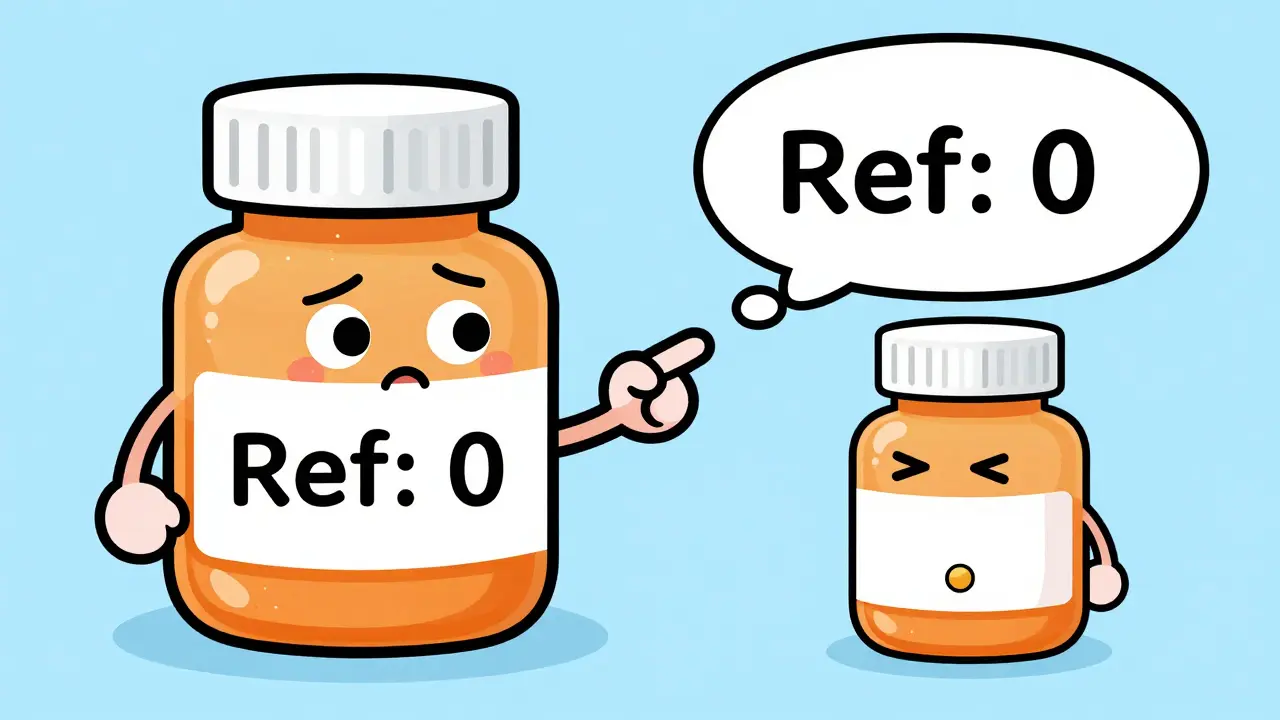
One of the most common points of confusion happens when a patient sees "Ref: 0." Many people mistakenly think this means they have zero medication left in the bottle. In reality, it means you have zero additional fills available from the pharmacy. You still have the medication currently in your hand, but once those pills are gone, the pharmacy cannot legally give you more without a new order from your provider.
This small linguistic gap leads to thousands of unnecessary phone calls to doctors every year. According to a survey by Pharmacy Times, about 15% to 20% of provider calls are simply patients clarifying if "Ref: 0" means they are out of medicine or out of refills. When you see a zero, don't panic-just start planning your next doctor's visit or refill request.
Timing Your Refill Request
Knowing you have refills is one thing; knowing when to use them is another. If you wait until the last pill is gone, you're risking a gap in your treatment. A good rule of thumb is to contact your pharmacy 3 to 5 days before you expect to run out. This is especially critical for controlled substances, which often require a 72-hour processing window for verification and insurance approval.
Your insurance provider also plays a huge role in when you can actually get that refill. It's not always as simple as having a refill available on the label. For example:
- Medicare Part D: Generally allows refills starting 23 days after the previous fill for a 30-day supply.
- Commercial Insurers (like UnitedHealthcare): Often permit refills once you've used 80% of your supply (around day 24 for a 30-day script).
If you try to refill too early, the insurance company may reject the claim, even if the label says you have "Ref: 2" remaining. This is why checking your label and coordinating with your pharmacy's timing is a vital habit for medication adherence.
Dealing with Expiration Dates and State Rules
Not all refills last forever. Some pharmacies, such as Express Scripts, include specific "use by" or "refill by" dates. Even if your label says you have three refills left, those refills might expire a year after the original prescription date. If you miss that window, the prescription is legally void, and you'll need a new one.
Furthermore, the way this information is presented can change depending on where you live. The FDA notes that state laws heavily influence label content. In California, pharmacies must explicitly state "no refills" if that's the case. Meanwhile, in Texas, the law requires the label to show both the total number of refills originally authorized and the number currently remaining. If you move states or switch pharmacies, don't be surprised if the layout changes slightly.
Modern Tools to Simplify Refills
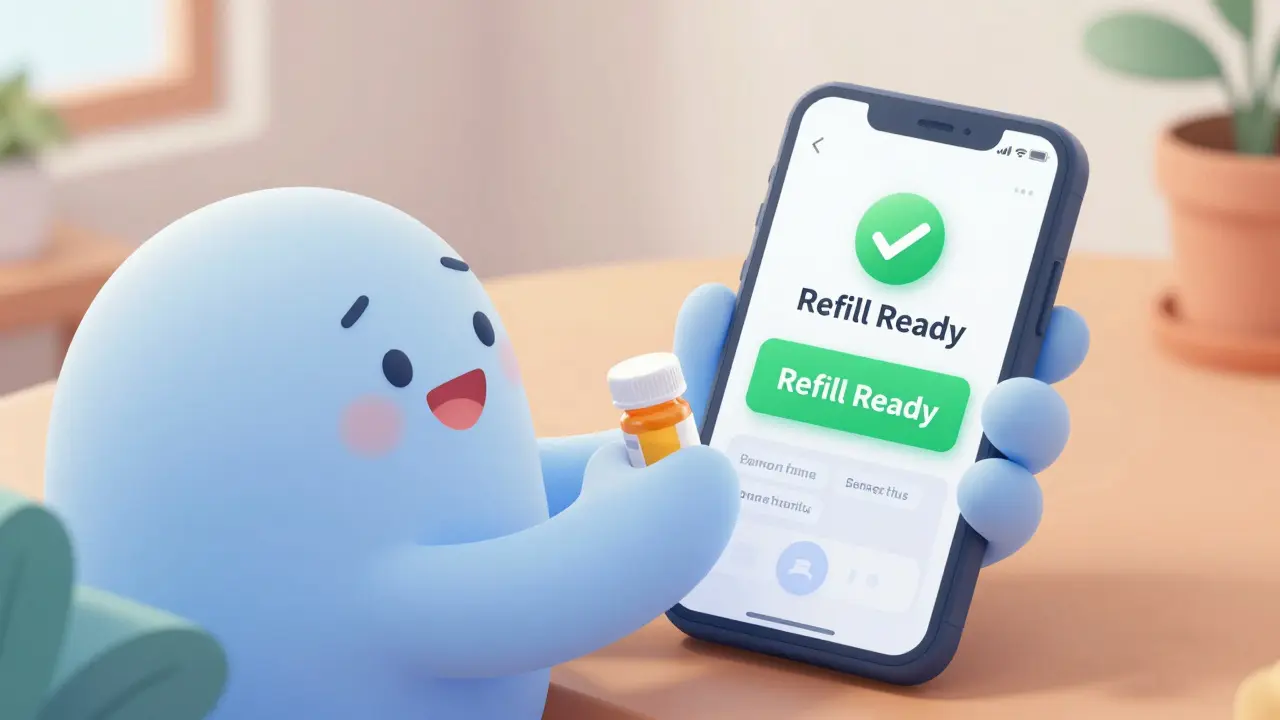
If reading tiny text on a plastic bottle feels like a chore, there are now digital ways to handle this. Many pharmacies are moving toward automated systems. For instance, CVS has introduced "Spoken Rx," which lets users scan their bottle with a smartphone to hear the refill instructions read aloud. This is a lifesaver for people with visual impairments or those who find pharmacy jargon confusing.
Digital integration is becoming the norm. Most major chains now offer text alerts that notify you when your refill is ready or when you are approaching "Ref: 0." These tools are designed to stop "medication abandonment," where patients simply stop taking their medicine because the process of getting a new prescription feels too difficult. According to research in the Journal of the American Pharmacists Association, clear refill communication can reduce these abandonment rates by over 20%.
What does "Ref: 0" actually mean on my bottle?
It means you have no more refills authorized by your doctor. You can finish the medication currently in the bottle, but you will need a new prescription to get more.
Can I get a refill if the label says "Ref: 0"?
Not without a new order. Your pharmacist cannot dispense more medication without a legal prescription from your healthcare provider. You should contact your doctor's office a few days before you run out.
Why can't I refill my medication even though I have refills left?
This is usually due to insurance "too soon" restrictions. Most insurance plans only allow a refill after you've used 75-80% of your current supply. Check with your pharmacy to see the exact date your insurance will cover the next fill.
Do prescription refills ever expire?
Yes. Most prescriptions expire one year from the date they were written, regardless of how many refills are left. Some controlled substances have even shorter expiration windows (e.g., 6 months).
How early should I call for a refill?
Generally, 3 to 5 days before you run out is ideal. This gives the pharmacy time to process the request and allows the doctor's office to respond if a new prescription is needed.
Next Steps for Managing Your Meds
To avoid the stress of running out of medication, try a few simple habits. First, set a weekly calendar reminder to check your refill counts. If you see your refills dropping to 1 or 0, put a note in your phone to call your doctor. If you use a variety of different medications, consider using a pharmacy app that tracks all your refill dates in one place. Finally, always double-check the "refill by" date on your label-don't assume that "Ref: 5" means you're set for the next five years.