
How to Safely Dispose of Expired Medications: FDA Take-Back Guidelines and Best Practices
Medication Disposal Guide
Check Your Medication Disposal Method
Every year, millions of unused or expired pills sit in medicine cabinets across the U.S.-some for years, some just a few months. You might think tossing them in the trash or flushing them down the toilet is harmless. But it’s not. The FDA says improper disposal contributes to accidental poisonings, drug abuse, and even environmental damage. The good news? There’s a clear, safe way to get rid of them-and it’s easier than you think.
What the FDA Says About Disposing of Medications
The FDA’s official stance is simple: take-back programs are the best and safest option for nearly every medication you have. In 2024, the agency updated its guidelines to make this even clearer. Out of the 5.8 billion prescriptions filled in the U.S. last year, an estimated 15-20% went unused. That’s hundreds of millions of pills. And if even a small fraction ends up in the wrong hands or in waterways, the consequences can be serious.
The FDA’s Drug Disposal: Questions and Answers document (updated October 2024) states that take-back programs are the only method proven to safely remove medications from circulation. These programs collect drugs at secure locations-like pharmacies, hospitals, or police stations-and destroy them under federal oversight. There’s no risk of theft, no chance of contamination, and no environmental harm.
Three Ways to Dispose of Medications (Ranked by Safety)
There are three approved methods for getting rid of expired or unwanted meds. But not all are created equal.
1. Use a Drug Take-Back Location (Best Option)
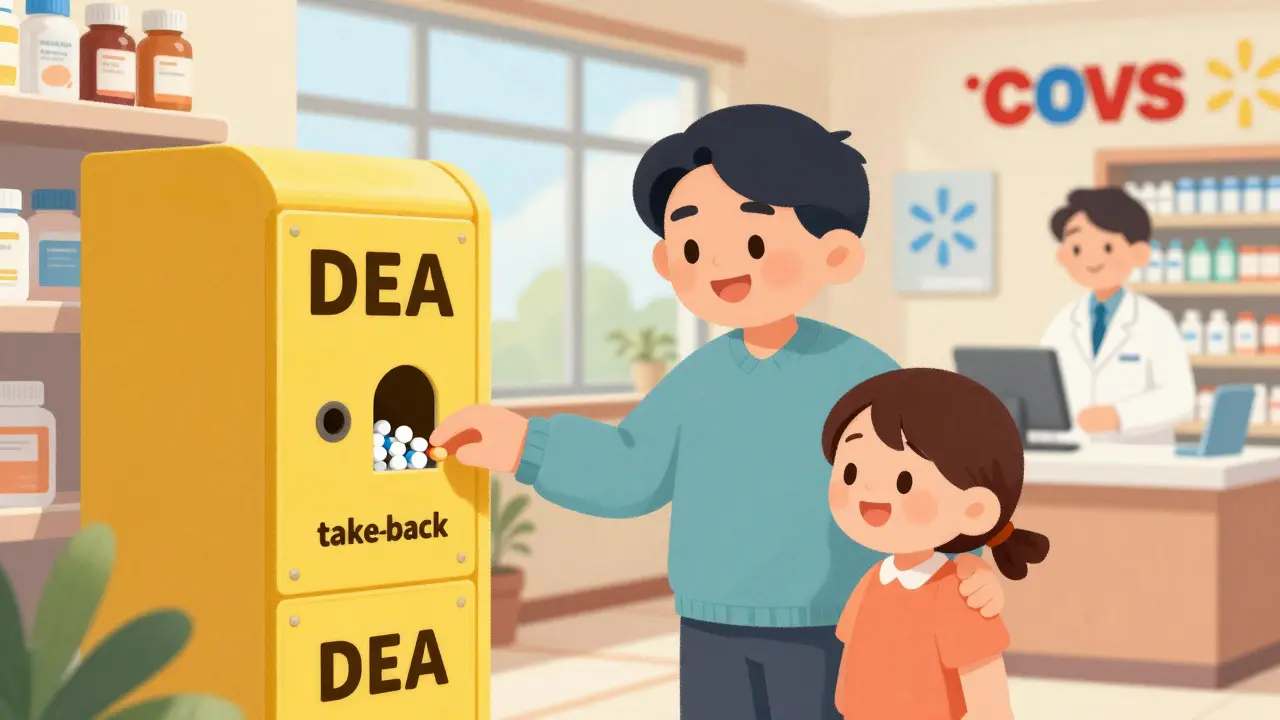
This is the #1 recommended method by the FDA, DEA, and EPA. As of January 2025, there are over 14,352 DEA-authorized collection sites across the U.S.-mostly at pharmacies like CVS, Walgreens, and Walmart. Nearly 70% of U.S. counties have at least one permanent drop-off point. You don’t need a prescription or ID. Just bring your meds in their original bottles (no need to remove labels yet), and staff will handle the rest.
Take-back programs collected over 1 million pounds of medication during the October 2024 National Take-Back Day alone. That’s more than 28% higher than the year before. And the success rate? Nearly 99.8% of medications collected are properly destroyed. No chance of reuse. No risk of pollution.
Walmart now has take-back kiosks in all 4,700 of its U.S. pharmacies. CVS has invested $15 million into mail-back and kiosk programs. These aren’t just marketing gimmicks-they’re part of a national effort to cut down on opioid misuse, which contributed to over 13,000 overdose deaths in 2022.
2. Use a Mail-Back Envelope (Great Alternative)
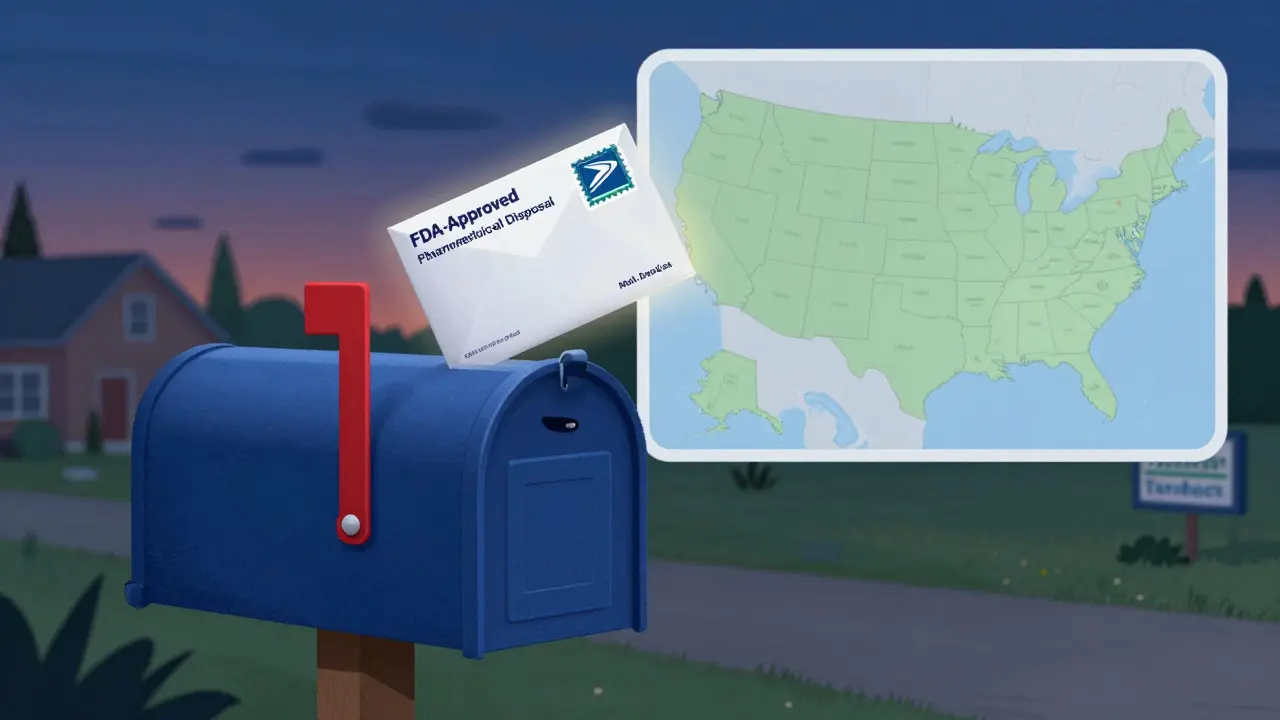
If there’s no take-back site nearby, prepaid mail-back envelopes are the next best option. These are available through pharmacies, insurance providers, or companies like DisposeRx and Sharps Compliance. You fill the envelope with your meds, seal it, and drop it in any mailbox. The company handles everything-shipping, destruction, compliance.
These envelopes cost between $2.15 and $4.75, but many insurers (like Express Scripts) offer them for free to members. In a 2024 survey of 287,000 users, 94.2% said they found the service easy and reliable. Military families using VA-provided mail-back kits showed an 89.2% compliance rate-far higher than those trying to dispose on their own.
Important: The envelope must meet USPS Domestic Mail Manual Section 604.8.0 standards. Not all “pharmaceutical disposal” envelopes do. Check the packaging for compliance labels.
3. Home Disposal (Only If No Other Option)
If you can’t get to a take-back site or mail-back envelope, and the medication isn’t on the FDA Flush List, you can dispose of it at home. But you must do it right.
The FDA’s 5-step home disposal process:
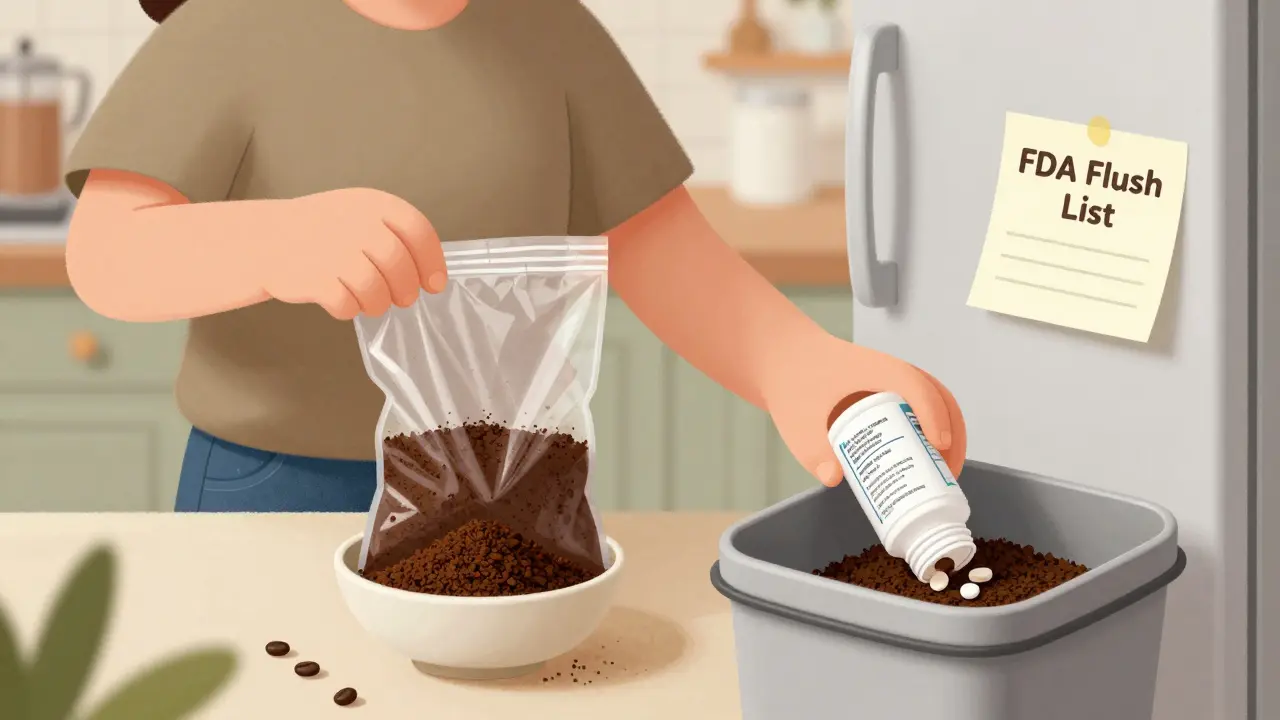
- Remove personal info. Scratch out your name, prescription number, and pharmacy details with a permanent marker or use an alcohol swab. Don’t just peel off the label-some ink can be recovered.
- Mix with unpalatable stuff. Use an equal amount (1:1 ratio) of coffee grounds, cat litter, dirt, or even used paper towels. This makes the pills disgusting to animals or people who might dig through the trash.
- Seal it tightly. Put the mixture in a sealed plastic bag or container. The FDA recommends plastic at least 0.5mm thick. A resealable bag from the grocery store works fine.
- Put it in the trash. Not the recycling bin. Trash goes to landfills. Recycling plants can’t handle meds.
- Recycle the empty bottle. Once you’ve removed all personal info, you can recycle the bottle. Most plastic prescription bottles are #1 or #2 plastic and accepted in curbside programs.
Here’s the catch: A 2023 FDA study found that 12.7% of home disposal attempts failed. Why? Most people didn’t mix the meds properly (43.8% of failures) or didn’t seal the container well (37.2%). Liquid medications are especially risky-never pour them down the drain or toss them in the trash without mixing them with absorbent material first.
What Medications Can You Flush?
There’s one exception to the “never flush” rule: the FDA Flush List. This list includes 13 high-risk medications-mostly powerful opioids-that can cause fatal overdoses if found by children, pets, or others.
As of October 2024, the Flush List includes:
- Fentanyl (patches and injections)
- Oxycodone (OxyContin, Percocet)
- Hydrocodone (Vicodin)
- Buprenorphine (Suboxone)
- Meperidine (Demerol)
- Methadone
- Hydromorphone (Dilaudid)
- Tapentadol (Nucynta)
- Alprazolam (Xanax)
- Clonazepam (Klonopin)
- Remifentanil
- Levorphanol
- Phenazepam
Flushing is only recommended if you can’t access a take-back site within 15 miles or 30 minutes. The FDA says flushing these specific drugs prevents immediate harm-even if it causes minimal environmental impact. The EPA still discourages flushing in general, but acknowledges the life-saving benefit for these high-risk drugs.
Important: If your medication isn’t on this list, DO NOT flush it. Flushing non-Flush List meds is illegal for healthcare facilities and contributes to water contamination. The U.S. Geological Survey found pharmaceuticals in 80% of streams tested-but the amount from household flushing is tiny (0.0001% of total contamination). Still, it’s avoidable.
What Not to Do
Here are the most common-and dangerous-mistakes people make:
- Don’t pour liquids down the sink. Even cough syrup or liquid antibiotics can seep into groundwater. Mix them with coffee grounds or cat litter first.
- Don’t just throw pills in the trash. Someone-maybe a child, a pet, or someone looking for drugs-can dig them out.
- Don’t rely on pharmacy leaflets. A 2024 Consumer Reports review found only 72% of pharmacy disposal instructions were accurate. Always check FDA.gov for the latest guidelines.
- Don’t assume “expired” means safe to keep. Many meds lose potency over time, but others (like insulin or epinephrine) can become dangerous. If you’re unsure, ask your pharmacist.
Why This Matters Beyond Your Medicine Cabinet
Proper disposal isn’t just about cleaning out your cabinet. It’s about public safety. A 2024 study in JAMA Internal Medicine found that communities with three or more take-back locations per 100,000 residents saw an 11.2% drop in adolescent opioid misuse. Why? Because fewer pills were sitting around homes.
The DEA found that 42.7% of medications collected in take-back programs were opioids or benzodiazepines-drugs commonly misused. Every pill turned in is one less that could end up in the wrong place.
And environmentally? While flushing contributes minimally to water pollution, the plastic waste from millions of empty bottles and improper disposal containers is growing. The EPA’s 2025 Emerging Contaminants Watch List now includes microplastics from medication packaging. Recycling bottles and using mail-back envelopes reduces that burden.
What’s Changing in 2025
The system is getting better. The DEA plans to expand take-back locations to 20,000 sites by the end of 2025. The EPA has proposed a $37.5 million grant program to help rural areas set up collection points. Walmart and CVS are rolling out more kiosks. And the FDA aims to get 90% of Americans using take-back programs by 2030-up from just 35.7% today.
Meanwhile, mail-back companies like DisposeRx are dominating the market, holding 48% of the share in 2024. They’re making it easier for people in remote areas to participate.
What to Do Right Now
Here’s your action plan:
- Check your medicine cabinet. Pull out all expired, unused, or unneeded meds.
- Identify the Flush List drugs. Look for fentanyl, oxycodone, hydrocodone, buprenorphine, etc. If you find any, flush them only if no take-back site is nearby.
- Find your nearest take-back location. Go to deas takeback site or text your ZIP code to 1-800-882-9539.
- Use a mail-back envelope if needed. Ask your pharmacy or insurer if they offer one.
- Dispose of the rest at home, correctly. Mix, seal, trash, recycle the bottle.
It takes less than 10 minutes. And it could save a life.
Can I flush all expired medications down the toilet?
No. Only medications on the FDA’s Flush List-like fentanyl, oxycodone, and hydrocodone-should be flushed, and only if no take-back option is available within 15 miles. Flushing other drugs contributes to water pollution and is against EPA guidelines. Always check the label or ask your pharmacist.
Are drug take-back kiosks safe?
Yes. DEA-authorized take-back locations are secure and monitored. Collected medications are incinerated under federal regulations, ensuring they can’t be retrieved or reused. These kiosks are designed to prevent theft and diversion, and they’re available at over 14,000 pharmacies nationwide.
What if I live in a rural area with no take-back site?
Use a prepaid mail-back envelope. Many pharmacies, insurers, and mail-order services offer them for free or under $5. If that’s not an option, follow the FDA’s home disposal steps: remove labels, mix with coffee grounds or cat litter, seal in a plastic bag, and throw in the trash. Never flush unless it’s on the Flush List.
Can I recycle the empty pill bottles?
Yes, but only after removing all personal information. Use a permanent marker or alcohol swab to obliterate your name, prescription number, and pharmacy details. Most plastic prescription bottles are recyclable (#1 or #2 plastic), but check your local recycling rules.
Is it safe to mix medications with food or drink before throwing them away?
No. Mixing meds with food or drink is not recommended. It can be dangerous if someone accidentally eats it, and it doesn’t guarantee the drugs are rendered unusable. Always mix with unpalatable, non-edible substances like coffee grounds, cat litter, or dirt in a 1:1 ratio. Seal it tightly and throw it in the trash.
How do I know if a medication is on the FDA Flush List?
Check the label for the active ingredient. The FDA’s current Flush List includes 13 specific opioids and benzodiazepines, such as fentanyl, oxycodone, hydrocodone, and buprenorphine. You can find the full list on FDA.gov or ask your pharmacist. If you’re unsure, it’s safer to assume it’s not on the list and use a take-back program.
11 Comments
Why are we letting the feds dictate how we dispose of our own medicine? This is just another step toward government control. I’ve been throwing pills in the trash since the 90s and no one’s died yet. Stop the fearmongering.
I used to flush everything until I read this. Now I use the CVS kiosk down the street. Took me 3 minutes. No more guilt. No more wondering if my grandkid might find my old Xanax. This is common sense, not activism.
My mom had Alzheimer’s and kept her meds in a drawer labeled ‘emergency’-she’d take them by accident. I cleaned it out last month. Took the whole box to the pharmacy. She didn’t even remember she had them. That’s why this matters. Not for the environment. Not for the DEA. For people like her. We forget how dangerous these things are when you’re not thinking straight.
in india we just throw them in the river or burn them in the backyard. no one cares here. why should u? the water is already full of shit. why worry about a few pills? also, why do u need so many labels? just crush em and toss. simple. no kiosks needed. lol
My dad was a Vietnam vet. He had a drawer full of painkillers he never took. I found them when he passed. I didn’t know what to do. I kept them for months. Then I saw this FDA guide. Took them to Walgreens. Felt like I finally did something right for him. This isn’t about rules. It’s about respect.
They say take-back programs are safe. But what if they’re just collecting pills to sell on the black market later? Ever think about that? DEA’s got a history. And why are Walmart and CVS pushing this so hard? Coincidence? Or profit? I’m not falling for the PR.
OMG I just found 3 bottles of OxyContin from 2018 in my closet. I’m so glad I read this. Just dropped them off at the CVS kiosk. Felt like I just saved someone’s life. Also-did you know they take ALL meds? Even the weird ones like that weird thyroid pill your aunt swears by? YES. THEY DO. GO DO IT NOW. YOUR KIDS WILL THANK YOU. 🙌
There’s a quiet dignity in properly disposing of what once helped you. It’s not about compliance. It’s about closure. Every pill you turn in is a promise: I won’t let this harm someone else. We treat our bodies with care when we’re alive. Why not treat the remnants of our healing with the same respect?
They’re using this to track who had what meds. The FDA, DEA, Big Pharma-they’re all in bed together. That’s why they want you to use the kiosks. Your name’s on the bottle. They scan it. They build a profile. Next thing you know, your insurance hikes your rates because you ‘had opioids’. I’m not falling for it. I flush. I don’t care about the environment. I care about my privacy.
It is imperative to underscore that the FDA’s recommendations are grounded in empirical public health data, peer-reviewed environmental studies, and longitudinal epidemiological analysis. The implementation of standardized disposal protocols demonstrably reduces incidence rates of pediatric exposure and opioid diversion. Furthermore, the logistical infrastructure provided by DEA-authorized collection sites represents a cost-effective, scalable solution to a systemic societal challenge. One must not conflate convenience with culpability. Responsible stewardship of pharmaceuticals is not merely advisable-it is a civic obligation.
You claim 99.8% destruction rate. But how do you verify that? No independent audit. No transparency. The DEA does not publish incineration logs. And why are mail-back envelopes so expensive if they are ‘free’ through insurers? Because the companies are profiting from fear. You are being manipulated into paying for a service that should be free. The real solution? Stop prescribing so much in the first place.