
How to Update Your Allergy List Across All Healthcare Providers
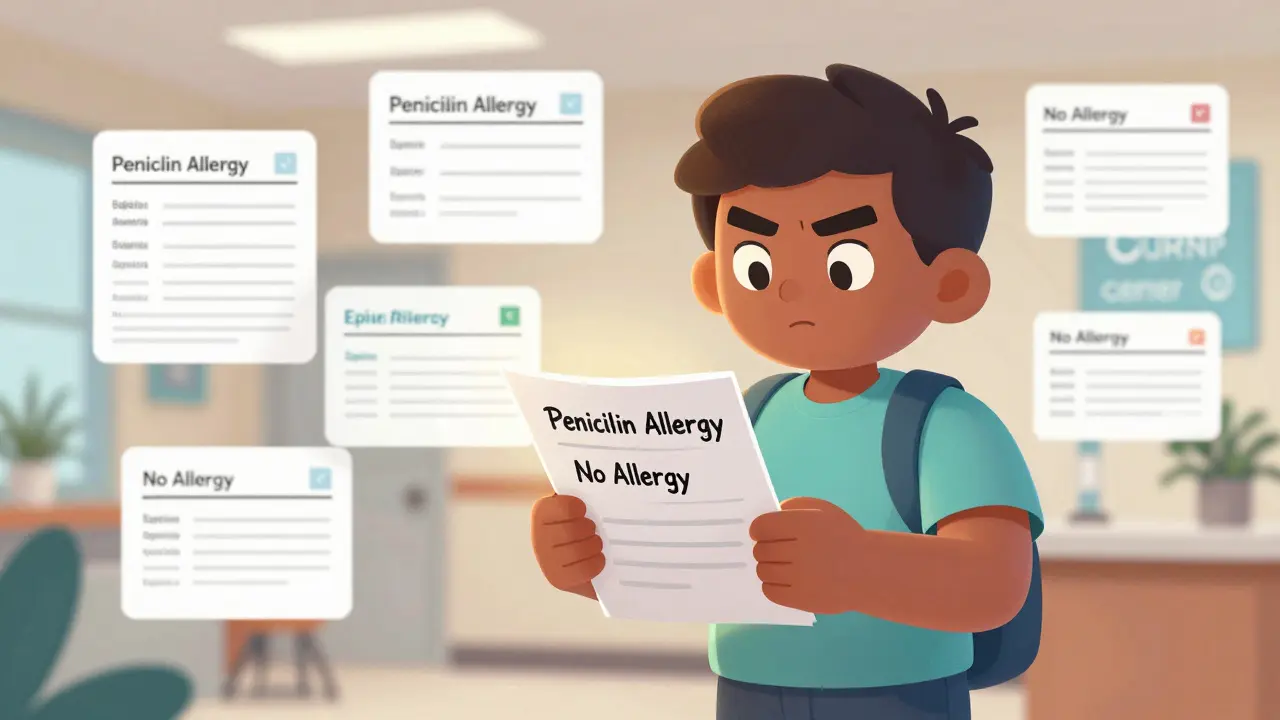
Every time you visit a new doctor, pharmacist, or emergency room, they ask: "Do you have any allergies?" If you’ve ever said "penicillin" and later found out the hospital had no record of it-or worse, had it listed as active when you’ve been cleared-you’re not alone. Inaccurate allergy records are one of the most common-and dangerous-mistakes in U.S. healthcare. The allergy list isn’t just a checkbox on a form. It’s a live, critical safety tool that can mean the difference between a routine treatment and a life-threatening reaction.
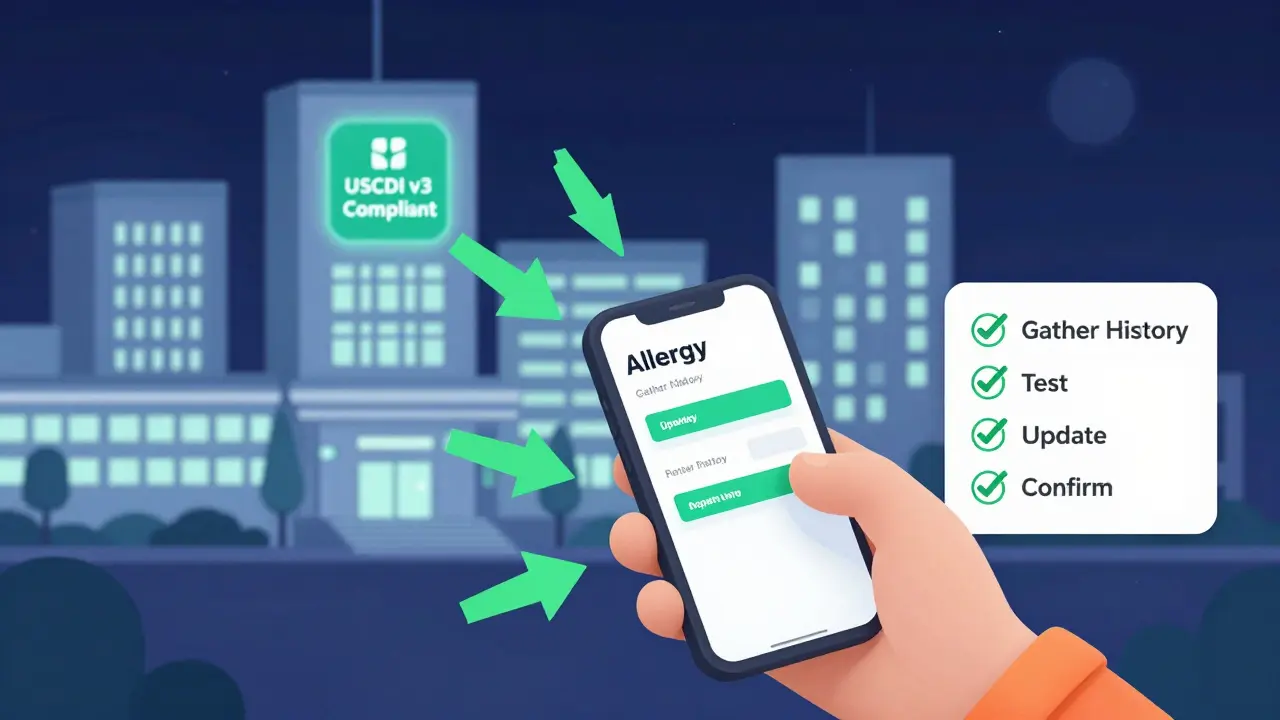
By 2025, every certified electronic health record (EHR) system in the U.S. must follow strict rules under the United States Core Data for Interoperability (USCDI v3). That means your allergy list must include: what you’re allergic to (using standardized medical codes), how you reacted (rash, swelling, anaphylaxis), when it happened, and whether it’s been verified by testing. But here’s the problem: even with these rules, your allergy list can still be wrong across providers. A 2022 study found that nearly 1 in 8 patients had outdated or incorrect allergy info in their records. And when that happens, doctors might avoid safe, effective drugs-or worse, give you something you’re truly allergic to.
Why Your Allergy List Gets Out of Sync
Your allergy list doesn’t update itself. It moves between clinics, hospitals, and pharmacies as a static note-not a living record. If you had a rash after taking amoxicillin in 2018, but later got tested and found out you’re not allergic, that update might only live in your allergist’s notes. Your primary care doctor, your local pharmacy, and the ER you visited last year? They still see the old warning.
Here’s how it breaks down:
- 77% of U.S. hospitals use Epic or Cerner EHRs, which can share allergy lists between their own systems-but they don’t compare them to your actual medical history.
- Only 28% of community hospitals have tools that automatically scan your notes, lab results, or medication logs to catch mismatches.
- Patients are rarely told to check their own records. Only 22% of people use their patient portal to update allergies, even though 89% have access.
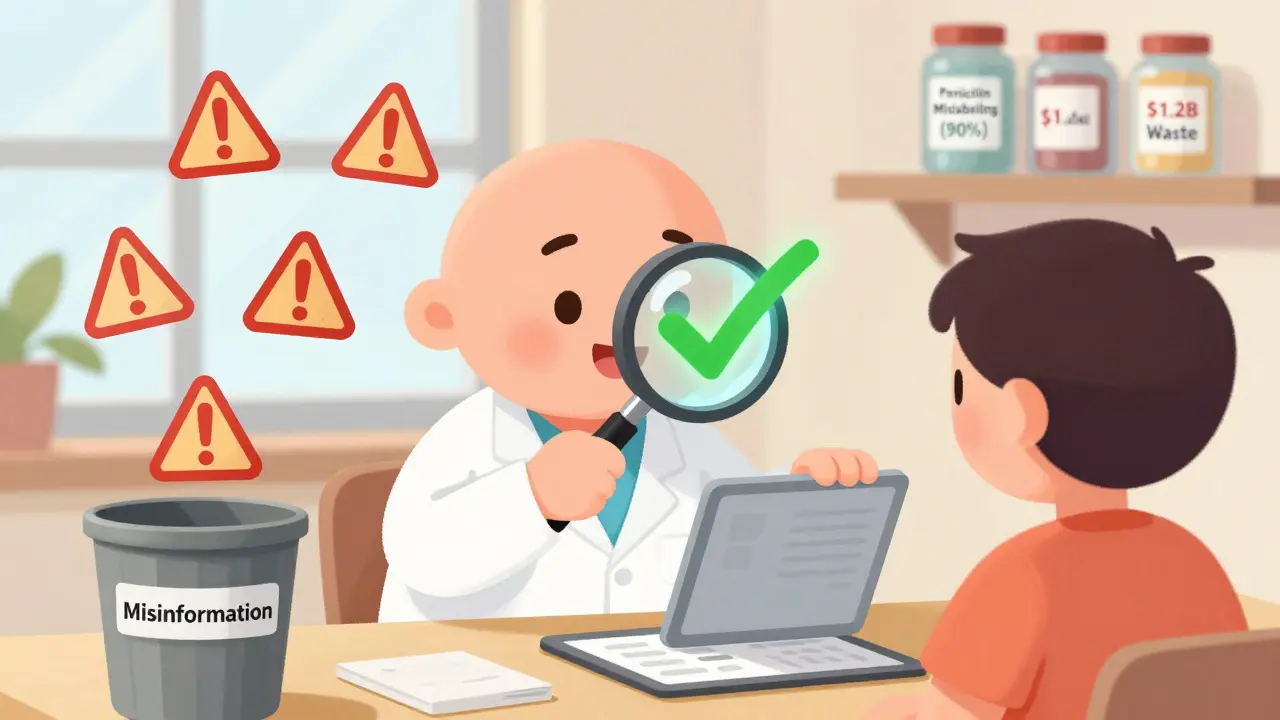
Worse, some allergies get mislabeled. Up to 90% of people who think they’re allergic to penicillin aren’t. But because the label sticks, doctors give you stronger, costlier, and sometimes riskier antibiotics. That adds up to $1.2 billion in unnecessary healthcare spending every year.
How to Fix It: A Step-by-Step Plan
You don’t need to wait for your doctor to fix this. You can take control. Here’s what to do, in order.
Step 1: Gather Your Real Allergy History
Start with what you know. Write down every drug, food, or substance you’ve reacted to. For each one, include:
- The name of the substance (e.g., "amoxicillin," not just "antibiotic")
- The reaction (hives? swelling? trouble breathing? vomiting?)
- The date or approximate time it happened
- Whether you’ve had testing (like a penicillin skin test)
- Whether a doctor ever said you were no longer allergic
Example: "Amoxicillin - 2019, severe rash, no testing done. Doctor said it might have been viral. No reaction since."
Don’t guess. If you’re unsure about a reaction, write "unclear" and bring it up at your next visit.
Step 2: Request Your Records From Each Provider
Under federal law, you have the right to see all your medical records. Go to each provider you’ve seen in the last 5 years-your PCP, specialists, urgent cares, even the ER. Use their patient portal if possible. If not, call or send a written request.
Ask for:
- Your full allergy list
- Any notes about allergy testing or challenges
- Any changes made to your allergy list in the past 2 years
Compare what you get with your personal list. Look for mismatches. If a provider lists "penicillin allergy" but you’ve never had a reaction, flag it.
Step 3: Ask for Allergy Testing If Needed
Many people are labeled allergic based on a childhood rash or a vague reaction. But true drug allergies are rare. Penicillin allergies, for example, are often outgrown. A simple skin test can clear up confusion.
Ask your doctor: "Can I get tested for this allergy?" If they say no, ask for a referral to an allergist. These tests are quick, low-risk, and often covered by insurance. At Parkland Health, before they started using reconciliation tools, only 17 penicillin tests were done over 20 months. After implementing better systems, that number jumped 300%.
Once you’re tested and cleared, make sure the result is added to your record-with a note like: "Penicillin allergy ruled out by skin test on [date]. No reaction."
Step 4: Update Your Records, Then Confirm
When you find an error, don’t just mention it. Ask the provider to:
- Remove incorrect allergies
- Update reaction details with exact wording
- Set the verification status to "verified" if tested
- Change the status from "patient-reported" to "verified" if you have documentation
After they make the change, ask for a printed or digital copy of the updated list. Then, check your patient portal 48 hours later to make sure it synced.
Step 5: Make It a Habit
Update your allergy list at every visit-even if nothing changed. Say: "Can we review my allergy list? I want to make sure it’s accurate."
Also, use your portal. Most EHRs now let you submit changes directly. If you had a new reaction, or were cleared of an allergy, log in and add it. It’s not always automatic-but it’s your right.
What Providers Should Be Doing (But Often Aren’t)
Some hospitals are leading the way. Mass General Brigham uses AI tools that scan your clinical notes, lab results, and medication history to find mismatches. Their system catches 95% of errors and alerts doctors before they prescribe. UCHealth cut inappropriate antibiotic use by 24% after rolling out similar tools.
But most clinics still rely on manual checks. A nurse might glance at your list, but if your allergy was written as "rash from penicillin" in 2017 and now it’s coded as "anaphylaxis," the system won’t catch the inconsistency. That’s why your personal effort matters so much.
What’s Changing in 2025 and Beyond
Starting January 1, 2025, all U.S. healthcare systems must use USCDI v3 standards. That means:
- Allergy entries must use SNOMED CT codes (not free text)
- Reaction descriptions must include severity and timing
- Verification status must be marked: "verified," "unverified," or "patient-reported"
Also, new federal rules let you update your allergy list directly through your patient portal-and those changes will sync across providers using FHIR APIs. You won’t have to call each clinic. You’ll just update it once, and it’ll flow.
By 2026, hospitals could lose 2.3% of their Medicare payments if their allergy documentation is inaccurate. That’s pushing systems to invest in better tools. But until then, you’re still the most important part of the system.
What to Do If You’re Turned Away
Some providers still say: "We can’t change it unless you see an allergist." That’s outdated. You have the right to request changes based on your own records. If you’re refused:
- Ask for the provider’s medical records department
- Submit a written request citing HIPAA rights
- Use the patient portal to submit a formal note
- If still blocked, contact your insurance or state health department
Your safety is not up for debate.
Final Checklist
Here’s what to do now:
- Write down every allergy you’ve ever had-include dates and reactions
- Log into every patient portal you use and check your allergy list
- Call or visit 2-3 providers you’ve seen recently and ask for a printed copy
- Compare the lists. Flag any differences
- Ask for testing if you’re unsure about an allergy
- Update your records in writing and confirm the changes appear online
- Make it part of every visit: "Let’s review my allergies."
It takes less than an hour. And it could save your life.
What if I don’t remember when I had a reaction?
It’s okay to say "I’m not sure." Write down what you remember-even if it’s vague. For example: "I think I had a rash after taking amoxicillin in college, but I never got tested." Providers can still use that info to flag caution. Later, you can request testing to clear it up.
Can I update my allergy list over the phone?
Some clinics allow it, but it’s not reliable. Phone updates rarely sync to your EHR. Always follow up with a written request through the patient portal or a signed form. That’s the only way to ensure it sticks.
Do food allergies count on the same list as drug allergies?
Yes. Under USCDI v3, all allergies-drugs, foods, latex, environmental-must be recorded in the same system. But many EHRs still handle them poorly. If your food allergy isn’t showing up on your list, speak up. It’s just as critical as a drug allergy.
What if I’m allergic to a drug but need it?
If you’re labeled allergic but need the drug-for example, if you have a life-threatening infection and penicillin is the best option-you can be desensitized. This is done under medical supervision. Tell your doctor you’re open to testing or desensitization. Don’t assume you’re stuck with alternatives.
Will my updated allergy list show up in emergency rooms?
If the hospital uses Epic, Cerner, or another USCDI v3-compliant EHR, yes-your updated list will appear in their system within 24 hours. But if it’s a small clinic or out-of-state hospital without interoperability, they might not see it. Always carry a printed list in your wallet or phone. It’s your best backup.
8 Comments
I literally just updated my allergy list last week after my pharmacist flagged a mismatch. I thought I was allergic to sulfa drugs because of a rash in 2016, but turns out it was a virus. Got tested at my local clinic-free with insurance-and now my whole record’s clean. Took 20 minutes. Seriously, y’all, don’t wait for an emergency to fix this. It’s not glamorous, but it’s life-saving.
Also, if your portal lets you edit it directly, DO IT. No more "I’ll ask my doctor next time." Next time might be too late.
The fact that 90 of people think theyre allergic to penicillin when theyre not is criminal negligence. I work in health IT and I see this daily. The system is broken because patients dont take ownership and providers dont enforce verification. The USCDI v3 standards are a step forward but theyre not enough. You need mandatory revalidation every 2 years. And no more patient-reported entries without clinician confirmation. This isnt a suggestion its a public health imperative.
I used to be one of those people who just shrugged and said "I think I’m allergic to something... maybe penicillin?" until my sister nearly went into anaphylaxis because the ER had her record wrong. She’d been cleared years ago but the system didn’t sync. That’s when I realized-this isn’t about paperwork, it’s about trust. Your body remembers what the computers forget. So now I check my portal every three months. I print out a copy and keep it in my wallet. I’ve even started reminding my mom to do the same. It’s not rocket science. It’s just responsibility. And honestly? It’s kind of empowering to be the one holding the keys to your own safety.
The procedural clarity presented in this post is commendable. Adherence to USCDI v3 standards represents a significant advancement in interoperability. However, the efficacy of these protocols is contingent upon consistent implementation across disparate healthcare entities. I would suggest supplementing patient self-reporting with automated reconciliation triggers based on longitudinal clinical data, such as negative serological responses or absence of adverse events following re-exposure. Systemic change must precede individual action.
Theyre lying to you about penicillin allergies. Big Pharma pushed this for decades so youd keep buying expensive antibiotics. The real reason they dont test you? Because if you found out you werent allergic youd stop taking their overpriced meds. I had my records fixed last year and now I know I never had an allergy. They kept me on clindamycin for years because its 5x more expensive. And now? The government says 2025 is when things change. But theyve known this for 15 years. They dont care about you. They care about profit. Your allergy list is a cash cow. Dont let them control it.
I’m curious-do you think the same system should apply to food allergies? Like, if I’m allergic to shellfish but never got tested, should I be able to update it just by saying I ate shrimp last month and felt fine? Or is there a different standard because food reactions are harder to verify? I’ve been confused about this since my allergist said my "mild reaction" in 2017 might’ve been histamine poisoning, not an allergy.
Y’all need to stop waiting for someone else to fix this. I’m a nurse in Lagos and we don’t even have digital records half the time. But guess what? I taught my whole family how to write down their allergies on a card and carry it in their purse. One cousin saved her own life because the ER doc saw her card before the system loaded. You don’t need fancy tech-you need awareness. Do it for your mama. Do it for your brother. Do it for yourself. It’s not hard. It’s just urgent. Go update your list right now. I’ll wait. 😊
I’ve been reviewing my allergy list annually since 2020. It takes five minutes. I don’t make a big deal out of it. I just say, "Can we go over my allergies?" Most providers appreciate it. I’ve had two allergies removed and one added. No drama. No confrontation. Just quiet accountability. It’s not about being loud. It’s about being consistent. And if you’re not sure? Write "unclear." That’s better than silence.