
Insurer-Pharmacy Negotiations: How Generic Prices Are Set in 2026
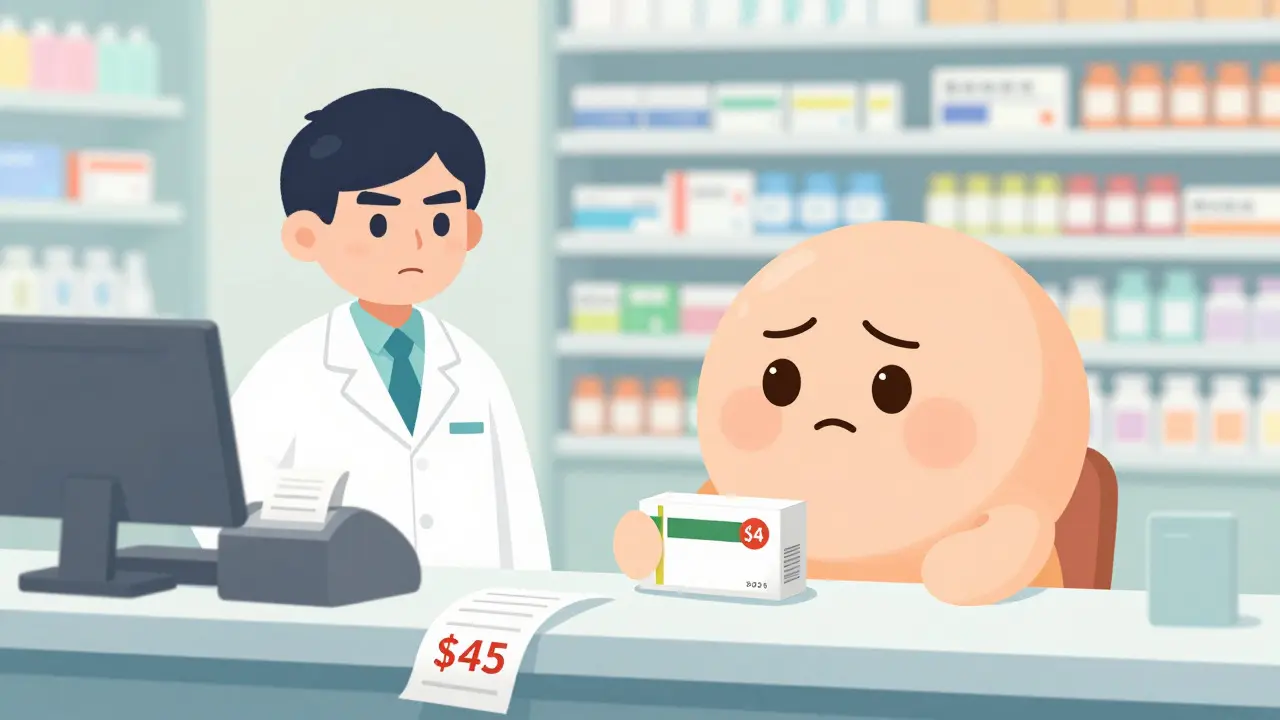
Imagine walking into a pharmacy to pick up a simple generic antibiotic. The cash price on the shelf is $4. You hand over your insurance card, expecting a small copay. Instead, the register prints out a bill for $45. You pay it because you have no other choice at that moment. This isn't a glitch; it’s the result of a complex, opaque negotiation system between insurers, Pharmacy Benefit Managers (PBMs), and pharmacies that has come under intense scrutiny in 2026.
If you’ve ever wondered why your insurance doesn’t always save you money on generics, or why prices vary so wildly between pharmacies, you are looking at the mechanics of insurer-pharmacy negotiations. These aren’t just abstract business deals; they dictate what you pay, which drugs are covered, and whether local independent pharmacies stay open. Let’s break down how these prices are actually set, who controls the levers, and what recent regulatory changes mean for your wallet this year.
The Middlemen: PBMs and Their Role in Price Setting
To understand how generic prices are set, we first need to identify who is doing the negotiating. It is rarely the insurance company directly talking to the pharmacist. Enter Pharmacy Benefit Managers (PBMs), which are intermediary organizations that manage prescription drug benefits for health insurers, employers, and government programs. Think of them as the gatekeepers. They sit between pharmaceutical manufacturers, health plans, and pharmacies.
In 2026, the market remains highly consolidated. Three major entities-OptumRx (owned by UnitedHealth Group), CVS Caremark, and Express Scripts (Cigna)-control approximately 80% of the PBM market. This concentration gives them immense leverage. When an insurer wants to offer coverage, they contract with a PBM. The PBM then negotiates with pharmacies to join their network and with drug manufacturers for rebates.
The core promise of PBMs is cost savings through volume. By aggregating millions of prescriptions, they theoretically get better rates than any single insurer could achieve alone. However, investigations in 2023 and 2024 revealed that this model often creates perverse incentives. As Dr. Joseph Dieleman noted in a 2023 JAMA commentary, the current system can drive higher list prices to generate larger rebates, ultimately increasing patient cost-sharing. The negotiation isn't just about getting the lowest price for the patient; it's about maximizing the PBM's revenue streams, which include administrative fees, rebates, and spread pricing.
How Generic Reimbursement Rates Are Calculated
When you use your insurance, the pharmacy doesn't charge the insurer the retail price. Instead, the PBM reimburses the pharmacy based on specific formulas. For generic drugs, this process involves several key components that determine the final number you see on your bill.
- Average Wholesale Price (AWP): This is a benchmark price published by third-party vendors. Historically, reimbursements were calculated as AWP minus a percentage (e.g., AWP - 10%). However, AWP is often criticized for being disconnected from actual acquisition costs.
- National Average Drug Acquisition Cost (NADAC): Many plans now use NADAC, which attempts to reflect the actual cost pharmacies pay wholesalers. Reimbursement might be NADAC plus a dispensing fee.
- Maximum Allowable Cost (MAC) Lists: PBMs create proprietary lists of maximum prices they will pay for generics. These lists change frequently and are not always transparent to pharmacies until after a claim is filed.
- Dispensing Fees: A flat fee paid to the pharmacy to cover the labor and overhead of filling the prescription. This fee is negotiated separately and varies significantly by region and pharmacy size.
The critical issue here is opacity. In 2024, the Department of Labor highlighted that the fragmented nature of bilateral negotiations leads to inconsistent coverage and cost-sharing. Pharmacists often don't know exactly how much they will be reimbursed until days or weeks later. If the MAC list drops below what the pharmacy paid for the drug, the pharmacy loses money on that transaction. This risk is borne entirely by the pharmacy, while the PBM retains the difference between what the insurer pays and what the pharmacy receives.
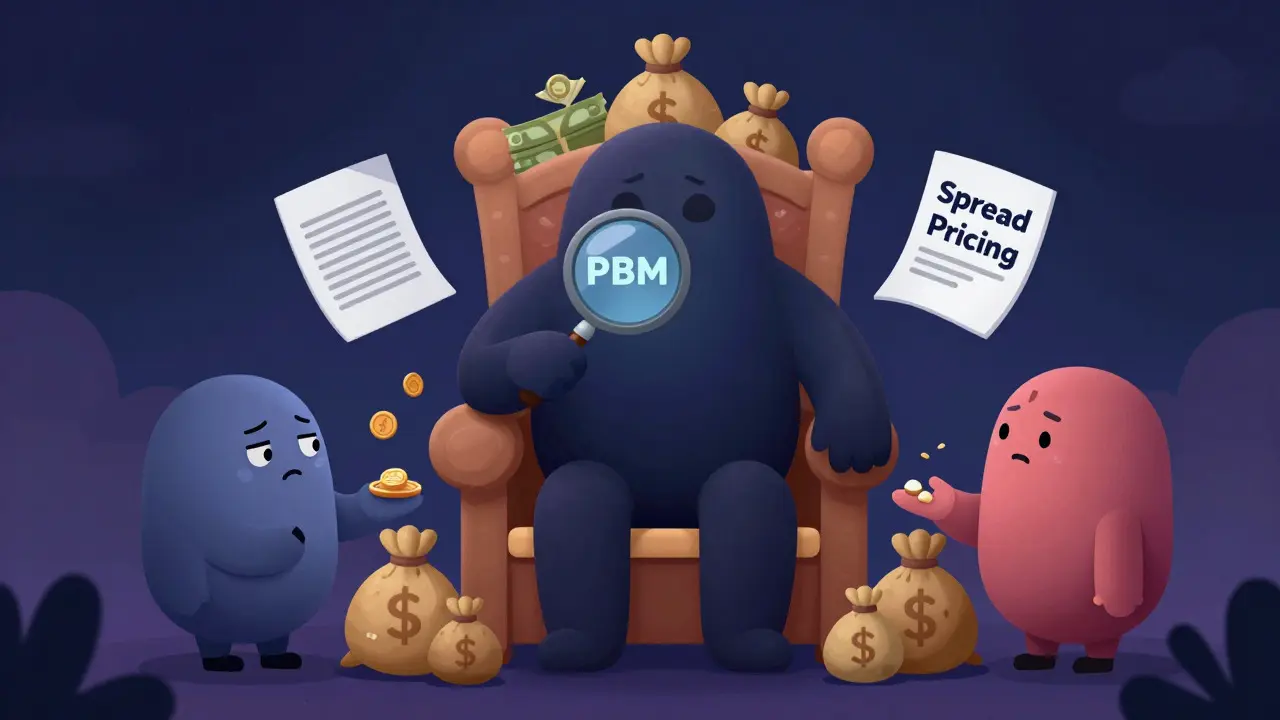
Spread Pricing: The Hidden Profit Mechanism
One of the most controversial aspects of insurer-pharmacy negotiations is spread pricing, defined as the practice where PBMs charge health plans more for a medication than they reimburse the pharmacy, keeping the difference as profit. This practice was widespread in generic drug transactions, accounting for 68% of estimated $15.2 billion in undisclosed PBM revenue in 2024, according to Evaluate Pharma.
Here is how it works in practice: An insurer pays the PBM $10 for a generic drug. The PBM reimburses the pharmacy only $7. The $2 difference is the "spread." The insurer thinks it paid a fair market rate, and the pharmacy accepts the $7 hoping for volume. But the patient? If the plan uses a fixed copay, say $10, the patient pays $10, the insurer pays $10, but the pharmacy only gets $7. The math doesn't add up for the provider.
This mechanism explains why insured patients sometimes pay more out-of-pocket than cash-paying customers. In 2023, a Wall Street Journal investigation found extreme anomalies where patients using PBM networks faced higher costs than those paying retail cash or using discount services like GoodRx. For some cancer and multiple sclerosis generics, the price differences across channels were staggering. The lack of transparency meant patients couldn't compare options effectively.
Regulatory pressure has mounted. The Biden administration’s September 2024 executive order mandated PBM fee transparency and banned spread pricing in federal programs, effective January 2026. While this applies directly to Medicare and Medicaid, it sets a precedent that may influence commercial markets. McKinsey & Company projects a 25% reduction in spread pricing revenue by 2027 due to these pressures, though they warn manufacturers may raise list prices to compensate.
Formularies and Copays: Why Your Insurance Might Cost More
Your insurance plan includes a formulary, which is a list of covered medications determined by the insurer and PBM based on clinical effectiveness and cost. Not all generics are created equal in the eyes of the formulary. Drugs are tiered, usually into three or four levels, with lower tiers having lower copays.
Historically, generic copays have remained relatively stable, averaging around $5-$6 for decades. However, the structure of these copays interacts poorly with modern PBM negotiations. If your plan has a fixed $10 copay for Tier 1 generics, but the PBM reimburses the pharmacy only $4, the pharmacy must absorb the $6 loss or find another way to balance the books.
This dynamic leads to two common scenarios for patients:
- Gag Clauses: Contracts often prevent pharmacists from telling you if the cash price is lower than your copay. In 2024, CMS reported that 92% of PBM contracts contained these clauses. So, even if the cash price is $4 and your copay is $10, the pharmacist is legally barred from informing you unless state laws override the contract.
- Network Restrictions: To offset low reimbursements, PBMs narrow their pharmacy networks. Independent pharmacies, which cannot negotiate favorable terms, are often excluded. Between 2018 and 2023, 11,300 independent pharmacies closed, partly due to unsustainable reimbursement rates.
A 2024 Consumer Reports survey found that 42% of insured adults encountered situations where their insurance copay exceeded the cash price for generics. For many, the solution is to ask for the cash price before every fill, but this requires time and knowledge that many patients simply don’t have.

Impact on Pharmacies and Patient Access
The negotiation framework places significant strain on community pharmacies. Navigating PBM rules requires specialized billing software, costing an average of $12,500 per pharmacy for setup. Owners spend 200-300 hours annually decoding reimbursement methodologies. Documentation quality from PBMs is rated "poor" by 76% of pharmacists, with reimbursement methods changing without notice in 41% of cases.
"Clawbacks" are another major pain point. PBMs may retroactively reduce reimbursement after a claim is processed, affecting 63% of independent pharmacies. This uncertainty makes financial planning nearly impossible for small businesses. Many pharmacists report that they must maintain dual pricing systems-one for insurance and one for cash-to survive.
For patients, the impact is reduced access. With fewer independent pharmacies open, wait times increase, and personalized care decreases. Prior authorization requirements delay 18% of generic drug dispensations, according to CMS data. The complexity of the system means that even when a drug is clinically appropriate, administrative hurdles can prevent timely treatment.
| Pricing Model | Who Sets Price? | Transparency Level | Typical Patient Cost |
|---|---|---|---|
| Cash Retail | Pharmacy | High (Posted Price) | $4 - $15 for most generics |
| Insurance Copay (Fixed) | Insurer/PBM | Low (Hidden Spread) | $5 - $15 (may exceed cash price) |
| Discount Cards (e.g., GoodRx) | Third-Party Vendor | Medium (Online Lookup) | $3 - $12 (varies by location) |
| Medicare Negotiated | CMS/Government | High (Publicly Reported) | Capitated based on negotiation |
Regulatory Changes and Future Outlook in 2026
2026 is a pivotal year for drug pricing transparency. The ban on spread pricing in federal programs took effect in January, forcing PBMs to disclose fees more clearly. Additionally, the Medicare Drug Price Negotiation Program, established by the Inflation Reduction Act, expanded to include 20 drugs in 2025, with results influencing private market expectations.
State-level actions are also accelerating. As of late 2024, 42 states implemented or considered PBM transparency laws requiring disclosure of MAC lists and spread pricing. The No Surprises Act continues to address some opacity issues, though gaps remain. Legislative proposals like the Pharmacy Benefit Manager Transparency Act of 2025 aim to require PBMs to pass 100% of rebates to plan sponsors, potentially lowering premiums or copays.
However, challenges persist. Pharmaceutical manufacturers may adjust strategies in response to reduced PBM profits. Stanford researchers estimate potential savings of $200-250 billion over 10 years if Medicare negotiations extend to commercial insurance, but political and industry resistance remains strong. Healthcare economists predict significant structural reforms within five years, but the transition period may bring volatility.
For consumers, the best strategy is vigilance. Always ask for the cash price. Use discount cards when insurance copays are high. Support independent pharmacies where possible. Understanding these negotiations empowers you to navigate the system more effectively and avoid unnecessary costs.
Why does my insurance copay cost more than the cash price for a generic drug?
This happens due to spread pricing and opaque reimbursement models. PBMs may charge the insurer more than they reimburse the pharmacy. If your fixed copay is higher than the actual cash price, the pharmacy absorbs the loss or relies on gag clauses to prevent telling you the cheaper option. Always ask for the cash price before filling.
What is spread pricing in pharmacy negotiations?
Spread pricing occurs when a PBM charges a health plan a certain amount for a drug but reimburses the pharmacy less, keeping the difference as profit. This hidden margin can distort true costs and lead to situations where insured patients pay more than cash-paying customers.
How do PBMs influence which generic drugs are covered by my insurance?
PBMs work with insurers to create formularies, ranking drugs by tier based on cost and clinical value. They negotiate rebates with manufacturers, often favoring drugs that offer higher rebates rather than the lowest net cost. This can limit patient choice and push usage toward preferred brands.
Are there new laws in 2026 affecting generic drug prices?
Yes. Starting January 2026, federal programs banned spread pricing and mandated greater PBM fee transparency. Additionally, the Medicare Drug Price Negotiation Program expanded, and many states enacted laws requiring disclosure of maximum allowable costs and rebate pass-throughs.
Should I use a discount card like GoodRx instead of my insurance?
It depends on the specific drug and your plan. For many generics, discount cards offer lower prices than insurance copays, especially if spread pricing is involved. Compare the cash price, your copay, and discount card rates before each fill. Note that discount card purchases usually don't count toward your insurance deductible.