
Manufacturer Reporting: Understanding Generic Company Safety Obligations
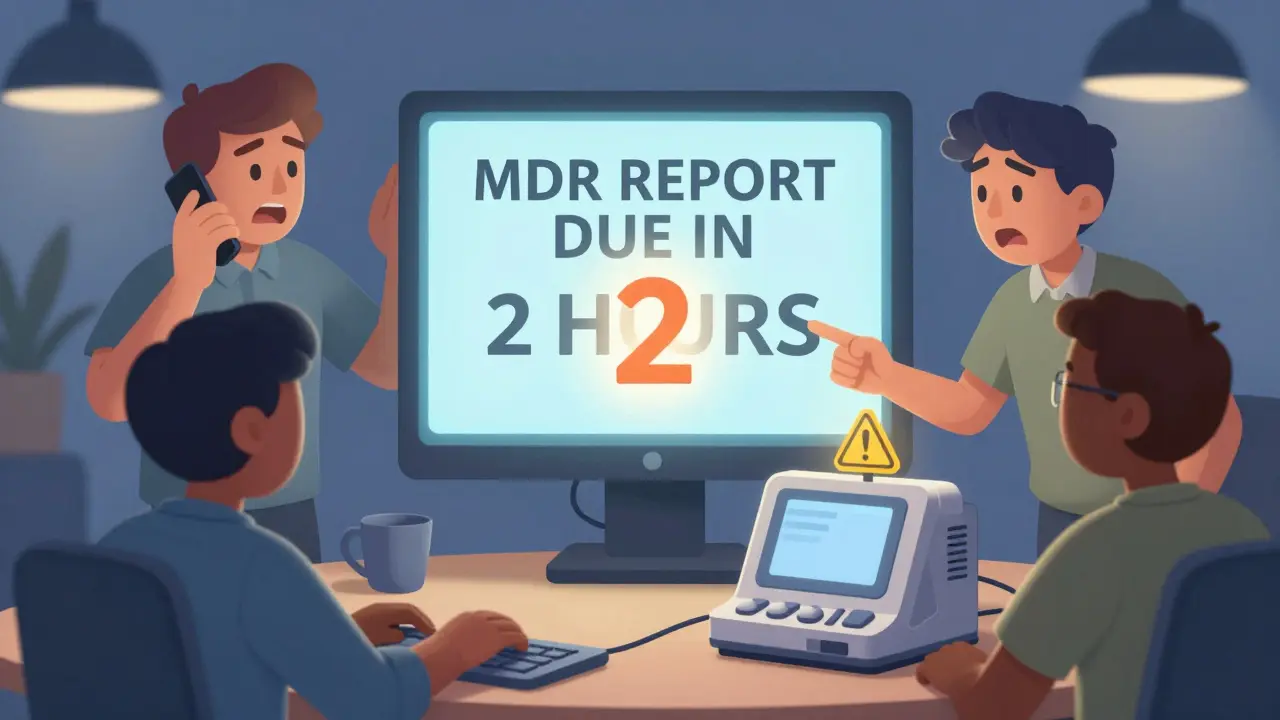
When a medical device fails, a toy breaks, or a car part malfunctions, the public expects safety. But who’s responsible for sounding the alarm? Manufacturer reporting is the invisible system that keeps millions of products off the danger list before they hurt someone. It’s not optional. It’s not advice. It’s the law-and companies that ignore it risk massive fines, lawsuits, or worse.
What Exactly Are Manufacturer Safety Reporting Obligations?
Manufacturer safety reporting means companies must tell government agencies when their products cause-or could cause-serious harm. These aren’t complaints from customers. These are formal, legally binding notifications that trigger investigations, recalls, or design changes. Three main agencies run these systems in the U.S.: the FDA for medical devices, the CPSC for consumer products, and NHTSA for vehicles and auto parts.The FDA’s Medical Device Reporting (MDR) system is the most detailed. Under 21 CFR Part 803, manufacturers must report any incident where a device may have caused or contributed to a death or serious injury. Even a malfunction that didn’t cause harm yet-but could if it happened again-must be reported. The clock starts ticking the moment someone in the company becomes aware of the issue. That could be a technician, a customer service rep, or a salesperson. There’s no excuse for ignorance.
For consumer products, the CPSC requires reporting within 24 hours of learning about a defect that could create a substantial risk of injury or death. You don’t need proof someone got hurt. Just knowing a toaster could short-circuit and start a fire? That’s reportable. The CPSC doesn’t wait for tragedy. They want to stop it before it happens.
How Different Are the Rules Between Industries?
The rules aren’t the same across the board. Medical device makers face a 30-day window to file individual reports with the FDA-unless the issue requires immediate action, like a recall. Then, they have just five working days. But consumer product manufacturers have a harder deadline: 24 hours to notify the CPSC, no exceptions. That’s why some companies hire entire teams just to handle CPSC reporting.NHTSA’s system works differently. Car makers don’t report every minor glitch. Instead, they submit quarterly data on crashes, injuries, and deaths tied to specific models. If a tire model is linked to five or more deaths, ten or more injuries, or ten property damage claims, the manufacturer must dig deeper and report more.
Pharmaceutical companies have their own set of rules under the FD&C Act. Serious side effects from over-the-counter drugs must be reported within 15 business days. Minor ones? Often ignored. That’s a key difference: medical devices and consumer products are judged by potential harm, while drugs are judged by actual harm.
There’s also a loophole-sort of. The FDA lets some manufacturers submit summary reports for common malfunctions instead of filing hundreds of individual ones. This Voluntary Malfunction Summary Reporting program, expanded in August 2024, helps companies like Medtronic cut their report load by over 60%. The CPSC doesn’t offer anything like this. Every single incident must be reported individually.
What Happens If You Don’t Report?
Ignoring these rules isn’t a slap on the wrist. The FDA can fine companies up to $252,756 per violation. That’s not a typo. One missed report could cost more than $250,000. And it’s not just money. The FDA can issue warning letters, halt production, or even seize products. In extreme cases, executives face criminal charges.CPSC enforcement is even stricter in practice. In 2023, 54% of home appliance makers got warning letters for late reporting. Only 31% of medical device companies got similar notices from the FDA. Why? Because the 24-hour deadline is brutal. Many companies file incomplete reports just to meet the clock, then scramble to fix them. The CPSC says 37% of those initial reports need major follow-up.
And it’s not just regulators. If a product causes injury and the company didn’t report it, lawyers have a field day. Courts treat non-reporting as proof of negligence. In 2022, a jury awarded $18 million to a family after a faulty CPAP machine caused a death-part of the verdict was based on the manufacturer’s failure to file a timely MDR.

What Do Companies Actually Do to Stay Compliant?
Most companies don’t wing it. They build systems. Small medical device makers spend an average of $50,000 a year just on reporting compliance. Larger ones spend millions. They hire quality managers, train staff, and buy software to track complaints, flag reportable events, and auto-generate forms.One of the biggest headaches? Figuring out when someone in the company "becomes aware." The FDA says it’s when any employee who might reasonably pass the info to compliance staff learns about it. That means your customer service rep who gets a call about a device overheating? They’re now part of your reporting chain. Many companies train every employee-from sales to shipping-on what counts as reportable.
Documentation is just as important. You must keep records of every complaint, investigation, and report for at least two years after the product is last sold. And all reports must go through the FDA’s Electronic Submission Gateway, which requires specific file formats. One company in Texas spent $120,000 on IT upgrades just to meet the technical specs.
Training is another major cost. The FDA recommends 40 to 80 hours of specialized training for staff handling reports. Without it, mistakes happen. On Reddit’s r/QualityAssurance, a user wrote: "We had three FDA inspectors visit us in one year. Each said our interpretation of the same malfunction was wrong." That’s the reality: ambiguity is built into the system.
How Is This System Changing?
The system is evolving. The FDA’s proposed Unique Device Identification (UDI) update, due in 2026, will make it easier to track exactly which device caused a problem. That means faster recalls and better data.AI is starting to help. Philips Healthcare now uses machine learning to scan customer feedback, warranty claims, and service logs. Their system flags potential issues before humans even notice. It cut their MDR prep time from 8.2 hours to 3.5 hours per report. That’s not just efficiency-it’s risk reduction.
There’s also political pressure. The Medical Device Safety Act of 2023, backed by both parties, wants to cut the FDA reporting window from 30 to 15 days for high-risk devices like pacemakers and insulin pumps. Congress is also pushing the CPSC to modernize its system, allocating $25 million in 2025 to speed up review times.
Small businesses are feeling the squeeze. They make up 62% of medical device manufacturers but only file 28% of reports. Why? Cost. A small company with 20 employees might spend nearly 20% of its entire quality budget on reporting. Many can’t afford the software, the staff, or the training. That’s why some experts worry about underreporting in this segment.

What Should Your Company Do Right Now?
If you make a product sold in the U.S., here’s your checklist:- Identify which agency governs your product-FDA, CPSC, or NHTSA.
- Map out who in your company might hear about a problem. Train them on what to do.
- Set up a written procedure for receiving, reviewing, and evaluating complaints.
- Invest in a quality management system (QMS) that tracks reportable events.
- Test your electronic reporting setup. Don’t wait until the deadline to find out your file won’t upload.
- Review your reporting history. Are you filing late? Are your reports complete?
Don’t wait for a recall or a fine to act. The system isn’t perfect-but it’s the only thing standing between a faulty product and a child’s injury, a patient’s death, or a house fire. Companies that treat reporting as a burden are setting themselves up for disaster. Those that treat it as a safety tool? They build trust, avoid lawsuits, and protect lives.
Why This Matters Beyond the Law
This isn’t just about avoiding fines. It’s about credibility. When a company reports a problem early, it shows customers they care more about safety than profits. It builds loyalty. It invites collaboration with regulators instead of confrontation.Look at the numbers: the FDA gets over 1.2 million device reports a year. That’s not noise-that’s data. That’s insight. That’s how we learn what’s broken and fix it before more people get hurt. The system isn’t flawless, but it works. And it only works if manufacturers take it seriously.
Do I have to report if no one got hurt?
Yes. Under the FDA’s MDR system, you must report malfunctions that could cause harm if they happened again-even if no injury occurred. The CPSC requires reporting if a product has a defect that creates a substantial risk of injury or death, regardless of whether anyone was hurt. The key is potential harm, not actual harm.
What happens if I report too early?
Reporting early is always better than reporting late. Regulators prefer incomplete but timely reports over perfect ones that miss deadlines. The CPSC even encourages companies to file an initial report within 24 hours and then submit updates later. The FDA allows you to update your MDR report as new information becomes available. Early reporting shows responsibility, not panic.
Can I outsource my safety reporting?
Yes, many companies hire third-party compliance firms to handle reporting. These firms specialize in FDA and CPSC regulations and can manage documentation, submissions, and audits. But the legal responsibility still rests with your company. You can’t outsource accountability. Make sure your vendor understands your product, your risk profile, and your internal processes.
How do I know if my product falls under FDA, CPSC, or NHTSA?
If your product is a medical device-like a glucose monitor, pacemaker, or surgical tool-it’s regulated by the FDA. If it’s a household item like a toaster, toy, or ladder, it’s under the CPSC. If it’s a vehicle, tire, or car part, it’s NHTSA. If you’re unsure, check the agency’s product classification tools online. When in doubt, consult a regulatory specialist.
Are small businesses treated differently?
No. The legal obligations are the same regardless of company size. But the FDA and CPSC do offer guidance and resources specifically for small businesses. Some reporting requirements, like the FDA’s Voluntary Malfunction Summary Reporting, can ease the burden. Still, many small manufacturers struggle with costs and expertise. It’s not a loophole-it’s a challenge.
8 Comments
Man, I’ve seen so many startups blow this off like it’s just bureaucracy. But once you’re in the room with an FDA inspector asking why your ‘minor glitch’ wasn’t reported, you realize-this ain’t paperwork, it’s insurance for someone’s life. I work with a small med device shop, and we spent six months just mapping who hears what. Now? We’ve got a Slack bot that pings compliance the second someone says ‘that thing’s overheating again.’ No excuses.
So let me get this straight-your toaster’s about to turn your kitchen into a bonfire, but you’ve got 24 hours to tell the CPSC? Meanwhile, my landlord takes three weeks to fix a leaky faucet. Capitalism’s got priorities.
The systemic rigor behind these reporting frameworks is often underestimated. While the regulatory burden is substantial, particularly for small enterprises, the ethical imperative to prioritize public safety transcends fiscal constraints. A robust compliance infrastructure not only mitigates legal exposure but reinforces institutional integrity. The data generated through these channels constitutes an invaluable public health asset.
They say ‘report early’ like it’s a pep talk. Meanwhile, my compliance team is buried under 17 different interpretations of ‘could cause harm.’ One guy says a flickering LED is reportable. Another says it’s a feature. I just want to go home.
USA thinks it’s the only one with rules? 😒 In Nigeria, if your product kills someone, you don’t get a warning letter-you get a village meeting with elders and a goat sacrifice. 🐐 No paperwork, no loopholes. You think your $250K fine is scary? Try explaining to a mother why her child died because your ‘minor malfunction’ was ‘not urgent.’
Just do the checklist. Seriously. Identify the agency. Train your team. Use the software. Don’t wait till someone gets hurt. This isn’t optional-it’s how you keep your business alive. One missed report can shut you down. Don’t be the guy who learns that the hard way.
I used to work in customer service for a baby monitor company. We got a call from a mom whose monitor went silent for 12 hours. She thought her baby was dead. Turned out it was a battery glitch. We didn’t report it because ‘no one got hurt.’ We were wrong. That’s the thing-hurt doesn’t have to be physical. Sometimes it’s the fear that kills you.
Report early. Report often. It’s not a burden-it’s your duty.