
Medicaid and Generics: How Low-Cost Drugs Save Money for Patients
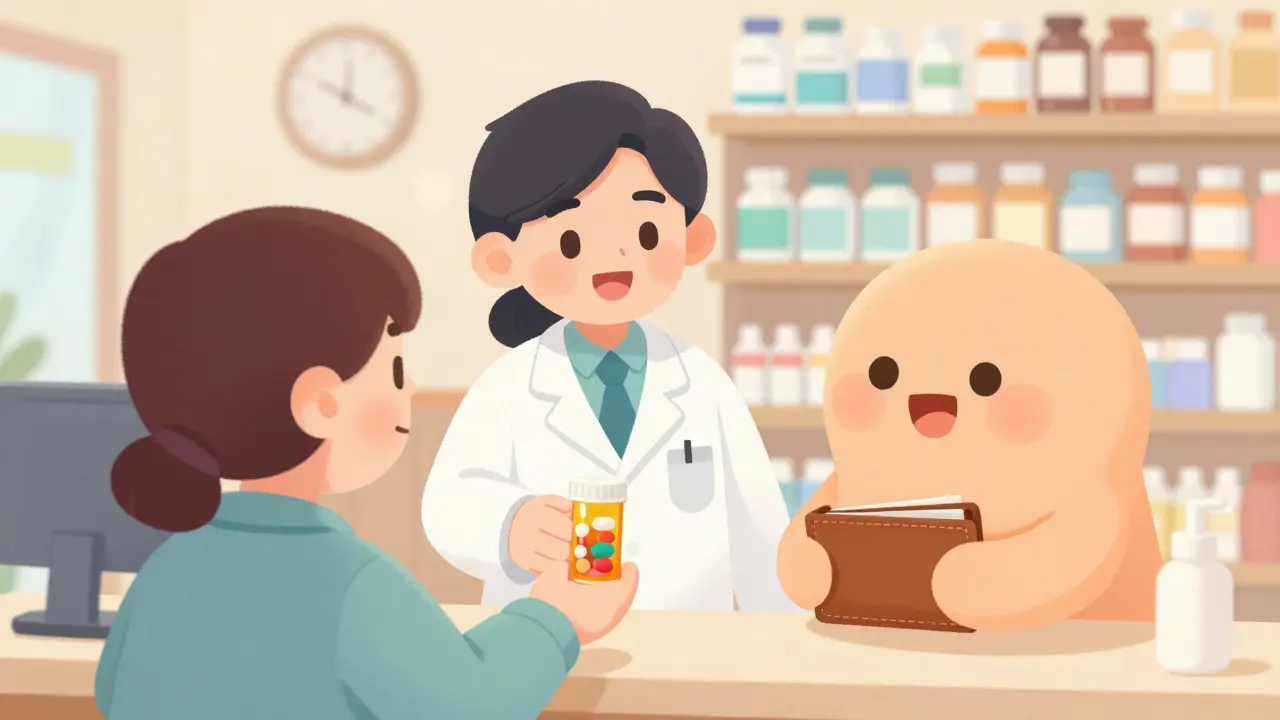
Imagine walking into a pharmacy with a prescription that could cost you anywhere from $6 to over $50. For millions of Americans on Medicaid is a joint federal and state health insurance program that provides coverage for low-income individuals and families, the difference between those two prices often determines whether they actually pick up their medication. This isn't just about saving a few bucks; it's about survival and staying healthy on a tight budget. The secret weapon in this battle against high healthcare costs? Generic drugs.
If you are enrolled in Medicaid, you are likely already using generics without even realizing it. In fact, nearly every prescription filled under Medicaid-about 90% to 91%-is for a generic version of a drug. These medications look identical to their expensive brand-name counterparts but cost a fraction of the price. But how does this system work, and why do generics save so much money for both patients and the government?
The Power of Generics in Your Pocket
Let’s talk numbers because they tell a clear story. According to recent data from the Association for Accessible Medicines (AAM), the average copay for a generic drug for Medicaid beneficiaries is just $6.16. Compare that to the average copay for a brand-name drug, which sits at a staggering $56.12. That is nearly nine times more expensive. For a family living paycheck to paycheck, paying $50 extra for every prescription can mean choosing between medicine and groceries.
Here is what makes generics so effective: they contain the same active ingredients as brand-name drugs. The Food and Drug Administration (FDA) requires generics to be bioequivalent, meaning they work in your body the same way. You get the same therapeutic effect without the premium price tag. In 2022 alone, generics and biosimilars generated a record $408 billion in savings for the entire U.S. healthcare system. For Medicaid specifically, these savings translate directly into lower out-of-pocket costs for you.
| Feature | Generic Drugs | Brand-Name Drugs |
|---|---|---|
| Average Copay | $6.16 | $56.12 |
| Share of Prescriptions Filled | 90-91% | 9-10% |
| Share of Total Spending | 17.5-18.2% | 81.8-82.5% |
| Under $20 Dispensing Rate | 93% | 59% |
Notice that while generics make up almost all prescriptions, they account for less than one-fifth of total spending. This disparity highlights just how costly brand-name drugs are. When you choose a generic, you aren't just saving money; you are participating in a system designed to keep healthcare affordable for low-income populations.
How Medicaid Keeps Prices Low: The Rebate System
You might wonder why brand-name drugs are so expensive if manufacturers have to compete with cheap generics. The answer lies in the Medicaid Drug Rebate Program (MDRP) is a federal program established in 1990 that requires drug manufacturers to pay rebates to state Medicaid programs for covered drugs. Established by the Omnibus Budget Reconciliation Act of 1990, this program forces drug makers to kick back a portion of their revenue to Medicaid states in exchange for having their products covered.
These rebates are massive. In fiscal year 2023, Medicaid rebates reduced overall gross prescription drug spending by 51.2%, amounting to $53.7 billion. Think about that: more than half of the initial cost of drugs is clawed back through this system. A 2021 Congressional Budget Office study found that Medicaid obtains the lowest net prescription drug prices among all federal programs, including the Department of Veterans Affairs. This means that as a Medicaid beneficiary, you are often getting better pricing power than many other government-backed insurance plans.
However, the rebate system has its quirks. While it saves billions for the government, it doesn't always translate to lower copays for patients immediately. Some critics argue that high rebates encourage insurers to steer patients toward higher-priced brand-name drugs because the insurer gets a bigger cut back, even if the patient pays more upfront. Despite this, for most low-income patients, the default preference for generics ensures that out-of-pocket costs remain manageable.
Navigating the Pharmacy Counter: What You Need to Know
When you hand over your prescription, the pharmacist usually substitutes the brand-name drug with a generic automatically. This process is seamless for most people. However, there are times when things get complicated. Let’s break down what happens behind the scenes and how you can advocate for yourself.
- Automatic Substitution: In most states, pharmacists are required or strongly encouraged to dispense the generic equivalent unless the doctor specifies "Dispense as Written" (DAW). This is a safeguard to ensure you get the cheapest option first.
- Prior Authorization Hurdles: Sometimes, even for generics, you might face prior authorization requirements. This is an administrative step where your doctor must prove to Medicaid that the drug is medically necessary. One user on a Medicaid support forum shared that switching her daughter’s asthma inhaler to a generic saved $22 per fill, but the approval process took three weeks and multiple phone calls. It’s frustrating, but worth it for the long-term savings.
- Formulary Tiers: Medicaid uses a tiered formulary system. Generics sit at the lowest tier, meaning minimal copays. Brand-name drugs are placed in higher tiers with significantly higher costs. Understanding your plan’s formulary can help you discuss alternatives with your doctor before they write the prescription.
It is also important to note that not all generics are created equal in terms of availability. While major manufacturers like Teva, Viatris (formerly Mylan), and Sandoz dominate the market, supply chain issues can occasionally lead to shortages. If your usual generic is unavailable, ask your pharmacist if another manufacturer’s version is in stock. They are therapeutically equivalent, so you shouldn’t notice a difference in effectiveness.
The Hidden Challenge: Specialty Drugs and Rising Costs
While generics are a triumph for affordability, they don’t solve every problem. The biggest threat to Medicaid’s budget-and potentially your future access-is the rise of high-cost specialty drugs. These are complex medications used for serious conditions like cancer, rheumatoid arthritis, and multiple sclerosis. In fiscal year 2021, drugs costing over $1,000 per claim accounted for less than 2% of prescriptions but more than half of Medicaid’s total drug spending.
This trend is driving overall costs up. Net spending on prescription drugs in Medicaid increased by 72% from $30 billion in 2017 to $51 billion in 2023. To combat this, the Centers for Medicare & Medicaid Services (CMS) launched the GENEROUS Model in 2024. This initiative aims to reduce costs through better utilization management and formulary design. As a patient, this might mean stricter rules on who qualifies for certain expensive treatments, but it also reflects a broader effort to keep the system sustainable.
Another hidden cost involves Pharmacy Benefit Managers (PBMs). These middlemen negotiate drug prices and manage formularies. A 2025 report by the Ohio Auditor of State revealed that PBMs took fees equal to 31% on generic drugs, amounting to $208 million in one year. These fees don’t go toward research or development; they are administrative costs that inflate the final price. While you don’t see these fees on your receipt, they contribute to the overall complexity of drug pricing.
Practical Tips for Maximizing Savings
You can take active steps to ensure you are getting the best deal on your medications. Here are some practical strategies:
- Always Ask for Generic: Even if your doctor writes a brand name, politely ask if a generic alternative exists. Most doctors prefer generics because they know they are effective and affordable.
- Check Your Formulary: Log in to your state’s Medicaid portal or call your managed care organization to check which drugs are covered and at what tier. This prevents surprise bills.
- Use Mail-Order Pharmacies: For maintenance medications (like blood pressure or cholesterol drugs), mail-order services often offer 90-day supplies at lower copays. Check if your Medicaid plan offers this benefit.
- Appeal Denials: If a generic is denied or unavailable, don’t give up. Work with your doctor to submit a prior authorization request. Document any side effects or issues with previous medications to strengthen your case.
Remember, knowledge is power. Understanding how Medicaid works empowers you to navigate the system effectively. You are not just a passive recipient of care; you are a stakeholder in a system that relies on high generic usage to remain financially viable.
Looking Ahead: Biosimilars and Future Savings
The landscape of affordable medicine is evolving. Just as generics revolutionized small-molecule drugs, biosimilars are highly similar versions of biologic drugs that offer lower-cost alternatives as patents expire are emerging as the next frontier for cost savings. Biologics are complex drugs made from living organisms, used to treat conditions like cancer and autoimmune diseases. They are typically very expensive.
As patents on popular biologics expire, biosimilars will enter the market. The Association for Accessible Medicines projects that biosimilars could generate an additional $100 billion in annual savings by 2027. For Medicaid patients, this means that even complex treatments may become more affordable in the coming years. Keep an eye on developments in this area, as your doctors may start recommending biosimilars more frequently.
In summary, generics are the backbone of affordable healthcare for low-income Americans. They provide essential medications at a fraction of the cost of brand-name drugs, thanks to a combination of market competition and robust rebate policies. While challenges like specialty drug costs and PBM fees persist, the core value proposition remains strong: generics keep you healthy without breaking the bank.
Are generic drugs as effective as brand-name drugs?
Yes, generic drugs are required by the FDA to be bioequivalent to their brand-name counterparts. This means they contain the same active ingredients, work in the same way in the body, and have the same safety and efficacy profiles. The only differences may be in inactive ingredients, such as color or flavor, which do not affect how the drug treats your condition.
Why is my generic copay sometimes higher than expected?
While the average generic copay is around $6.16, specific drugs may have different pricing based on your state’s Medicaid plan or managed care organization. Additionally, if a drug is classified as a specialty generic or requires prior authorization, the copay structure might differ. Always check your specific plan’s formulary for accurate cost information.
Can I refuse a generic substitution?
You can request a brand-name drug, but your doctor must specify "Dispense as Written" on the prescription. However, this will likely result in a significantly higher copay for you. Insurance plans often require medical justification for refusing a generic, so be prepared to explain why the generic is not suitable for your needs.
What is the Medicaid Drug Rebate Program?
The Medicaid Drug Rebate Program (MDRP) is a federal law that requires drug manufacturers to pay rebates to state Medicaid programs for every prescription drug covered by Medicaid. These rebates help offset the cost of drugs for the government, allowing Medicaid to stretch its budget further and keep patient copays low.
How do biosimilars differ from generics?
Generics are copies of small-molecule chemical drugs, while biosimilars are highly similar versions of complex biologic drugs made from living cells. Because biologics are harder to replicate exactly, biosimilars undergo rigorous testing to ensure they are no different from the reference product in terms of safety and efficacy. They offer similar cost-saving benefits as generics but for more complex treatments.