
Methadone and QT Prolongation: Essential ECG Monitoring Guidance

Methadone QT Risk Assessor
Patient Profile & Risk Factors
Ready to Assess
Enter your details and click "Assess Risk Level" to see your personalized monitoring recommendations.
Why This Matters
Structured QT monitoring reduces serious cardiac events by 67%. Knowing your risk profile helps ensure safe, effective treatment.
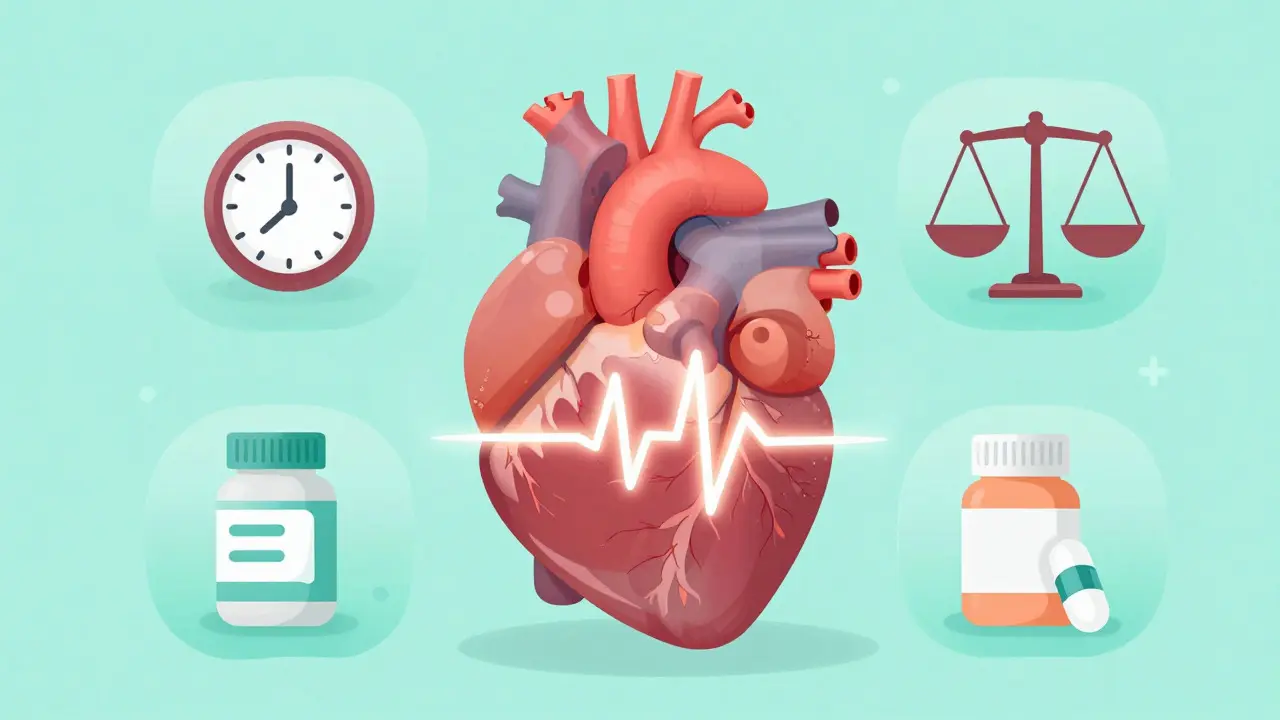
Imagine you are taking a medication that saves your life by stabilizing opioid dependence, but it also quietly alters the electrical rhythm of your heart. This is the reality for many patients on Methadone, a long-acting synthetic opioid agonist used primarily in maintenance therapy for opioid addiction. While methadone has been a cornerstone of treatment since its introduction in the 1960s, it carries a well-documented risk of QT interval prolongation, a condition where the heart takes longer than normal to recharge between beats, increasing the risk of dangerous arrhythmias. Understanding this risk isn't about fear; it's about safety. With proper ECG monitoring, electrocardiogram testing used to measure the heart's electrical activity and detect abnormalities like QT prolongation, clinicians can keep patients safe without compromising their recovery.
Why Methadone Affects the Heart
To understand why we monitor hearts during methadone therapy, we need to look at what happens inside the cells. Methadone works by binding to opioid receptors, which helps reduce cravings and withdrawal symptoms. However, it also interacts with potassium channels in the heart muscle, specifically the hERG (human ether-a-go-go-related gene) channels. These channels are responsible for repolarization-the process where the heart resets itself after each beat.
When methadone blocks these channels, the heart takes longer to reset. On an electrocardiogram, this delay shows up as a prolonged QT interval. If the interval gets too long, the heart can develop chaotic rhythms known as Torsades de Pointes, a specific type of polymorphic ventricular tachycardia associated with QT prolongation that can degenerate into ventricular fibrillation and cause sudden cardiac death. This is rare, but when it happens, it can be fatal. The good news? It is highly preventable with regular checks.
| Category | Men (ms) | Women (ms) | Clinical Action |
|---|---|---|---|
| Normal | ≤430 | ≤450 | Routine monitoring based on risk factors |
| Borderline | 431-450 | 451-470 | Increased vigilance; check electrolytes |
| Clinically Significant | >450 | >470 | Frequent monitoring; consider dose adjustment |
| High Risk | >480 | >500 | Immediate intervention; cardiology consult |
Who Is at Higher Risk?
Not everyone on methadone faces the same level of danger. Some patients have underlying conditions or take other medications that stack the deck against them. Identifying these risk factors early allows doctors to tailor monitoring schedules appropriately.
- Gender: Women naturally have longer QT intervals than men and face a 2.5 times higher risk of developing Torsades de Pointes.
- Age: Patients over 65 years old are more susceptible due to age-related changes in heart function and drug metabolism.
- Electrolyte Imbalances: Low levels of potassium (<3.5 mmol/L) or magnesium (<1.5 mg/dL) significantly increase arrhythmia risk. This is common in patients with poor nutrition or chronic diarrhea.
- Heart Conditions: Pre-existing structural heart disease, heart failure, or congenital long QT syndrome raises the stakes considerably.
- Drug Interactions: Medications that inhibit the CYP3A4 enzyme-such as fluconazole, voriconazole, or certain antidepressants like fluvoxamine-can raise methadone levels in the blood by up to 50%, amplifying cardiac risks.
If you fall into one or more of these categories, your provider will likely place you in a moderate or high-risk group, requiring more frequent ECG checks.
Monitoring Guidelines: What You Need to Know
The American Heart Association and SAMHSA recommend a risk-stratified approach rather than one-size-fits-all screening. Here’s how it typically works:
- Baseline ECG: Before starting methadone, especially if the initial dose is above 100 mg/day, a baseline ECG is standard practice. This establishes your starting QTc value.
- Steady-State Check: Two to four weeks after initiation or any significant dose change, another ECG is performed. This ensures the drug has reached steady-state concentration in your body.
- Ongoing Monitoring:
- Low Risk: Every 6 months if no additional risk factors exist.
- Moderate Risk: Every 3 months for those with borderline QTc values or 1-2 risk factors.
- High Risk: Monthly monitoring for QTc >480 ms (men) or >500 ms (women), or ≥3 risk factors.
Recent studies show that implementing structured QT monitoring protocols reduces serious cardiac events by 67% compared to standard care. That’s a powerful statistic that underscores the importance of sticking to your schedule.
What Happens If Your QTc Is Too Long?
Let’s say your ECG comes back with a QTc greater than 500 milliseconds. Does this mean you’re off methadone forever? Not necessarily. Clinicians follow a stepwise approach:
- Correct Electrolytes: First, they’ll check and replenish potassium and magnesium if levels are low.
- Review Medications: Any interacting drugs might be paused or switched.
- Dose Adjustment: Reducing the methadone dose can sometimes bring the QTc back into range.
- Switch Therapy: If risks persist, switching to Buprenorphine, a partial mu-opioid receptor agonist used in medication-assisted treatment for opioid use disorder, known for having a lower risk of QT prolongation compared to methadone is often recommended. Buprenorphine has a much safer cardiac profile.
In extreme cases, cardiology consultation becomes essential. Remember, the goal is to maintain your recovery while protecting your heart.

Real-World Challenges and Patient Perspectives
Guidelines sound great on paper, but real-world implementation varies. A survey of patients on Reddit forums revealed that 68% experienced inconsistent ECG monitoring across different clinics. Access issues, cost, and lack of awareness among providers contribute to this gap. However, those who received regular monitoring reported 82% confidence in their treatment safety versus only 47% among those without consistent checks.
This highlights a critical point: advocacy matters. Ask your provider about your QTc status. Understand your risk profile. Don’t hesitate to request an ECG if you’ve had recent dose changes or started new medications.
Practical Tips for Patients
You play a vital role in keeping yourself safe. Here are actionable steps you can take:
- Stay Hydrated and Nourished: Maintain adequate potassium and magnesium intake through diet or supplements if advised by your doctor.
- Avoid Alcohol Excess: Alcohol can worsen electrolyte imbalances and depress heart function.
- Track Symptoms: Report dizziness, fainting, palpitations, or unexplained fatigue immediately. These could signal arrhythmias.
- Keep a Medication List: Share all prescriptions, over-the-counter drugs, and supplements with your prescriber to avoid dangerous interactions.
- Schedule Regular Check-Ups: Treat ECG appointments as non-negotiable parts of your treatment plan.
How often should I get an ECG if I’m on methadone?
Frequency depends on your risk profile. Low-risk patients typically need an ECG every 6 months. Moderate-risk patients should be monitored every 3 months. High-risk individuals may require monthly checks. Always follow your clinician’s specific recommendations.
Can methadone cause sudden cardiac death?
Yes, although it is rare. Methadone-induced QT prolongation can lead to Torsades de Pointes, a potentially fatal arrhythmia. The risk increases significantly when the QTc exceeds 500 milliseconds. Regular ECG monitoring drastically reduces this risk.
Are there alternatives to methadone with less cardiac risk?
Buprenorphine is a widely used alternative that has a significantly lower risk of QT prolongation. It is often recommended for patients who cannot tolerate methadone due to cardiac concerns.
Which medications interact dangerously with methadone?
Drugs that inhibit the CYP3A4 enzyme, such as fluconazole, voriconazole, and fluvoxamine, can increase methadone levels in the blood. Other QT-prolonging drugs like haloperidol or moxifloxacin should be used with caution.
What symptoms should prompt me to seek immediate medical attention?
Seek help if you experience fainting spells, severe dizziness, rapid or irregular heartbeat, or unexplained shortness of breath. These could indicate a serious arrhythmia requiring urgent evaluation.