
Monitoring Your INR: Understanding Blood Thinner Levels and Targets
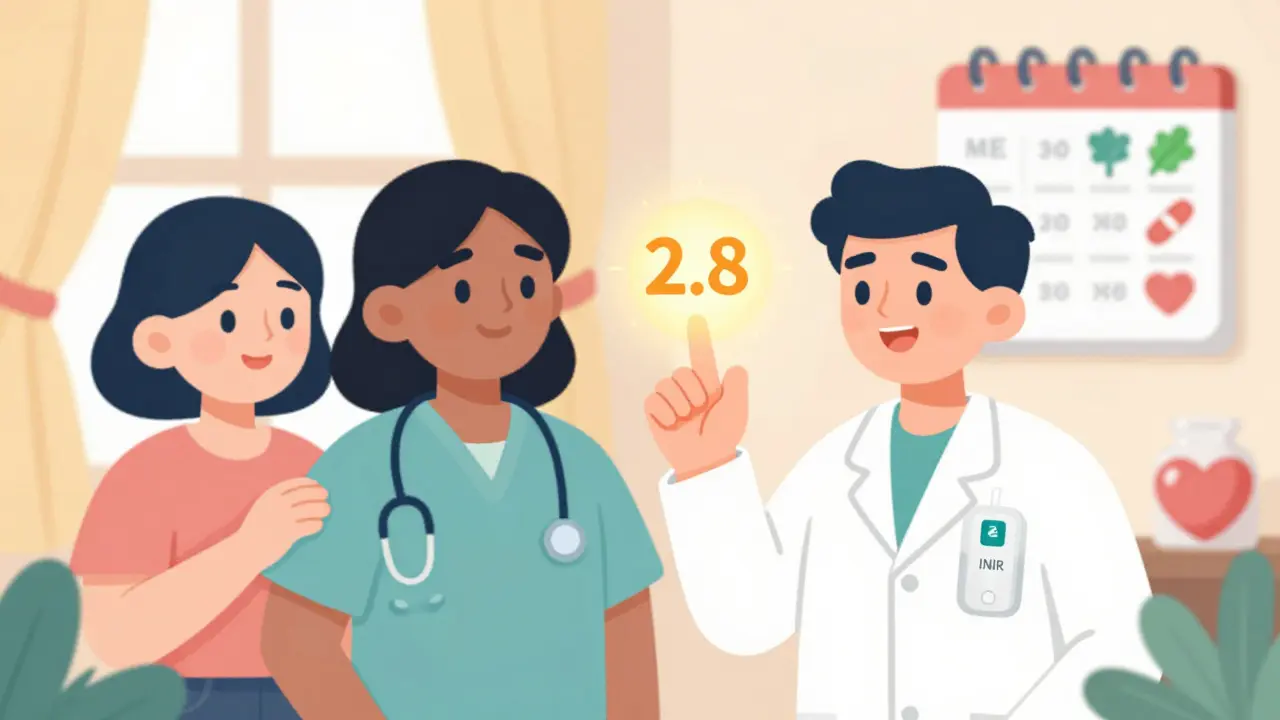
INR Target Checker
Why This Matters
Your INR level shows how quickly your blood clots. For most patients on warfarin, the safe range is 2.0-3.0. Values outside this range increase your risk of clots or bleeding.
Enter your INR value to see results
Results will appear here after you check
When you're on a blood thinner like warfarin, your life revolves around one number: your INR. It’s not just a lab result-it’s the difference between staying safe and facing a stroke, a clot, or dangerous bleeding. Understanding what your INR means, why it matters, and how to keep it in range can literally save your life. And while newer blood thinners don’t require regular testing, if you’re on warfarin, INR monitoring isn’t optional-it’s essential.
What Is INR and Why Does It Matter?
INR stands for International Normalized Ratio. It’s a standardized way to measure how long it takes your blood to clot. This number comes from a simple test called the prothrombin time (PT), which tracks how fast your plasma clots after adding certain chemicals. But here’s the problem: without standardization, one lab’s "normal" could be totally different from another’s. That’s why the INR was created in 1983 by the World Health Organization. It takes your raw PT result and adjusts it based on the specific reagent each lab uses, giving you a number that means the same thing everywhere.
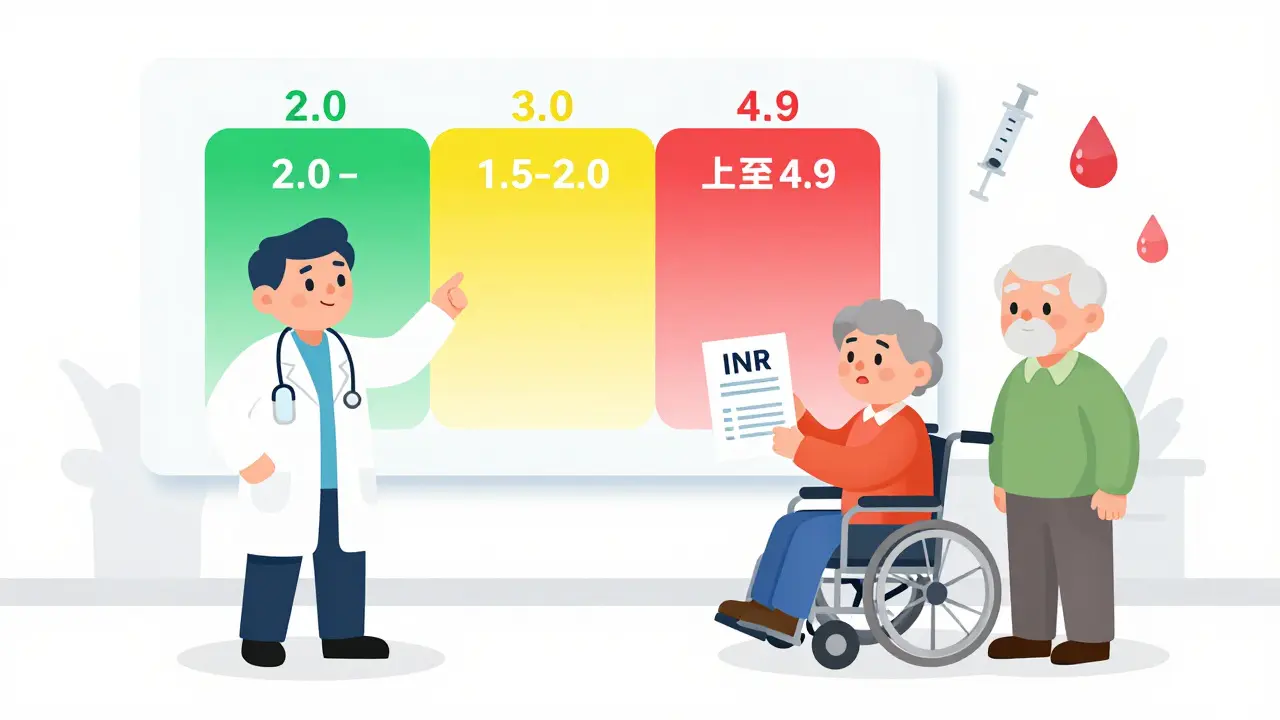
For someone not taking blood thinners, a normal INR is exactly 1.0. But if you’re on warfarin, your goal isn’t to be normal-it’s to be in a sweet spot. For most people, that’s between 2.0 and 3.0. This range reduces your risk of clots without making you bleed too easily. If your INR drops below 1.5, you’re at higher risk for clots. If it climbs above 4.9, your risk of serious bleeding spikes by 27% for every 0.5-point increase. That’s why doctors don’t just look at one number-they track trends over time.
Therapeutic Targets Vary by Condition
Not everyone on warfarin has the same target. Your INR goal depends on why you’re taking it. For atrial fibrillation or deep vein thrombosis, the standard target is 2.0-3.0. But if you have a mechanical heart valve, especially in the mitral position, your target jumps to 2.5-3.5. A mechanical aortic valve usually stays at 2.0-3.0, though some patients need slightly higher depending on other risk factors.
These differences aren’t arbitrary. They’re based on decades of clinical data showing what levels prevent clots without causing harm. For example, patients with mechanical mitral valves have a much higher risk of clotting on the valve surface. That’s why they need stronger anticoagulation. Missing this nuance can be dangerous. A 2023 study from the American College of Chest Physicians found that patients who stayed within their condition-specific target had 38% fewer complications than those who didn’t.
How Often Should You Get Tested?
When you first start warfarin, you might need testing twice a week. Your body is still adjusting to the drug, and your dose changes often. Once you’re stable-meaning your INR stays in range for several weeks-you can usually cut back to once a month. But "stable" doesn’t mean "set and forget." Changes in diet, medications, or even illness can throw your INR off.
Here’s what the guidelines say: the American Society of Hematology recommends testing at least once a month for stable patients. Yet, a 2021 study in Annals of Internal Medicine found that 38% of patients were being tested weekly for no reason. That’s unnecessary stress, extra costs, and more clinic visits. On the flip side, going longer than 6 weeks without a test increases your risk of being out of range by 40%. The key is consistency-not frequency.
Home Testing: Convenience vs. Challenges
For many people, going to a lab every few weeks is a hassle. That’s why home INR testing has become a game-changer. Devices like the Abbott Acelis and Roche CoaguChek let you prick your finger, apply a tiny drop of blood, and get a result in under a minute. These devices are FDA-approved and accurate when used correctly.
The data speaks for itself: patients who test at home spend 72% of their time in the therapeutic range, compared to 58% for those who rely on clinic visits. That’s a 21% drop in major bleeding and a 34% drop in clots. But home testing isn’t for everyone. About 25-30% of patients struggle with it due to shaky hands, poor eyesight, or memory issues. Elderly patients over 65 report lower satisfaction-only 3.1 out of 5-compared to 4.3 for younger users.
Cost is another factor. The device itself costs around $299, and each test strip runs $5.99. Medicare covers 100% of the cost for eligible patients. Most private insurers cover it too, but you might pay 20% coinsurance. Still, many users say it’s worth it. One Reddit user shared that home testing cut their clinic visits from twice a month to once a month-and saved them $187 per visit in lost wages and childcare.
What Happens When Your INR Is Off?
If your INR is too low (under 2.0 for most people), your blood is clotting too fast. You’re at risk for strokes, heart attacks, or pulmonary embolisms. Your doctor might increase your warfarin dose or adjust your vitamin K intake.
If your INR is too high (over 3.0, especially above 4.0), your risk of bleeding skyrockets. Nosebleeds, bruising, or blood in your urine or stool are warning signs. An INR above 5.0 means you should skip your next warfarin dose and call your provider immediately. A reading over 9.0 is an emergency-you may need vitamin K or even a blood transfusion.
There’s no "one-size-fits-all" fix. A 2022 Mayo Clinic trial showed that AI tools like the INR Advisor platform can predict the right warfarin dose change with 83% accuracy by analyzing your history, diet, and medications. But even the best algorithm can’t replace your own awareness. If you feel unusually tired, dizzy, or notice unusual bruising, don’t wait for your next test.
Warfarin vs. Newer Blood Thinners
It’s worth asking: why are you still on warfarin? Newer drugs-apixaban, rivaroxaban, dabigatran-are now used in 70% of new anticoagulant prescriptions. They don’t require INR testing, have fewer food interactions, and are easier to manage. But they’re not for everyone.
Warfarin remains the only option for people with mechanical heart valves, severe kidney disease, or those who can’t afford the $550-$650 monthly price tag of newer drugs. Warfarin costs about $4 a month. That’s not a typo. For many, especially on Medicare, it’s the only affordable option.
And here’s the catch: even if you’re on a DOAC, your doctor might still check your INR if you’re having bleeding issues or need emergency surgery. So understanding INR isn’t just for warfarin users-it’s useful for anyone on anticoagulants.
How to Stay in Range
Keeping your INR steady isn’t just about taking your pill. It’s about routine, consistency, and awareness.
- Test at the same time of day-ideally between 8 a.m. and noon-after fasting for 4-6 hours. Food and timing affect results.
- Keep vitamin K intake steady. Leafy greens, broccoli, and Brussels sprouts are high in vitamin K, which counteracts warfarin. Don’t cut them out-just eat about the same amount every week.
- Track all medications. Antibiotics, painkillers, even herbal supplements like garlic or ginkgo can interfere with warfarin. Always tell your doctor what you’re taking.
- Use a log. Write down your INR, date, dose, and any symptoms. Apps or paper logs help you spot patterns before your doctor does.
- Know your numbers. If your INR is 2.8 one week and 3.6 the next, don’t assume it’s normal. Ask why it changed.
The Bigger Picture: Access and Equity
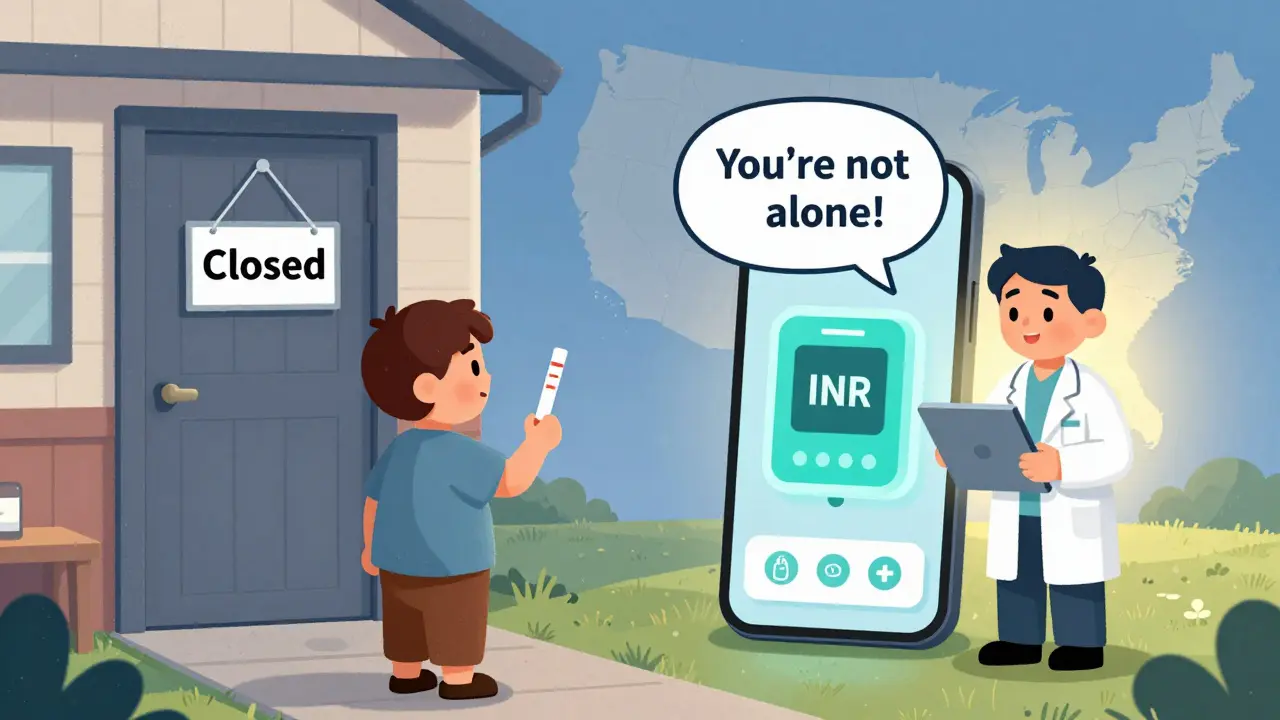
While home testing is more effective, it’s not equally available. Rural areas have only 35% of the anticoagulation services found in cities. That means patients in small towns may not even have access to home testing kits, or the support to use them. This gap isn’t just inconvenient-it’s dangerous. A 2023 National Blood Clot Alliance report found that patients without reliable access to monitoring had twice the rate of hospitalizations due to bleeding or clots.
And yet, the future is moving fast. In January 2023, the FDA approved the first smartphone-connected INR monitor, which automatically sends results to your doctor. AI-powered dose calculators are becoming standard in clinics. The goal isn’t to replace human care-it’s to make it smarter, faster, and more precise.
If you’re on warfarin, your INR is your lifeline. It’s not a number you ignore. It’s a signal you listen to. Stay consistent. Know your range. Ask questions. And don’t let cost, distance, or confusion keep you from getting the care you need.
What is a normal INR level if I’m not on blood thinners?
For someone not taking anticoagulants, a normal INR is always 1.0. This means your blood clots at the expected rate. Any deviation above or below this number usually indicates a medical issue or the influence of medication like warfarin.
Can I check my INR at home?
Yes, home INR testing is FDA-approved and widely available through devices like the Abbott Acelis and Roche CoaguChek. These devices use a small drop of blood from a finger prick and deliver results in under a minute. They’re accurate, convenient, and covered by Medicare and most private insurers for eligible patients.
Why do I need to test so often if my INR is stable?
Even if your INR has been stable for months, small changes in diet, illness, medications, or even stress can shift it. Warfarin has a very narrow therapeutic window-just 0.5 units between effective and dangerous levels. Monthly testing catches these shifts before they cause harm. Testing more than once a month is usually unnecessary unless you’re adjusting doses or recovering from an illness.
What should I do if my INR is too high or too low?
If your INR is below 1.5, contact your doctor immediately-your risk of clotting is high. If it’s above 5.0, skip your next warfarin dose and call your provider within 24 hours. An INR over 9.0 is an emergency and may require urgent treatment like vitamin K or blood products. Never adjust your dose without medical advice.
Are newer blood thinners better than warfarin?
Newer drugs like apixaban and rivaroxaban don’t require INR testing and have fewer interactions, making them easier for many people. But they’re not suitable for everyone-especially those with mechanical heart valves or severe kidney disease. Warfarin remains the only option for these patients and is far cheaper, costing about $4 a month compared to $550-$650 for newer drugs.
14 Comments
They say home testing saves money, but let’s be real-most people don’t have the dexterity to prick their own finger at 70. My mom tried it, cried for an hour, and now she just skips tests. They’re not saving lives, they’re saving corporate profits while elderly folks bleed out in silence.
And don’t get me started on ‘AI dose calculators.’ If you think an algorithm can account for Grandma’s arthritis, her three different pain meds, and the fact that she eats kale every damn Tuesday, you’re not thinking-you’re marketing.
Warfarin isn’t outdated. It’s the last stand for working-class people who can’t afford $600 pills. The system doesn’t care if you live in a rural town with no lab for 50 miles. It just wants you to shut up and take your $5 strips like a good little patient.
Oh honey, you’re telling me people are still on warfarin? Sweetie, it’s 2025. We’ve had DOACs for over a decade. If you’re still using something that requires a blood test every 3 weeks, you’re either not listening to your doctor-or you’re married to chaos.
I mean, come on. You’re literally choosing to live in the 1990s. Vitamin K? In 2025? I’ve got a 72-year-old neighbor on apixaban who hasn’t seen a needle since 2021. She’s traveling to Bali next month. You? You’re stuck in a revolving door of finger pricks and panic.
Not judging. Just… confused. And slightly sad for you.
Let’s cut through the corporate fluff. The INR is not a lifeline-it’s a leash. The pharmaceutical-industrial complex doesn’t want you to be free. They want you dependent. Testing every month? That’s not medicine-it’s revenue generation.
Home testing? Sure, it works for the tech-savvy. But for the disabled, the elderly, the poor? It’s a cruel joke. The system doesn’t care if you can’t afford strips or can’t see the numbers. They’ll sell you the device, then charge you for the ‘support services’-because why not monetize your vulnerability?
And let’s not pretend warfarin is ‘cheap.’ It’s cheap because it’s old. It’s cheap because no one invests in it anymore. It’s cheap because the market abandoned it. That’s not a feature. That’s a betrayal.
AI tools? They’re just new ways to make you feel like a data point while the real people-your doctors, your nurses, your community health workers-are laid off.
This isn’t healthcare. It’s surveillance with a stethoscope.
Bro I just take my pill and forget about it. Why do I need to know my INR? I’m not a doctor. My doc says ‘keep it between 2 and 3’ so I guess that’s fine. I’ve been on warfarin for 6 years and never had a problem. Why make it so complicated?
Also, home testing? That’s a whole new chore. I already have to check my blood sugar, my BP, my steps, my sleep. Now I gotta poke my finger? Nah. I’ll just go to the clinic. It’s easier.
The conflation of accessibility with efficacy is a profoundly flawed heuristic. The assertion that home INR monitoring constitutes a panacea is empirically dubious, particularly when contextualized within the sociopolitical architecture of healthcare disparity.
While the 72% therapeutic time metric is statistically significant, it fails to account for the confounding variables of socioeconomic status, digital literacy, and institutional support infrastructure. The study cited-though methodologically rigorous-is predicated on a sample cohort that disproportionately represents urban, insured, middle-class populations.
Moreover, the normalization of ‘convenience’ as a proxy for ‘outcomes’ reveals a neoliberal epistemological bias wherein efficiency supersedes equity. One cannot reduce anticoagulation management to a consumerized product without eroding the foundational tenets of patient-centered care.
Warfarin persists not due to obsolescence, but because it remains the sole viable option for those excluded from the modern pharmacopeia. To celebrate technological innovation while ignoring structural exclusion is not progress-it is performative.
You all are missing the real issue. Why is warfarin even still available? It’s a 70-year-old drug with a narrow window, constant monitoring, and 300+ drug interactions. The fact that we’re still pushing it as a ‘solution’ is a sign of systemic failure. The FDA approved DOACs because they’re safer. Period.
And home testing? That’s just a Band-Aid. You’re not fixing the problem-you’re just making it more expensive for the patient to manage a broken system.
And don’t even get me started on vitamin K. You’re telling people to eat the same amount of kale every week? That’s not healthcare. That’s nutritional policing.
Someone needs to ask: who benefits from keeping people on warfarin? Hint: not the patient.
Oh wow, look at all this science. So many graphs. So many percentages. So much jargon.
Meanwhile, my cousin in Ohio had a stroke because her INR dropped to 1.2 and her doctor didn’t call her back for 11 days. She’s now paralyzed on one side. And you’re telling me the solution is… a $299 device?
Yeah. That’s not a fix. That’s a luxury.
And the ‘AI dose calculator’? The same AI that gets your credit score wrong? The one that thinks ‘low income’ means ‘low intelligence’? You really trust that thing to adjust your life-saving medication?
Don’t mistake automation for care. Automation doesn’t care if you’re alone. Doesn’t care if you can’t afford strips. Doesn’t care if you’re scared.
But your nurse? Your pharmacist? Your neighbor who checks in on you? They do.
So maybe stop selling tech and start investing in people.
They say warfarin is cheap, but have you seen the cost of the blood tests? $150 a pop? And then the gas to get there? And then the time off work? And then the ‘follow-up consult’? It adds up.
And don’t tell me about ‘stability.’ My uncle was stable for 3 years. Then he got the flu. Then his INR went to 6.8. Then he ended up in the ER with a brain bleed. They said ‘it happened fast.’
Meanwhile, the DOACs? You take one pill. No tests. No fuss. And the insurance pays for it.
So why are we still talking about warfarin like it’s some noble tradition? It’s not. It’s a relic. And we’re letting people die because we’re too scared to move on.
And don’t even get me started on vitamin K. Bro, you’re telling me to eat the same amount of broccoli every week? That’s not medicine. That’s a cult.
Wait, wait, wait-so you’re telling me that a machine that costs $300 and uses $6 strips is somehow better than a $4 pill? And you want me to believe that this is ‘equity’? That’s a joke.
And the ‘AI’ thing? Yeah, right. Like the algorithm didn’t get trained on data from people who live in zip codes with gyms and smoothie bowls. What about the guy in West Virginia who eats fried chicken every day and has no idea what ‘vitamin K’ even means?
And home testing? You think people with shaky hands and bad eyesight can do this? That’s not innovation-that’s abandonment.
And the ‘study’? The same study that says ‘72% in range’? That’s not the real world. That’s a lab. Real people? They forget. They miss. They get scared. They don’t call.
This isn’t progress. It’s exploitation dressed up as tech.
My mom’s on warfarin. She’s 78. She cries every time she tests. She’s scared she’ll mess up. She’s scared she’ll bleed. She’s scared she’ll die because she didn’t prick right.
I got her the home tester. She uses it once a month. She still goes to the clinic. Why? Because she needs someone to hold her hand.
Technology doesn’t replace compassion. It just hides it.
And yeah, DOACs are great. But they’re not for everyone. And we need to stop pretending they’re the ‘right’ choice for everyone. Some people need the old way. Not because they’re stupid. Because they’re human.
Stop glorifying gadgets. Start glorifying care.
❤️
INR is a proxy. Not a measure. Not a cure. Not a solution. Just a number. And we treat it like gospel.
Warfarin doesn’t prevent clots. It delays clotting. Big difference.
And home testing? It doesn’t improve outcomes. It just moves the burden from clinic to kitchen.
Real solution? Stop prescribing warfarin to people who can’t manage it. Period.
Stop pretending it’s affordable. Stop pretending it’s safe. Stop pretending it’s ‘the only option.’
It’s not. It’s a compromise. And we’re calling it a cure.
Therapeutic INR range is not a target-it’s a dynamic equilibrium. The 2.0–3.0 paradigm is a population-based heuristic, not a physiological imperative. Individual variability in CYP2C9 and VKORC1 polymorphisms necessitates pharmacogenomic-guided dosing, which remains grossly underutilized in clinical practice.
Furthermore, the economic argument for warfarin is a fallacy. The true cost of anticoagulation includes hospitalizations, bleeding events, and lost productivity-factors that DOACs mitigate. The $4 price tag is a red herring. It ignores downstream costs.
Home monitoring is not a convenience-it’s a biomarker-driven intervention that reduces event rates by 30% in RCTs. To dismiss it as elitist is to misunderstand the entire paradigm of precision medicine.
And vitamin K? It’s not about quantity. It’s about consistency. A fixed intake maintains equilibrium. Fluctuation induces instability. This is biochemistry, not diet culture.
Thank you for this comprehensive overview. In India, warfarin remains the most accessible anticoagulant, and home INR monitoring is still a luxury. Many patients rely on public hospitals with long wait times and inconsistent supplies.
However, we are seeing promising pilot programs in urban centers where community health workers assist elderly patients with home devices. The results show improved adherence and fewer complications.
While newer drugs are ideal, affordability and infrastructure must be addressed before we can phase out warfarin. Technology alone cannot bridge the gap. We need policy, not just devices.
Let us not mistake innovation for equity. The goal is not to replace warfarin, but to ensure that every patient-regardless of geography or income-can manage it safely.
Exactly. And while you’re all arguing about strips and algorithms, the real villain is the insurance companies who refuse to cover home devices for patients under 65 unless they have a ‘documented history of instability.’
So if you’re stable? Too bad. You don’t get the tool that would keep you stable.
It’s not about cost. It’s about control. They want you dependent. They want you coming back. They want you scared.
And we’re all just arguing over the color of the needle.