
NSAIDs and Heart Failure: Fluid Retention and Hospitalization Risk
Heart-Failure Medication Safety Checker
Use this tool to identify safe pain relief options and understand the hidden risks of fluid retention associated with common over-the-counter medications.
🛑 HIGH RISK (Avoid)
Causes significant fluid retention & kidney strain
✅ SAFER OPTIONS
Generally recommended alternative
Even safer medications require monitoring. Stop immediately and call your doctor if:
Taking ibuprofen for a headache might seem harmless, but for a person with heart failure, it can trigger an emergency room visit within days. You probably think of pain relievers as safe over-the-counter tools, yet they interact with your heart in ways that can destabilize your entire system. This isn't just theory; real-world data shows a sharp spike in hospitalizations when these medicines enter the picture. Understanding this link helps you protect your health before complications arise.
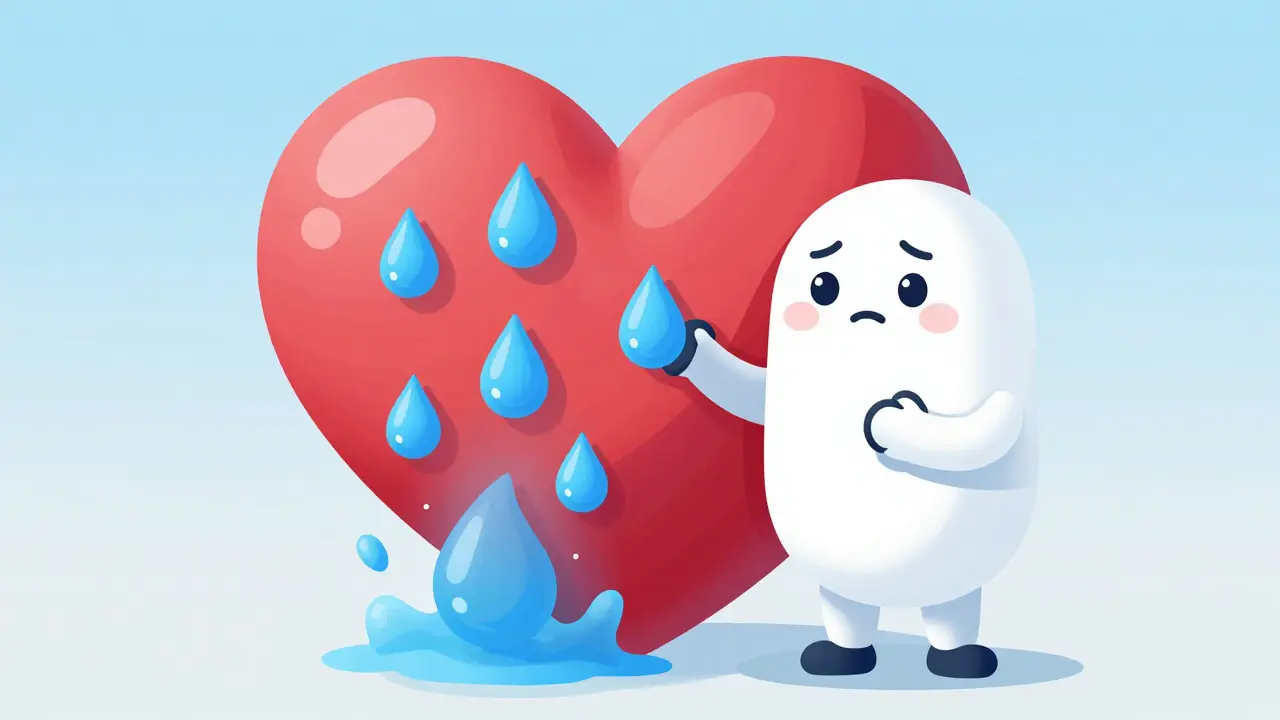
Heart failure is a condition where your heart cannot pump oxygen-rich blood efficiently to meet your body’s needs. NSAIDs Non-steroidal anti-inflammatory drugs are medications commonly used to reduce pain, inflammation, and fever. When you combine them with heart failure, you create a dangerous environment for your kidneys and cardiovascular system. The mechanism involves fluid retention, which sounds minor until you realize extra fluid strains a heart that is already struggling.
How Painkillers Trap Fluid in Your Body
The danger lies in how your kidneys work alongside your heart. Normally, your kidneys manage water and salt balance to keep blood pressure steady. Cyclooxygenase Enzymes Enzymes like COX-1 and COX-2 produce prostaglandins, which help regulate kidney function. NSAIDs block these enzymes to stop pain signals. Unfortunately, this same action blocks the prostaglandins your kidneys need to release sodium.
When sodium stays in your system instead of leaving through urine, water follows it. This increases the volume of blood flowing back to your heart. For a healthy person, the heart might handle this extra load without issue. If you have heart failure, your heart lacks the reserve capacity to pump that extra volume effectively. The result is congestion in your lungs and swelling in your legs. Studies show that even short-term use can lower renal blood flow by approximately 20 to 30 percent in susceptible patients. This reduction forces your kidneys to hold onto more water, creating a vicious cycle of worsening heart strain.
Risk Factors and Study Findings
You might wonder if taking a pill occasionally makes a difference. Recent research suggests otherwise. A major analysis published in the European Heart Journal examined a nationwide Danish cohort between 1998 and 2018. They found that even brief exposure increased the risk of heart failure hospitalization significantly. The odds ratio for certain NSAIDs ranged from 1.24 to 1.88 depending on the drug type and duration.
This isn't just about prescription strength medication. Over-the-counter products account for roughly 65% of global sales, meaning many people take these without realizing the hidden risks. A patient survey conducted by the American Heart Association found that 37% of heart failure patients reported unintentional use of these drugs. Even scarier is that 62% of those individuals experienced acute decompensation requiring medical intervention after taking them.
| Medication Type | Hospitalization Risk | Renal Impact | Recommendation |
|---|---|---|---|
| Ibuprofen | High | Significant Sodium Retention | Avoid Completely |
| Naproxen | Moderate to High | Reduced GFR | Avoid if Possible |
| Celecoxib (COX-2) | High | Similar to Traditional NSAIDs | No Safety Advantage |
| Acetaminophen | Low | Minimal Renal Effect | Safer Alternative |

Are Some NSAIDs Safer Than Others?
A common belief is that newer, selective COX-2 inhibitors like celecoxib offer a safer profile because they spare some kidney functions. Clinical evidence contradicts this idea. Experts analyzing the data note that putative renal-sparing NSAIDs have similar effects on renal function as traditional ones. Dr. Steven E. Nissen pointed out in a JAMA editorial that the renal effects of COX-2 inhibitors are virtually identical to traditional NSAIDs regarding fluid retention. No NSAID is considered completely safe for heart failure patients.
Some meta-analyses suggest naproxen might have a slightly better cardiovascular risk profile compared to others, with a relative risk of 0.92. However, this small statistical difference doesn't make it safe enough to recommend freely. The overall consensus remains firm: all classes pose significant risks. The risk is multifactorial, including blood pressure elevation, reduced renal perfusion, and direct fluid retention.
Recognizing Early Warning Signs
Knowing what to watch for can save lives. Symptoms of NSAID-induced fluid retention often appear quickly, sometimes within 24 to 72 hours of starting therapy. You might notice sudden weight gain without dietary changes. One user in a support community reported gaining 4.5 kg (10 lb) in three days after taking two doses of ibuprofen for minor pain. Shortness of breath is another critical sign. Your body tries to compensate for fluid buildup by moving it into the lungs, making breathing harder, especially when lying down.
Swelling in the ankles or abdomen indicates peripheral edema. This happens because the heart cannot move the excess blood volume forward fast enough. Pressure builds up in the veins, forcing fluid into tissues. If you weigh yourself daily, aim for stability. An unexplained jump of more than two pounds in a day warrants immediate attention. Monitoring these metrics is part of effective self-care. Family members can also help by watching for changes in breathing patterns or shoe tightness due to foot swelling.
Safer Pain Management Options
Ignoring pain isn't the answer either. Chronic pain affects quality of life, but managing it safely requires different strategies. Acetaminophen is generally recommended as a safer alternative for heart failure patients. It works differently than NSAIDs and lacks the strong anti-inflammatory properties that cause renal issues. While it may not relieve severe inflammation, it handles basic pain relief without triggering the same fluid shifts.
Your doctor might suggest topical treatments for joint pain. Creams containing capsaicin or lidocaine provide local relief without entering the bloodstream in high concentrations. Physical therapy can also reduce reliance on medication by strengthening muscles and improving mobility. Always discuss new supplements or herbal remedies with your cardiologist before using them. Natural does not mean safe for everyone, especially those with compromised organs.
Guidelines and Clinical Recommendations
Medical authorities have updated their stance clearly over the years. The European Society of Cardiology explicitly states that NSAIDs should be avoided in all heart failure patients. They cite a Class III recommendation, which means harm is proven. The American College of Cardiology has plans to develop mobile health applications that include specific alerts for these drug interactions. These guidelines reinforce that avoidance remains the gold standard.
Despite these warnings, prescribing errors persist. A 2020 study found that nearly 16% of heart failure patients still received NSAID prescriptions within one year of diagnosis. This gap highlights the importance of advocacy. When you see a specialist or a general practitioner, bring a complete medication list. Ask specifically, "Will this medicine affect my heart or kidneys?" Being proactive ensures your provider considers every factor before writing a script.
Can I take Tylenol if I have heart failure?
Yes, acetaminophen (Tylenol) is generally considered safer than NSAIDs for patients with heart failure. It does not inhibit prostaglandin synthesis in the kidneys to the same extent, so it carries a much lower risk of causing fluid retention.
How long do symptoms last after stopping NSAIDs?
Fluid retention symptoms typically begin to resolve within a few days after stopping NSAID use, provided you are on appropriate heart failure medication like diuretics. However, severe cases may require medical intervention to stabilize fluid levels quickly.
Is low-dose aspirin safe for heart failure?
Low-dose aspirin is often prescribed for other cardiac reasons and behaves differently than full-dose NSAIDs. It still has some effect on kidneys, so discuss the dosage carefully with your cardiologist to weigh benefits against risks.
Why does my doctor advise avoiding all NSAIDs?
Doctors avoid recommending NSAIDs because even over-the-counter versions can cause rapid decompensation. The risk of hospital readmission increases by about 28% for patients exposed to these drugs shortly after discharge.
What should I track daily?
Daily tracking should include morning weight, blood pressure, and checking for swelling in legs or ankles. Sudden jumps in weight are the most reliable early warning signs of fluid overload.
Taking charge of your medication list protects your recovery. The choices you make regarding pain relief directly impact your ability to stay out of the hospital. Prioritize options that support your heart rather than burdening it. Stay informed, ask questions, and keep your care team involved in every decision.
12 Comments
It is crazy how a normal headache pill can ruin your life forever.
You really have to pay attention to what you put into your body everyday.
It feels like we get sold too many things that claim to be safe when they are not.
This information right here is vital for anyone who has a weak heart.
I see friends pop pills for pain without checking the side effects labels.
They think it is just a quick fix and nothing happens after that.
Fluid retention might sound small but it piles up quickly inside you.
Your kidneys hold onto water when the salts do not leave properly.
Then your lungs get filled up with liquid you did not breathe in.
Breathing becomes hard work that takes a lot of energy away.
Hospitals get busy with cases that could have been prevented easily.
People ignore warning signs until it is too late to fix things.
Weight gain happens fast when the system stops draining water out.
Shoes feel tight and ankles look swollen before you even notice breathing issues.
We need to stop relying on drugs that make us stronger physically later on.
Prevention is always better than trying to cure a failing heart.
Sharing this knowledge saves lives in our community today.
It is scary to hear about those risks but staying informed helps everyone protect themselves.
We just need to talk to doctors before taking anything new for pain relief.
Being careful now keeps future complications away from our loved ones.
Health is wealth and keeping your heart stable matters more than temporary comfort.
They want us to believe natural options are dangerous while ignoring chemical safety standards.
Pharmaceutical companies push these pills everywhere and hide the real data deep down.
Government studies show risk but nobody reads the fine print details.
Insurance plans cover these meds fully while excluding better alternatives.
Something feels off about why this warning appears after years of sales.
People trust doctors blindly but profits drive the decisions made daily.
Independent research gets buried under corporate funding sources everywhere.
Real patients suffer while executives move money around globally.
We question everything and watch who controls the medical advice narrative.
You are being silly and ungrteful about medical guidance here today.
These drugs save lives but misuse causes harm to people who dont listen.
Stop making conspiracy claims when science has shown the truth clearly.
Doctors know best about kidney function and fluid balance in bodies.
Ignoring facts leads to hospital visits and costly mistakes later on.
Please educate yourself instead of spredding fear mongering online.
Common sense tells us to read labels before eating anything harmful.
So the lesson is basically do not live a normal life anymore apparently.
Everyone walks around in constant fear of their next aspirin dose now.
I mean sure lets avoid pain meds but pretend pain does not exist either way.
Living with discomfort sounds like a great plan for longevity goals.
Just hope nobody actually tries to enjoy anything fun during this crisis.
It makes sense that we trade quality of life for extra years of survival stats.
Nothing screams safety quite like avoiding all modern medicine entirely though.
Oh!!! Please!!! 😱 Do not be so negative!! 🙁 Life is worth living!! 💪 And yes!! Safety matters!! ❤️ We all need balance!! ⚖️ Pain kills joy!!! 🎉 So let us find happy solutions!! ✨ Together we can win!! 🌟 Keep smiling!!! 😊
I swear I gained ten pounds just reading the paragraph about fluid retention!!
It felt like my legs were already swelling in real time!!
One second I was fine and the next my shoes were crushing my toes!!
The horror of sodium retention struck me with such force!!
My breath hitched and I almost passed out right there!!
How dare a simple headache cause such a disaster scenario!!
I am terrified to touch my medicine cabinet ever again!!
The world is ending and I saw the prophecy unfold!!
Your hyperbolic reaction lacks empirical foundation regarding physiological response rates.
Acute edema requires significant ingestion thresholds before manifesting perceptible changes.
Hypothetical fear does not correlate with clinical presentation timelines observed in trials.
Patients maintain stability unless cumulative dosage breaches renal safety limits.
Exaggerating symptoms creates unnecessary anxiety without addressing actual pharmacological mechanisms.
Professional moderation ensures accurate understanding of therapeutic windows.
Emotional distress should not replace evidence-based assessment protocols.
In my culture we rely heavily on herbal remedies before seeking Western pharmaceutical interventions.
Elders often warn young members about strong chemicals messing with bodily rhythms.
My grandmother used turmeric paste instead of ibuprofen for joint pain regularly.
She lived a hundred years without ever visiting a hospital emergency ward once.
Her wisdom taught me that the body knows how to heal itself naturally.
Modern medicine offers convenience yet sometimes forgets ancient balance principles completely.
Respect for natural processes keeps health systems functioning smoothly over decades.
Integrating both views helps communities bridge gaps between old and new practices.
Listening to ancestors provides context for why certain risks appear in modern populations.
We must honor history while embracing useful tools available today carefully.
Herbal stuff is cool but sometimes inflammation needs direct action for relief.
Turmeric works great for mild cases though it might take longer to kick in.
Always run any supplement by your cardiologist before mixing it with heart meds.
Natural does not automatically mean harmless for compromised organs specifically.
Acetaminophen remains the gold standard for most chronic pain situations safely.
We try to minimize drug load but prioritize function above all else always.
Communication with providers keeps everyone aligned on the safest path forward.
Domestic healthcare standards fall behind because people refuse to follow basic guidelines responsibly.
Foreign data drives panic while local experts remain ignored by the masses unfortunately.
Elite patients understand the risks and avoid these cheap generic painkillers entirely.
The common man suffers due to ignorance and refusal to read labels properly.
True sophistication demands discipline regarding personal intake and medication choices.
National security starts with individual responsibility for public health outcomes.
Mediocrity breeds epidemics and hospitals overflow with preventable waste constantly.