
NSAIDs and Heart Failure: Understanding Fluid Retention Risks
The Hidden Danger in Your Medicine Cabinet
You might grab ibuprofen for a sore back without a second thought. If you have heart failure, that simple action could send you rushing back to the hospital. Studies show that non-steroidal anti-inflammatory drugs (NSAIDs) are linked to significant fluid retention and worsening heart conditions. This isn't just theory; real-world data confirms that thousands of heart failure patients face unnecessary readmissions because of pain medication choices. Understanding why this happens helps you stay safe while managing discomfort.
NSAIDs are medications commonly used for pain, inflammation, and fever that work by blocking cyclooxygenase (COX) enzymes. They reduce the production of prostaglandins, chemicals in the body that promote inflammation. While this makes them excellent for reducing swelling in joints, their effect on the kidneys creates a serious problem for people with weakened hearts.How These Drugs Mess With Your Body
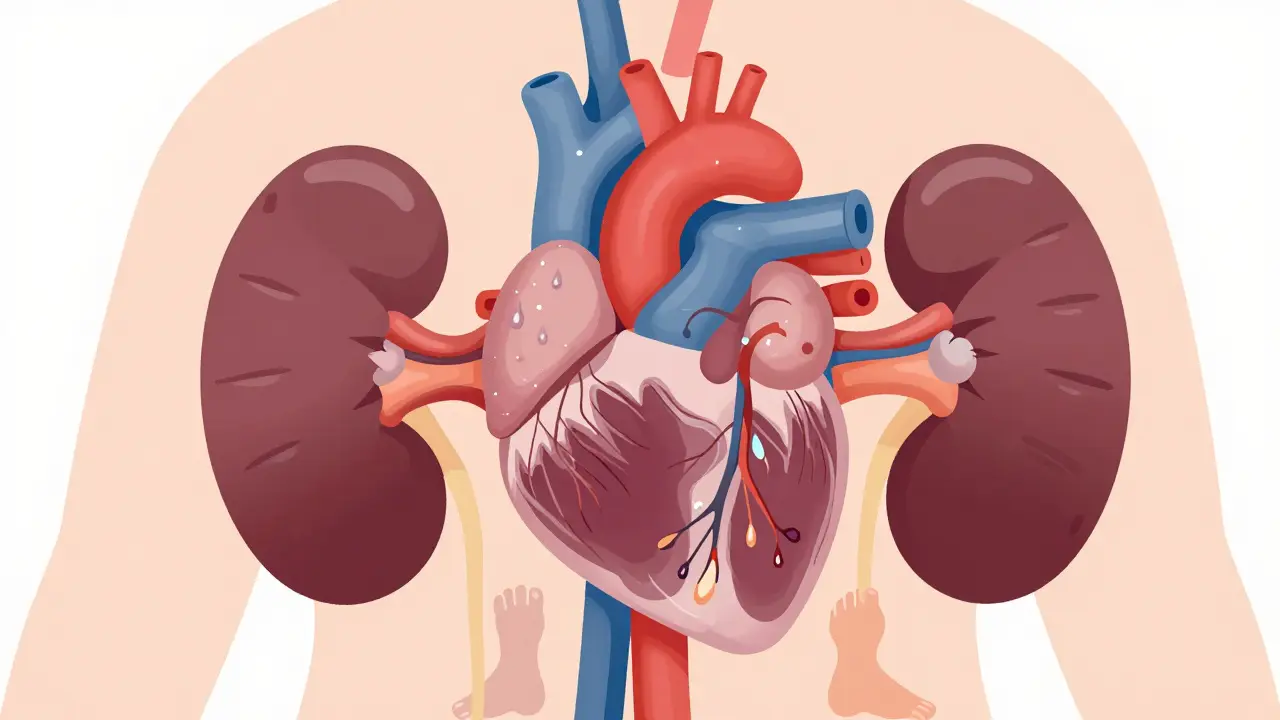
To understand the risk, you need to look at what happens inside your kidneys when you take these pills. Normally, your kidneys filter waste and balance fluids using hormones. One key player here is prostaglandin. It keeps blood vessels in the kidney open so blood can flow through freely. When you introduce NSAIDs into the mix, you stop prostaglandin synthesis.
This shutdown causes the arteries leading to the kidney filters to constrict. Imagine squeezing a garden hose. Less water gets through. When your kidneys can't flush out sodium efficiently, your body holds onto salt. Where there is salt, water follows. This trapped fluid increases the amount of liquid your heart has to pump. For a healthy person, the extra load might be fine. For someone with heart failure, whose heart is already struggling to keep up, this extra volume is dangerous.
Heart Failure is a chronic condition where the heart cannot pump sufficient oxygen-rich blood to meet the body's needs. It often leads to fluid accumulation in the lungs or legs. The connection between NSAIDs and cardiac decompensation was established decades ago but remains underappreciated by many patients.The Evidence Behind the Warning
We aren't guessing about these risks; medical history backs them up. A landmark review published in 2003 by Bleumink and colleagues showed clear connections between renal effects of NSAIDs and cardiac issues. They noted that even "putative renal-sparing NSAIDs," which were supposed to be safer for the kidneys, still increased the risk of heart failure in susceptible patients.
More recent research reinforces this. In 2022, a team led by Holt looked at a nationwide cohort of patients with type 2 diabetes in Denmark. They found that short-term exposure to drugs like celecoxib, diclofenac, ibuprofen, and naproxen significantly raised the odds of being hospitalized for heart failure. The risk spiked during the first week of use. If you take these medications for just a few days, your risk of needing acute care jumps substantially compared to not taking them.
The New Zealand Medsafe agency updated their guidance in June 2019 specifically addressing this. They warned that cardiovascular toxicity from these drugs includes elevated blood pressure and reduced kidney perfusion. This isn't limited to prescription strength doses either. Over-the-counter products sold without a doctor's note carry the same dangers. In fact, over-the-counter sales represent the bulk of usage globally, making patient education difficult.
Are Some NSAIDs Safer Than Others?
Many patients ask if they should just switch to a different brand hoping to find a safer option. The reality is complicated. For years, doctors hoped that COX-2 selective inhibitors would spare the stomach and kidneys. Dr. Steven E. Nissen of the Cleveland Clinic noted in a 2019 editorial that the renal effects of COX-2 inhibitors are virtually identical to traditional NSAIDs when it comes to fluid retention risk.
| Medication Class | Common Examples | Risk Level for Heart Failure | Note on Use |
|---|---|---|---|
| Traditional NSAIDs | Ibuprofen, Naproxen | High | Widely available, high misuse rates |
| COX-2 Inhibitors | Celecoxib (Celebrex) | High | Prescription required, similar renal risk |
| Alternative | Acetaminophen | Low | No anti-inflammatory properties, safer for kidneys |
Some meta-analyses suggest naproxen might have a slightly better profile compared to others, but none are considered completely safe for heart failure patients. The European Society of Card issued guidelines in 2021 stating explicitly that these drugs should be avoided in all heart failure patients due to the high risk of worsening renal function.
Recognizing the Warning Signs Early
Your body sends signals before a crisis hits. The American Heart Association surveyed patients and found that nearly two-thirds of those experiencing acute decompensation from accidental NSAID use reported symptoms like swelling and weight gain. You need to monitor your daily weight. A sudden spike, like gaining 4.5 kilograms (10 pounds) in three days, indicates rapid fluid buildup.
Patient communities online share alarming stories. One user on a health forum described taking standard doses of ibuprofen for a minor ache and requiring hospitalization within 72 hours because their breathing worsened. Shortness of breath is a red flag. If you feel puffy in your ankles or notice your shoes fitting tighter overnight, stop taking the pain medication immediately and call your care provider.
Kidney Function is critical for maintaining fluid balance, measured often by glomerular filtration rate (GFR). Research shows NSAIDs can decrease renal blood flow by approximately 20-30% in susceptible individuals.
Safer Alternatives for Pain Relief
If you cannot stop taking medication entirely, you have options. Acetaminophen is generally recommended as a safer alternative for heart failure patients. It relieves pain but does not have the same anti-inflammatory impact on the kidneys. However, remember it doesn't treat inflammation, so for severe joint pain, the relief might be less complete.
Non-drug strategies matter too. Physical therapy, heat packs, and gentle stretching can manage musculoskeletal pain without triggering renal pathways. If you do need to take NSAIDs-for example, during a dental emergency-the general guideline is to use the lowest effective dose for the shortest possible duration. Never exceed the maximum daily limit. Monitor your weight closely during this period.
The FDA required updated warnings on all NSAID labels in October 2020. This means every bottle should state the increased risk of heart failure. Unfortunately, a survey found that only 43% of primary care physicians routinely screen heart failure patients for these drugs during medication checks. You may need to advocate for yourself. Bring a list of every supplement and pill you take to your appointments.
Planning Ahead for Emergencies
Keep a record of what you've taken. If you end up in the ER, telling the triage nurse about your medication history saves time and prevents dangerous errors. Family members play a role too. According to patient instructions from MedlinePlus, family can help by monitoring sodium intake and avoiding harmful medicines like NSAIDs. Share this information with anyone helping you shop for groceries or medicine.
Current developments in 2024 suggest continued emphasis on risk mitigation. The American Heart Association released statements designating NSAIDs as absolutely contraindicated in all heart failure stages. Despite this, prescribing continues. A 2020 study showed nearly 16% of heart failure patients still received prescriptions within a year of diagnosis. Be proactive in asking your doctor: "Is this safe given my heart condition?"
Can I take ibuprofen if I have heart failure?
Generally, no. Ibuprofen belongs to the NSAID class known to cause fluid retention and worsen heart failure symptoms. Consult your cardiologist before using any over-the-counter pain reliever.
What are the symptoms of fluid retention caused by NSAIDs?
Look for rapid weight gain, swollen ankles or feet (edema), shortness of breath, and reduced urine output. These signs indicate your body is holding onto excess salt and water.
Is acetaminophen safe for heart failure patients?
Yes, acetaminophen is typically considered safer than NSAIDs for heart failure patients as it does not suppress kidney prostaglandins in the same way, though liver function should still be monitored.
Why do NSAIDs affect kidney function?
They block COX enzymes, which reduces prostaglandins needed to keep kidney blood vessels dilated. Constricted vessels lead to decreased filtration and sodium retention, increasing workload on the heart.
How quickly does NSAID risk manifest?
Symptoms can appear rapidly. Clinical reports show fluid retention and decompensation occurring within 24 to 72 hours of starting NSAID therapy, particularly in vulnerable individuals.