
Pharmacist Recommendations: When to Suggest Authorized Generics
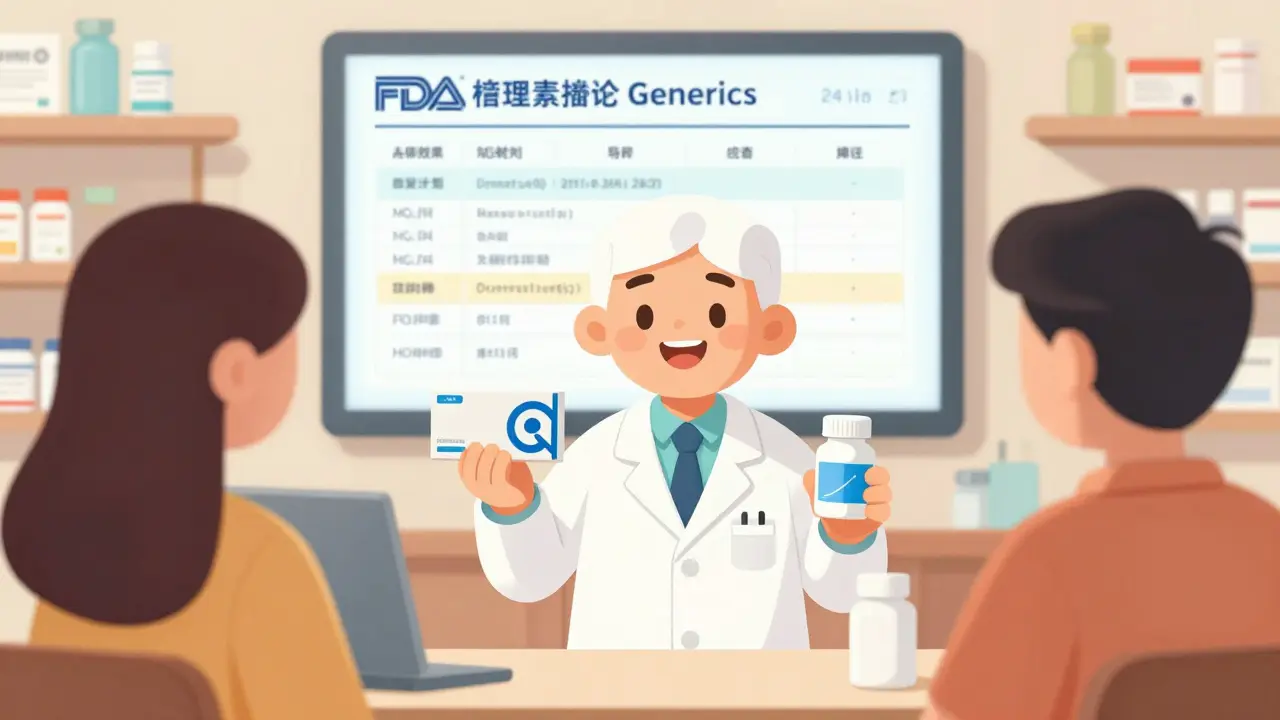
When a patient walks into the pharmacy with a prescription for a brand-name drug, the pharmacist’s first thought isn’t always about cost-it’s about authorized generics. These aren’t your typical generic pills. They’re the exact same medication as the brand, made by the same company, with the same active and inactive ingredients. The only difference? No brand name on the label. And that matters-more than most patients realize.
What Exactly Is an Authorized Generic?
An authorized generic is not a copy. It’s the original. The brand-name manufacturer produces it, then sells it under a different label-no logo, no fancy packaging, just the same pills inside. The FDA defines it clearly: it’s a drug approved under the same New Drug Application (NDA) as the brand, but marketed without the brand name. That means if you’re taking Lipitor, an authorized generic of atorvastatin is chemically identical-same fillers, same coatings, same everything. Regular generics? They’re approved under an Abbreviated New Drug Application (ANDA). They must be bioequivalent, but they can-and often do-use different inactive ingredients. That’s where problems can start.
When Pharmacists Should Recommend Authorized Generics
Not every patient needs an authorized generic. But for some, it’s the only safe switch.
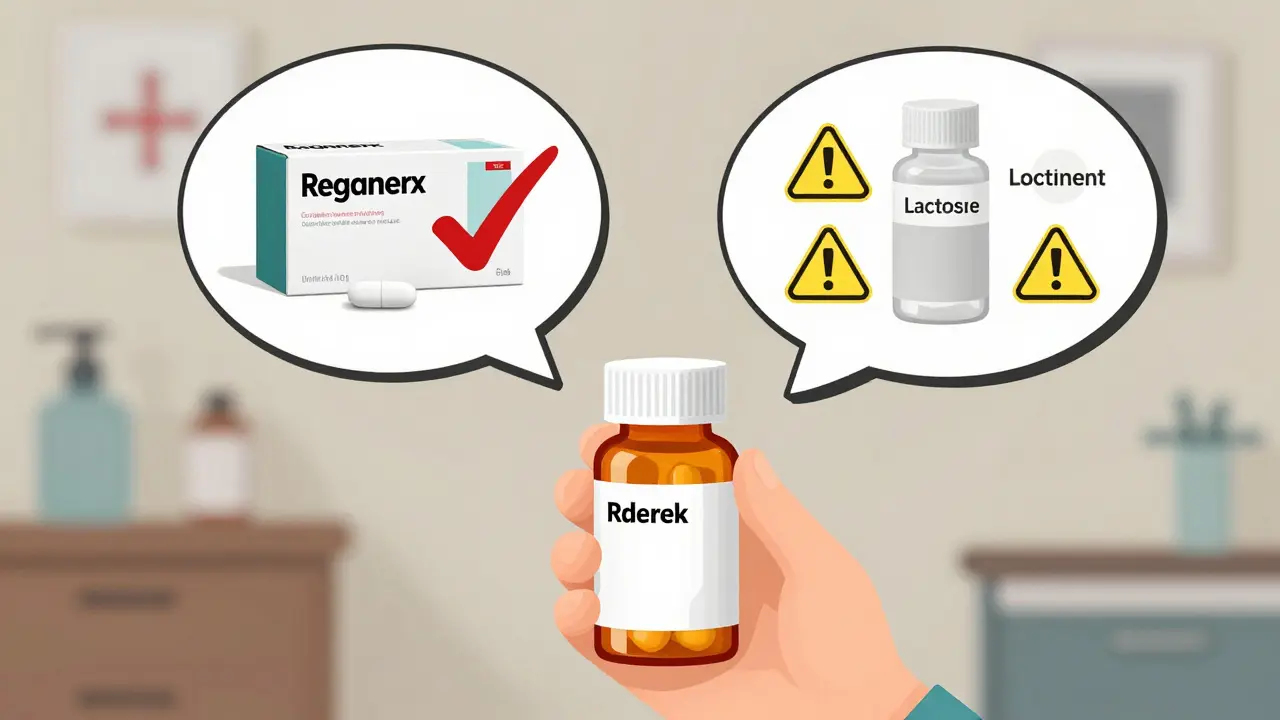
- Patients with allergies or sensitivities to inactive ingredients: Think celiac disease, lactose intolerance, or vegan diets. Many regular generics use gluten, lactose, or gelatin as fillers. The brand-name version may be safe because it uses rice starch or cellulose. But the generic? It might not. An authorized generic keeps the same formula. If the brand worked for your patient’s diet or allergy, the authorized generic will too.
- Narrow therapeutic index (NTI) drugs: These are medications where even tiny changes in blood levels can cause harm. Warfarin, levothyroxine, phenytoin, and cyclosporine fall into this category. Studies show 3-5% of patients on NTI drugs have issues after switching to a regular generic-either because absorption changed slightly or because of different fillers affecting dissolution. Authorized generics eliminate that risk. They’re not just equivalent-they’re identical.
- Modified-release formulations: Drugs like extended-release metformin or controlled-release oxycodone rely on complex coatings and matrices to release slowly. Regular generics may meet bioequivalence standards, but real-world performance can vary. Authorized generics, being the exact same product, deliver consistent results. For patients on these, switching to a regular generic isn’t just a cost cut-it’s a gamble.
- Patients who had a bad reaction after switching: A 2021 survey of 1,200 community pharmacists found that 12% of patients reported unexpected side effects or reduced effectiveness after switching to a regular generic. Often, the issue wasn’t the active ingredient-it was a filler, dye, or coating they didn’t tolerate. Going back to the brand isn’t always affordable. An authorized generic is the middle ground: same drug, lower price.
How to Spot an Authorized Generic
You can’t tell by looking at the pill. A blue tablet might be the brand. The same blue tablet, with different markings, could be the authorized generic. The only reliable way? Check the FDA’s quarterly list.
As of September 2023, there are 257 authorized generics on the FDA’s official list. That’s about 5% of all brand-name drugs with generic versions available. You’ll find them listed with the brand name, the manufacturer (often Pfizer, Merck, or Teva), and the date they entered the market. The National Drug Code (NDC) directory is another tool: if the labeler code matches the brand’s manufacturer-not a generic company like Teva or Sandoz-it’s likely an authorized generic.
Most are tablets or capsules (87%). You won’t find many authorized generics in injectables or inhalers yet. But for oral meds, they’re a solid option.
Insurance and Cost: The Hidden Catch
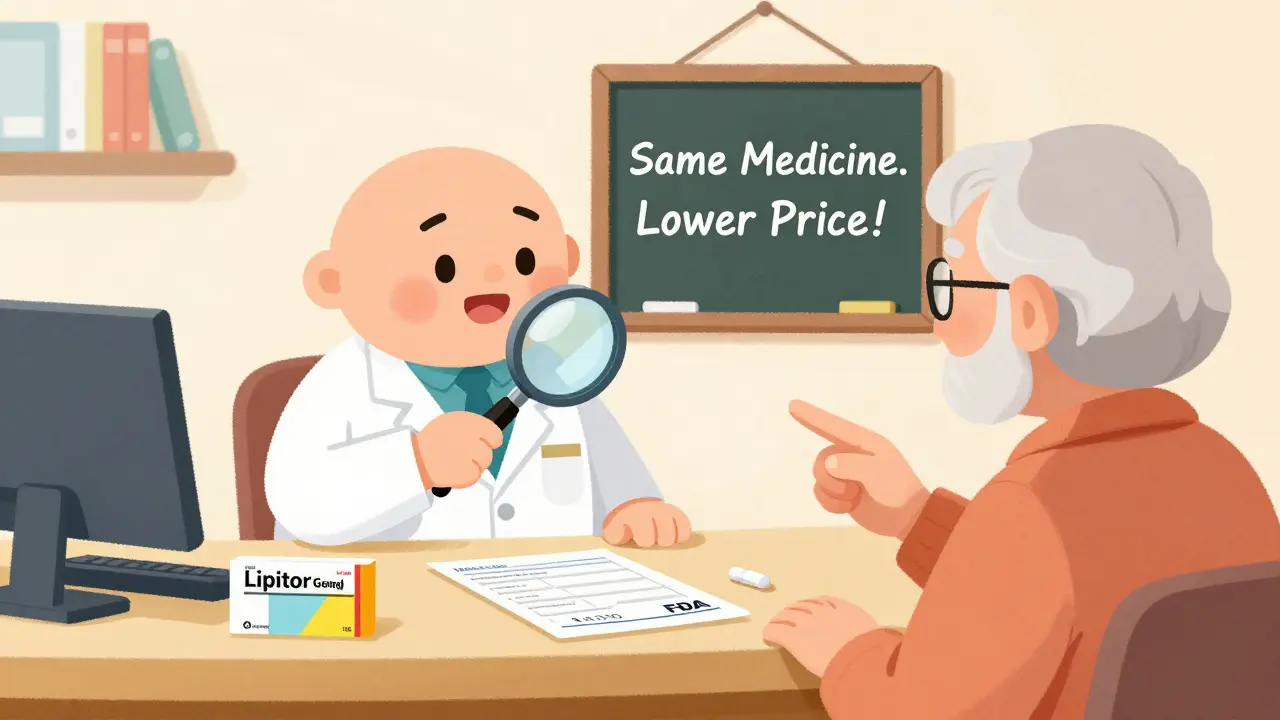
Here’s the part most patients don’t know: authorized generics often cost 20-80% less than the brand. But they don’t always get treated like generics by insurance.
Pharmacy benefit managers (PBMs) sometimes place authorized generics in the brand-name tier. Why? Contracting deals. If the brand manufacturer pays the PBM to steer patients away from generics, they might make the authorized generic count as a brand for reimbursement purposes. A 2022 study found that 63% of PBMs did exactly that. So even though the pill is identical, the patient pays more.
That’s why pharmacists need to check the patient’s formulary before recommending. Sometimes, the regular generic is cheaper-even if it’s not perfect. Other times, the authorized generic is the only affordable option that’s truly safe.
Patient Counseling: Why Appearance Matters
Patients get confused when their pill changes color or shape. A 2022 study found that 27% of patients stopped taking their medication after switching to a generic that looked different-unless the pharmacist explained why.
Don’t assume they know. Say it plainly: “This is the same medicine as your old pill. Same active ingredient. Same fillers. Same everything. The only difference is the company that made it and the label on the bottle. It’s not a new drug-it’s the same one, just cheaper.”
For patients with chronic conditions-diabetes, epilepsy, heart disease-this isn’t just about cost. It’s about trust. If they think they’re getting something different, they’ll stop. A simple explanation can prevent that.
Legal and State Rules
Pharmacists can substitute a brand with an authorized generic in 42 states without asking the prescriber-unless the script says “dispense as written.” But 18 states require notification to the prescriber for any generic substitution, including authorized generics. Always check your state’s rules. Documentation matters. Use the ‘DA’ modifier in billing to show a substitution occurred. Keep records showing the authorized generic matches the brand’s formulation.
And if you’re unsure? Call the prescriber. Better safe than sorry-especially with NTI drugs.
What’s Changing? What’s Next?
Authorized generics are growing. Since 2010, their numbers have increased by 18% each year. More manufacturers are launching them-not just to compete, but to keep patients on therapy. Consumer interest is rising too: GoodRx reports a 47% jump in searches for “authorized generics” between 2021 and 2022.
Legislation like the Affordable Insulin Now Act of 2023 could expand access for high-cost drugs. Professional groups like the American Pharmacists Association are updating guidelines for 2024, with clearer protocols for when to recommend them.
But the biggest barrier isn’t availability. It’s awareness. Many patients don’t know these exist. Many pharmacists don’t check for them. The tools are there-FDA list, NDC database, cost comparators. The knowledge is there-clinical evidence, patient studies, regulatory guidance.
What’s missing? Action.
Bottom Line: When to Recommend
Recommend an authorized generic when:
- The patient has a known intolerance to a filler in regular generics
- The drug has a narrow therapeutic index
- The patient had a negative reaction after switching to a regular generic
- The brand’s formulation is known to be safe for the patient’s condition (e.g., gluten-free, vegan)
- The cost is significantly lower than the brand and the insurance covers it as a generic
Don’t recommend it just because it’s cheaper. Recommend it because it’s the right medicine for the right patient. That’s what pharmacy is about.
Are authorized generics the same as brand-name drugs?
Yes. Authorized generics are made by the same company that makes the brand-name drug, using the exact same ingredients-both active and inactive. The only differences are the label, packaging, and sometimes the pill’s color or shape. They are not copies. They are the original product sold under a different name.
Why are authorized generics cheaper than the brand?
Because they don’t carry the marketing, advertising, or brand-name premium. The manufacturer produces the same pill, but sells it without the brand name, so they can price it lower. Patients typically pay 20-80% less than the brand, while getting the exact same medication.
Can I substitute an authorized generic without the prescriber’s permission?
In most states, yes-unless the prescription says “dispense as written.” Federal law allows substitution, and 42 states permit pharmacists to switch to an authorized generic without contacting the prescriber. But 18 states require notification. Always check your state’s pharmacy board rules before substituting.
Why do some insurance plans charge more for authorized generics?
Some pharmacy benefit managers (PBMs) classify authorized generics under the brand-name tier in their formularies, even though the drug is identical. This is often due to contracts between the brand manufacturer and the PBM. As a result, patients may pay more out-of-pocket than they would for a regular generic-even though the medication is the same.
How do I find out if an authorized generic is available for a drug?
Check the FDA’s quarterly updated list of authorized generics on their website. You can also look up the National Drug Code (NDC) in the FDA’s database. If the labeler code matches the brand-name manufacturer (like Pfizer or Merck), it’s an authorized generic. Regular generics will have labeler codes from companies like Teva, Sandoz, or Mylan.
Next Steps for Pharmacists
Start by checking the FDA’s authorized generic list once a quarter. Bookmark it. Print a cheat sheet for your top 10 most prescribed brand-name drugs. Train your staff to recognize when a patient might benefit-especially those with allergies, chronic conditions, or who’ve had bad experiences with generics.
When a patient asks, “Is there a cheaper version?” don’t just say yes or no. Ask: “Have you had any issues with your current pill?” “Do you have any food allergies or dietary restrictions?” That’s when you can offer the real solution-not just the cheapest option, but the safest one.
8 Comments
soooo i just got switched to some generic atorvastatin and now i’m dizzy as hell lmao. thought it was just me being lazy but turns out the filler might’ve been lactose?? my stomach’s been doing backflips. why tf do they even make these if they’re not the same??
THE BIG PHARMA CONSPIRACY IS REAL 😱 they make the SAME PILLS but charge you 3x for the brand and then make the generic version with gluten so you get sick 😭 they don’t care if you die as long as you keep buying 💸 #WakeUpSheeple
The distinction between authorized generics and standard generics is clinically significant, particularly in the context of narrow therapeutic index medications. The FDA’s regulatory framework for NDA-based products ensures bioequivalence at the molecular level, which is not always guaranteed under ANDA pathways. This distinction merits formal inclusion in pharmacist education curricula.
Man, I never knew this stuff existed. I’ve been on warfarin for 12 years and switched generics three times - each time I felt like I was walking through molasses. Last year my pharmacist slipped me an authorized generic and I swear I felt like myself again. No more dizziness, no more weird bruising. It’s like they just… took the brand off the label and called it a day. Why isn’t everyone talking about this?? I told my whole family. My mom’s on levothyroxine now and she’s begging for the same thing. This isn’t just about money - it’s about not feeling like a lab rat every time your pill changes color.
u guys are clueless 😤 i work at a pharmacy and i saw the real tea - the brand makers pay PBMs to make authorized generics cost MORE so you keep buying the expensive one 😈 they even change the pill shape to mess with your head 💊 i had a patient cry because her 50mg oxycodone went from blue oval to white round and she thought she got fakes. it’s the SAME PILLS. but they want you scared. also i found out my neighbor’s insulin is an authorized generic and he pays $20 vs $400. the system is rigged. #pharmacyscam
It is imperative to note that the regulatory distinction between NDA and ANDA pathways, while technically accurate, often fails to translate into patient-centric communication. The absence of standardized labeling protocols for authorized generics across states creates unnecessary confusion. Furthermore, the economic incentives embedded within PBM contracts undermine the ethical obligation of pharmacists to prioritize therapeutic continuity over cost arbitrage. A unified national guideline is urgently required.
bro i just realized my levothyroxine changed again… and i didn’t even notice till my heart started racing. now i’m paranoid every time i pick it up. why can’t they just make the pills look the same?? 😭
Let me be the adult in the room - this isn’t about generics or brands. It’s about control. The system wants you dependent. It wants you confused. It wants you to think the pill you’ve been taking for 15 years is suddenly unsafe because the logo changed. But here’s the truth: you were never in charge. The pharmacy, the PBM, the manufacturer - they’ve always decided what you take. The authorized generic? It’s not a solution. It’s a distraction. The real problem is that medicine has become a product. And you? You’re just the customer.