
Pregnancy Trimester-Specific Medication Risks: Safer Timing Strategies
Pregnancy Medication Risk Calculator
Medication Safety Assessment
Select a medication and your current gestational age to determine potential risks and safer timing strategies.
When you're pregnant, taking any medication - even something as simple as an antihistamine or pain reliever - isn't just about how it helps you. It's about how it might affect your growing baby. And that risk changes dramatically depending on when during pregnancy you take it. This isn't guesswork. It's science, backed by decades of research and real-world data from millions of pregnancies.
Why Timing Matters More Than You Think
Most people assume that if a drug is safe in one part of pregnancy, it's safe all the way through. That’s not true. The baby’s body develops in stages, and certain weeks are critical for specific organs. Think of it like building a house. You can’t install the roof before the walls. If you do, the whole structure fails. The most dangerous time for structural birth defects is between weeks 3 and 8 after fertilization - that’s roughly weeks 5 to 10 on a typical pregnancy calendar. This is when the heart, brain, limbs, and facial features form. Exposure to certain medications during this window can cause permanent, visible defects. After week 10, major structural damage becomes unlikely. But that doesn’t mean it’s safe to take anything. Later in pregnancy, risks shift from physical malformations to functional problems: brain development, lung maturity, or how the baby’s body handles drugs after birth. Before day 20 after fertilization, most medications follow an "all-or-nothing" rule. If the embryo is damaged enough to cause harm, it usually doesn’t survive - and you miscarry. If it survives, it likely wasn’t harmed. That’s why early pregnancy losses aren’t always linked to medications. But after day 20, every dose counts.First Trimester: The Window for Major Birth Defects
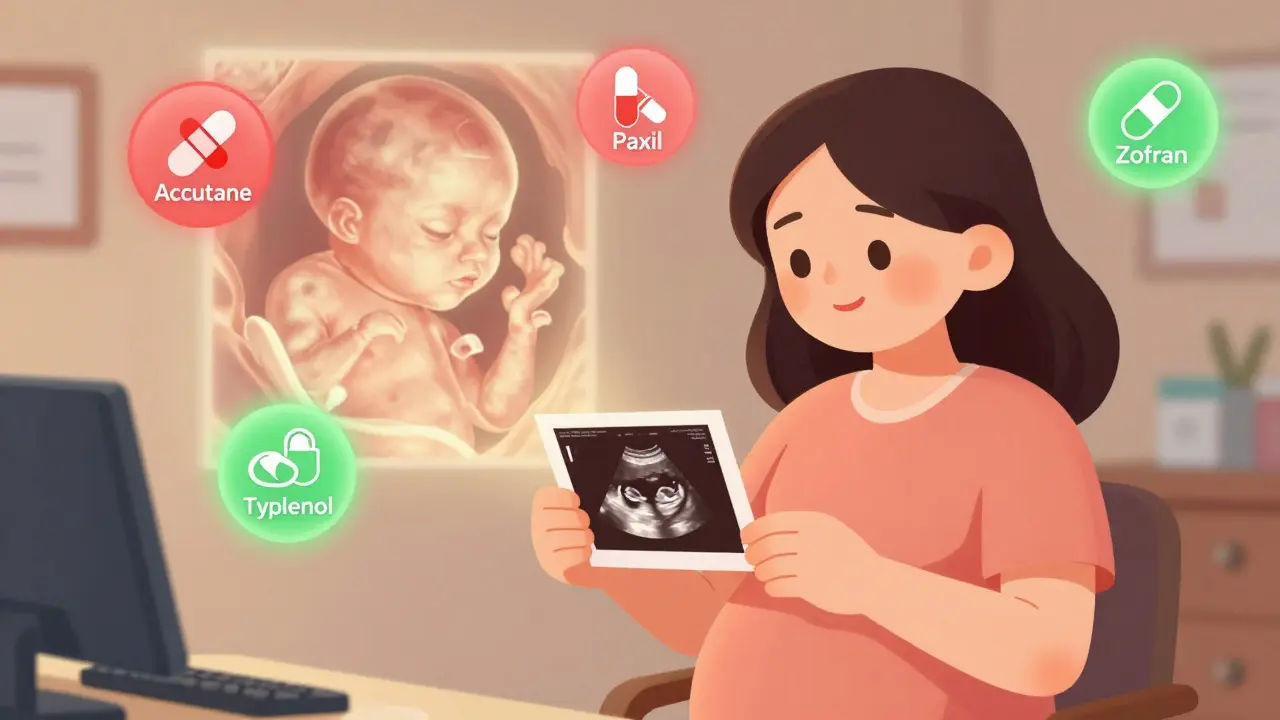
This is when the biggest risks occur - not because drugs are stronger here, but because the baby’s body is being built from scratch. Certain medications have very narrow danger zones:- Isotretinoin (Accutane): Used for severe acne, this drug is one of the most dangerous during pregnancy. If taken between days 21 and 55 after fertilization, it increases the risk of brain, heart, and facial defects by 50 times compared to the general population. That’s why the FDA requires the iPLEDGE program - two negative pregnancy tests before starting, monthly tests during use, and one full month after stopping.
- Paroxetine (Paxil): An SSRI antidepressant. When taken between days 20 and 24 after fertilization - right when the heart is forming - it raises the risk of heart defects from about 1% to 2-3%. Not everyone will have a baby with a defect, but the risk is real and measurable.
- Ondansetron (Zofran): Often used for morning sickness. A 2019 study of 1.8 million pregnancies found a small but significant increase in heart defects when used in the first trimester (odds ratio 1.32). No increased risk was seen after week 10.
On the flip side, some medications are safe even in the first trimester. Doxylamine/pyridoxine (Diclegis), used for nausea, has been studied in over 10,000 pregnancies and shows no increased risk of birth defects. Acetaminophen (Tylenol) is still the top-recommended pain reliever, with 24 studies involving over 215,000 pregnancies showing no link to neurodevelopmental issues at standard doses (up to 3,000 mg/day).
Second Trimester: Shifting From Structure to Function
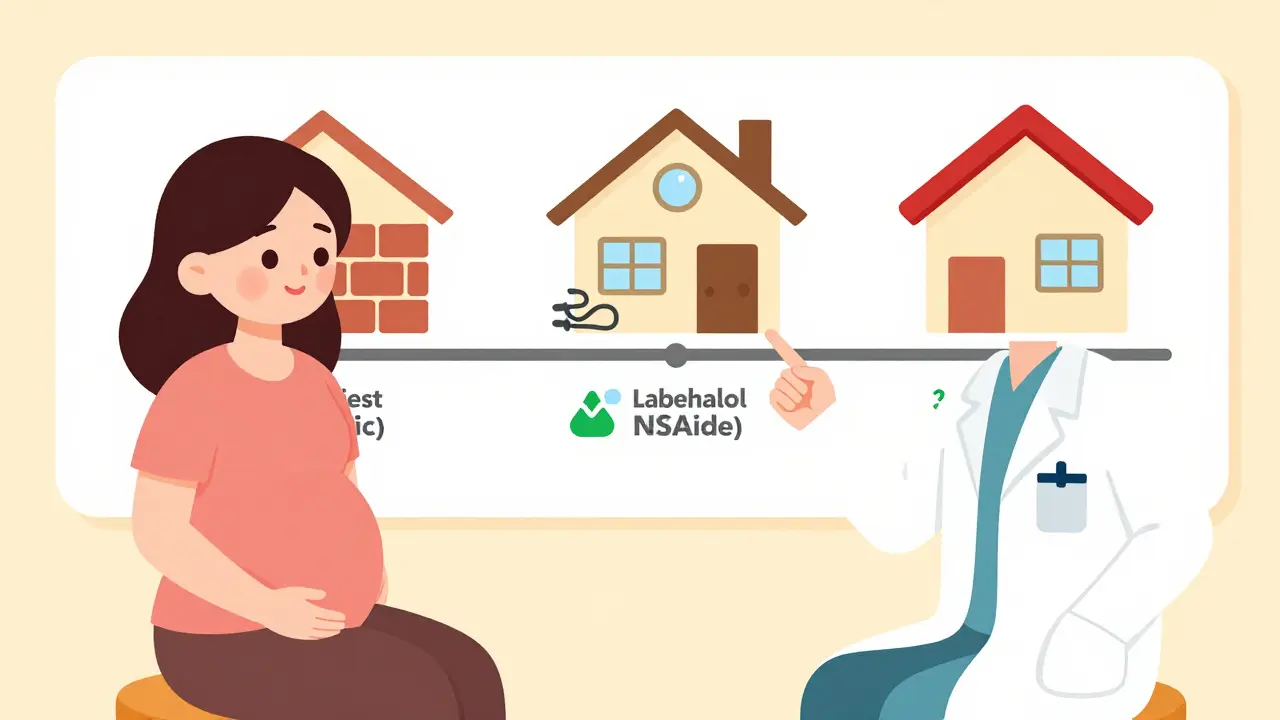
By week 13, most of the baby’s organs are formed. The risk of major birth defects drops sharply. But that doesn’t mean it’s time to relax. Now, the concern shifts to how drugs affect growth, brain wiring, and organ function.- ACE inhibitors (like lisinopril or enalapril): These blood pressure drugs are fine before week 8. But after week 12, they can cause serious kidney damage, low amniotic fluid, and skull deformities in the baby. That’s why doctors switch patients to labetalol or methyldopa - both have been proven safe across all trimesters.
- SSRIs: While sertraline (Zoloft) shows no increased risk of birth defects in the first trimester (odds ratio 1.05), its effects change later. In the second trimester, it may subtly affect fetal movement and heart rate. These aren’t visible defects, but they’re measurable changes that doctors monitor.
Many women stop their antidepressants in the second trimester because they think it’s "safe" - but that’s a dangerous myth. Untreated depression carries its own risks: poor nutrition, missed prenatal visits, and even preterm birth. The goal isn’t to stop all meds - it’s to pick the right ones at the right time.
Third Trimester: The Newborn Risk Zone
In the last few months, the baby’s body is mostly built. But it’s still learning how to function on its own. Medications taken now don’t cause birth defects - they cause withdrawal symptoms, breathing problems, or feeding issues after birth.- SSRIs like paroxetine: In the third trimester, about 30% of babies exposed to this drug show signs of neonatal adaptation syndrome - jitteriness, poor feeding, breathing trouble. Sertraline has a much lower risk (under 5%).
- NSAIDs (ibuprofen, naproxen): Safe before week 20. Between weeks 20 and 31, they can reduce amniotic fluid by 10-15%. After week 32, they can cause the ductus arteriosus (a vital blood vessel) to close prematurely - which can lead to heart failure in the newborn.
- Antibiotics like tetracycline: Can stain baby teeth and affect bone growth if taken after week 15.
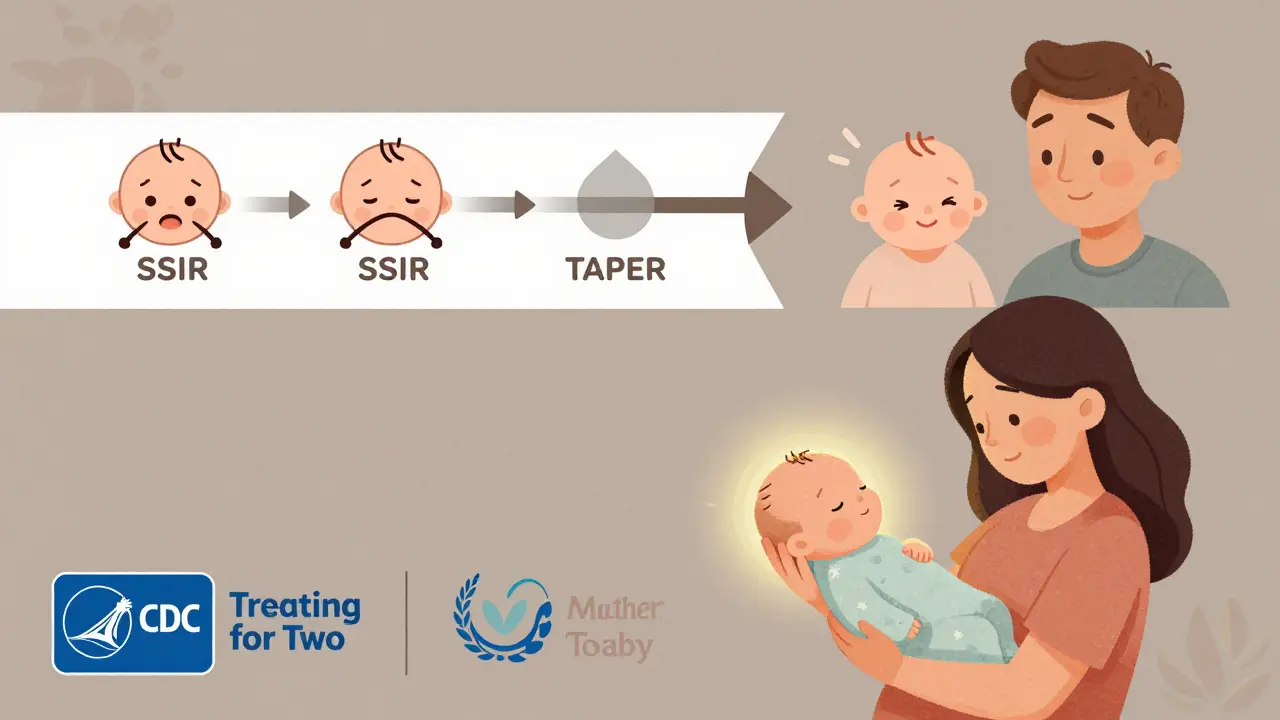
Here’s a real-life example: A mom in Phoenix, SarahM, had her first baby suffer from withdrawal after she stopped sertraline cold turkey at 36 weeks. Her second pregnancy? She worked with her psychiatrist to slowly reduce her dose - from 100mg to 50mg over six weeks - starting at 34 weeks. No withdrawal symptoms. No relapse. That’s the power of timing.
What About the Drugs We Don’t Know Much About?
Here’s the uncomfortable truth: 79% of prescription medications don’t have enough data to say whether they’re safe during pregnancy. The FDA only started requiring detailed trimester-specific data after 2015. Many older drugs were approved decades ago with minimal pregnancy studies. That’s why experts like Dr. Christina Chambers from UC San Diego stress: "The critical window isn’t calendar trimesters - it’s embryonic development stages." A doctor who says "don’t take anything in the first trimester" is oversimplifying. A drug taken on day 25 after fertilization might be fine. Taken on day 22? High risk.That’s why precise dating matters. If you think you’re 8 weeks pregnant based on your last period, but an ultrasound says you’re actually 6 weeks and 4 days, your risk profile changes completely. Misdating leads to 22% of unnecessary pregnancy terminations after a medication exposure, according to a 2021 study.
How to Make Safer Decisions
You don’t have to guess. Here’s how to navigate this safely:- Know your dates. If you’re unsure when you conceived, get an early ultrasound. It’s not just for seeing the baby - it’s for accurate risk assessment.
- Don’t stop meds without talking to your provider. Stopping metformin for PCOS, for example, can cause dangerous blood sugar spikes. Stopping antidepressants can lead to severe depression. Both hurt the baby more than the medication.
- Use trusted resources. The CDC’s Treating for Two tool and the MotherToBaby hotline (1-800-972-1020) offer free, evidence-based advice. Avoid Reddit, Facebook groups, or Dr. Google. A 2023 survey found 68% of pregnant people used social media for medication advice - and 42% got conflicting answers.
- Ask for the latest label. Look up your drug on the FDA’s Drugs@FDA database. Since 2015, all new drugs must include trimester-specific risk summaries. Older drugs? Check the TERIS database (free through many hospitals).
- Plan ahead. If you’re trying to get pregnant and take chronic meds (like for epilepsy, depression, or high blood pressure), talk to your doctor before conception. Switching to a safer option takes time.
The Bigger Picture: Progress and Gaps
The system is improving. In 2023, 93% of newly approved drugs included pregnancy exposure registries - up from just 58% between 2010 and 2014. The FDA now requires drugmakers to study effects by trimester. The NIH is funding a risk calculator that will one day use your genetics, your exact gestational age, and your medication dose to give you a personalized safety score.But we’re not there yet. Only 27% of drug labels include quantitative risk estimates. Many OB-GYNs still feel unsure. In a 2023 survey, only 31% of providers said they felt "very confident" interpreting trimester-specific data.
The goal isn’t to avoid all medications. It’s to use the right one, at the right time, at the right dose. For most women, that means continuing necessary treatments - with smart timing. For others, it means switching to a safer alternative. Either way, the key is not fear. It’s knowledge.
14 Comments
Man, this post is like a masterclass in prenatal pharmacology - I’ve been reading up on this stuff since my wife’s first trimester and honestly, it’s terrifying how little most OBs know. The fact that we’re still using drugs with zero trimester-specific labeling in 2024? Wild. I love how you broke down the developmental windows - it’s not just about ‘first trimester bad’ but about which organ’s being built that week. Like, paroxetine at day 22? Heart’s forming. Day 25? Probably fine. That’s the nuance we need.
It’s funny… I remember when I was trying to get pregnant, my doctor just said ‘avoid everything’ - no specifics, no science, just fear. Then I found MotherToBaby and it was like a breath of oxygen. I was on sertraline, 150mg, and they walked me through the tapering timeline, the risks by week, even the amniotic fluid studies. It’s not about being ‘safe’ - it’s about being informed. You don’t have to live in a bubble. You just need someone who knows the difference between ‘possible risk’ and ‘proven danger’.
So glad someone finally put this out there without sugarcoating. I’m a dad, not a mom, but I’ve sat through enough prenatal appointments to know how much misinformation is out there. My wife had Zofran for 6 weeks - we were terrified. Then we checked the 2019 study - odds ratio 1.32. That’s like, a 0.3% increase in risk. Meanwhile, she was dehydrated and losing 10 lbs a week. We didn’t stop. She’s fine. Baby’s fine. The real danger isn’t the drug - it’s the panic.
Look, I’m British and I’ve seen this kind of over-medicalisation before. We used to just tell women ‘don’t take anything’ and now we’ve got spreadsheets for every day after conception. It’s madness. My sister took ibuprofen at 28 weeks - her baby was born at 39 weeks, perfectly healthy. The system’s so scared of liability it’s scaring people away from medicine altogether. Sometimes, common sense beats a 2015 FDA guideline.
Okay but let’s be real - if you’re on Accutane and pregnant, you’ve got bigger problems than trimester timing. I mean, come on. Who takes that and doesn’t know? And yet, here we are, turning every little pill into a life-or-death calculus. I’ve got a friend who stopped her blood pressure med because she thought ‘second trimester = safe’ - guess what? She ended up in the hospital with preeclampsia. The real enemy isn’t the drug - it’s the assumption that ‘it’s fine’ just because you’re past week 10.
So let me get this straight - we’ve got a whole scientific framework for when a drug might fry a fetus’s heart… but we still let Big Pharma slap ‘Category C’ on everything and call it a day? And we wonder why women are Googling ‘is Benadryl okay?’ at 3am? I’m not mad - I’m just disappointed. This is 2024. We’ve got CRISPR and Mars rovers. But we can’t tell a pregnant woman if her migraine pill will give her baby six fingers? We’re not just behind - we’re comically, tragically, absurdly behind.
As someone who actually read the TERIS database (yes, it exists) and cross-referenced with the FDA’s Drugs@FDA, I must say - this post is amateurish. You mention ‘24 studies’ on acetaminophen - but none of them controlled for maternal BMI, smoking, or polypharmacy. The real data? A 2022 meta-analysis in JAMA Pediatrics showed a 1.7x increase in ADHD risk with >3000mg/week. So… yeah. You’re not ‘safe’. You’re just statistically lucky.
Key point missed here - ultrasound dating isn’t just helpful, it’s essential. I’ve seen too many cases where a woman thinks she’s 8 weeks when she’s really 6 weeks 4 days. That’s a 14-day window where the risk profile changes completely. If you’re taking anything in the first 8 weeks and you’re not sure of your dates - get an ultrasound. It’s cheaper than a NICU stay. And yes, I’m a midwife. I’ve seen it all.
🌿 This is why I love science - not fear, not dogma, but precision. The body isn’t a machine with ‘safe zones’ - it’s a symphony of development, and timing is the conductor. I’ve been studying embryogenesis for years - and this breakdown? It’s beautiful. The fact that we can now predict risk down to the day? That’s not just medicine - that’s art. And we need more of this. Not just for moms - for all of us. 🌱🧠
Let me ask you this - who really funds these ‘trimester-specific’ studies? Big Pharma? The FDA? Or the same people who told us cigarettes were safe? I’ve seen the data - the registries are full of holes. They track the happy cases. The ones where the baby was born fine. What about the ones that miscarried? The ones that were stillborn? The ones that got autism later? They don’t count those. This isn’t science. It’s PR with a lab coat.
Anyone who says ‘acetaminophen is safe’ hasn’t read the 2023 Harvard cohort study. 4000+ pregnancies. 3x increase in language delays. 2.5x increase in ADHD. They call it ‘standard dose’ - but 3000mg/day is 6 pills. That’s not ‘moderate’. That’s chronic. And we’re still telling women it’s fine? We’re not protecting babies. We’re protecting liability. Wake up.
I’m a dad of two. My first kid? Born at 37 weeks, had a weird jittery phase. Turns out I gave my wife ibuprofen for a headache at 33 weeks. We didn’t know. Second kid? We got the ultrasound, checked every med with MotherToBaby, switched to Tylenol, and avoided NSAIDs like the plague. Baby’s 2 now - no issues. It’s not about being perfect. It’s about being curious. And honestly? That’s the whole point of this post. Knowledge > fear.
This is why modern pregnancy is a luxury for the rich. Only those with time, money, and access to specialists can afford to ‘time their meds’ like a NASA launch. Meanwhile, millions of women in developing countries - or even rural America - are taking whatever’s in the cabinet. The real issue isn’t the drugs. It’s the system that lets this be a ‘science problem’ instead of a human rights crisis. You can’t have ‘precision medicine’ when half the population can’t afford a doctor.
Stop coddling pregnant women. They’re not fragile. They’re not babies. If you’re too weak to handle a headache without drugs, maybe you shouldn’t be having kids. Accutane? Don’t take it. Ibuprofen? Don’t take it. Period. No ‘timing’. No ‘odds ratios’. Just don’t. Your baby’s life isn’t a math problem. It’s a gift. Protect it. Period.