
PTSD Nightmares: Prazosin vs. Sleep-Focused Therapies (2026 Guide)
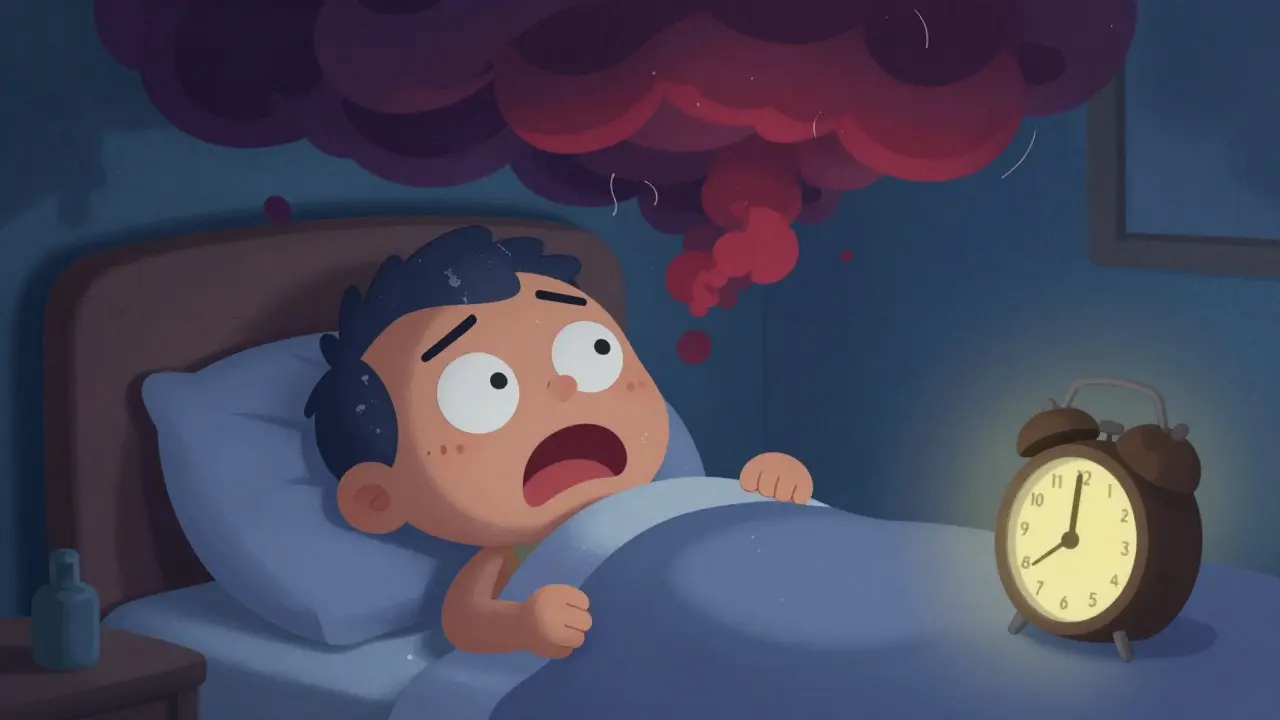
Waking up gasping for air, heart pounding, trapped in a memory you can’t escape-it’s not just a bad dream. For the roughly 71-90% of military veterans and 52-71% of civilian trauma survivors living with PTSD, these nightmares are a daily reality. They aren’t just interruptions; they’re a core symptom that keeps your nervous system on high alert, even when you’re supposed to be safe in bed.
You’ve probably heard about Prazosin, an alpha-1 adrenergic antagonist originally developed as an antihypertensive medication by Pfizer in 1976. It’s been the go-to prescription for years. But is it actually working? And what if there are other ways to reclaim your sleep without relying solely on pills? This guide breaks down the real data behind Prazosin and compares it to powerful, evidence-based therapies like Cognitive Behavioral Therapy for Insomnia (CBT-I) and Imagery Rehearsal Therapy (IRT).
Why Prazosin Became the Standard (And Why It’s Complicated)
Prazosin didn’t start out as a nightmare cure. In 2003, Dr. Murray Raskind at VA Puget Sound Health Care System repurposed this blood pressure drug for PTSD nightmares. The logic was sound: block the adrenaline surge that fuels those violent dreams. For a long time, it seemed like a miracle. If you’ve taken Prazosin, you might have noticed fewer night terrors or slightly deeper sleep.
However, the picture isn’t as clear-cut as we thought. As of 2023, the FDA has not approved any medication specifically for PTSD nightmares. Prazosin remains an off-label treatment. Why? Because recent large-scale studies have shown mixed results. A major Department of Defense-funded trial in 2018 found little difference between Prazosin and placebo for many patients. Critics like Dr. Charles Marmar argue we need to reconsider our enthusiasm for Prazosin monotherapy.
Yet, defenders like Dr. Raskind counter that negative trials often used inadequate dosing or included patients who didn’t have prominent nightmares. The current consensus? Prazosin helps some people-especially those with severe hyperarousal-but it rarely fixes the underlying PTSD. It treats the symptom, not the source.
The Power of Sleep-Focused Therapies
If pills only manage the adrenaline, what addresses the root cause? Enter behavioral therapies. These aren’t just "talk therapy"; they are structured, clinical interventions designed to retrain your brain’s response to sleep and trauma.
Cognitive Behavioral Therapy for Insomnia (CBT-I) is formally established as a first-line treatment by the American Academy of Sleep Medicine. Unlike Prazosin, which just dampens the signal, CBT-I changes how you interact with sleep. It involves:
- Stimulus Control: Getting out of bed if you’re awake for more than 20 minutes, breaking the association between bed and anxiety.
- Sleep Restriction: Limiting time in bed to actual sleep time to build sleep drive.
- Cognitive Restructuring: Challenging fears about sleeplessness itself.
Then there’s Imagery Rehearsal Therapy (IRT). This is specific to nightmares. You rewrite the script of your recurring nightmare into a positive or neutral ending while you’re awake. Studies show IRT leads to a 67-90% reduction in nightmare frequency for PTSD patients. It’s active, creative, and puts you back in control of the narrative.
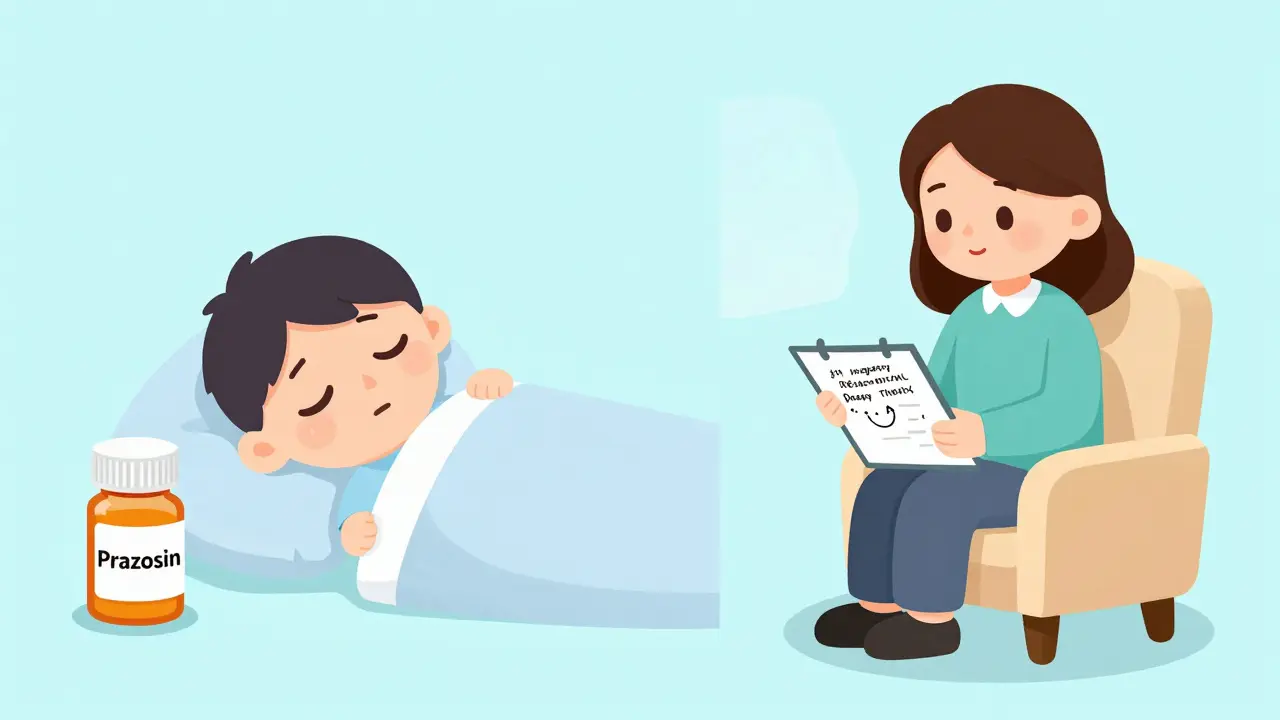
Head-to-Head: Prazosin vs. CBT-I vs. IRT
So, which one should you choose? Let’s look at the hard numbers from recent meta-analyses and clinical trials.
| Treatment | Primary Mechanism | Efficacy for Nightmares | Impact on Overall PTSD | Key Side Effects/Challenges |
|---|---|---|---|---|
| Prazosin | Blocks adrenaline receptors | Moderate (g=0.47) | Minimal (g=0.11) | Dizziness, low blood pressure, rebound nightmares upon stopping |
| CBT-I | Behavioral conditioning & cognitive change | High (large effect size for insomnia) | Moderate (g=0.62) | Initial sleep worsening during restriction phase; requires effort |
| Imagery Rehearsal Therapy (IRT) | Script rewriting & exposure | Very High (67-90% reduction) | Moderate to High | Requires confronting trauma memories; limited access to specialists |
A 2022 study combining CBT-I with Prolonged Exposure (trauma therapy) showed massive gains: insomnia severity dropped by 12.4 points, and total sleep time increased by 78 minutes. That’s significantly better than hygiene-focused approaches alone. Meanwhile, Prazosin remains popular because it’s easy to prescribe. About 78% of veterans in VA care receive medication, but only 32% receive evidence-based psychotherapy. Accessibility is a huge factor.
Real-World Experiences: What Patients Say
Data is great, but lived experience matters. On Reddit’s r/PTSD community, 62% of users reported reduced nightmare frequency with Prazosin, and 38% saw complete cessation. But 44% dealt with side effects like dizziness or nasal congestion. More concerning, 28% reported "rebound nightmares" when they tried to stop the drug-a scary phenomenon where dreams come back worse than before.
Conversely, VA patient surveys show 71% of people completing CBT-I report improved sleep quality, with 63% maintaining those gains six months later. One common complaint? The initial struggle. "The first week of sleep restriction was brutal," one veteran noted. But another added, "Regaining control over my sleep without medication felt empowering." IRT users also report high satisfaction, with 85% noting reduced nightmare distress in a 2020 National Center for PTSD survey.

New Frontiers: Digital Therapeutics and Integrated Care
We’re entering a new era. In 2020, the FDA approved NightWare, the first digital therapeutic for PTSD nightmares. Using an Apple Watch, it detects physiological signs of REM sleep disruption and delivers subtle vibrations to gently shift the dream state without waking you fully. Early validation studies showed a 58% reduction in nightmares.
The Department of Defense allocated $28 million in its 2024 budget for integrated sleep-PTSD research, focusing on combining CBT-I with virtual reality exposure therapy. The RAND Corporation predicts that by 2027, integrated sleep-PTSD models will be the standard of care. The goal? No longer treating sleep as a separate issue, but recognizing that healing sleep accelerates emotional regulation and PTSD recovery.
How to Choose Your Path Forward
There is no one-size-fits-all. Here’s a practical decision tree:
- Try Prazosin if: You need immediate relief from severe hyperarousal, cannot engage in therapy right now, or have failed behavioral treatments. Start low (1 mg) and titrate up slowly under doctor supervision.
- Choose CBT-I if: You want long-term, medication-free results, struggle with general insomnia alongside nightmares, and are willing to put in the work for 6-8 weeks.
- Opt for IRT if: Your primary issue is recurring, specific nightmares. It’s highly targeted and effective.
- Consider Combination Therapy: Many experts now recommend using Prazosin temporarily to stabilize sleep while you engage in CBT-I or trauma-focused therapy, then tapering off the medication as skills improve.
Don’t let stigma or fear hold you back. Whether you choose a pill, a therapy, or a tech tool, the goal is the same: peace in your own bed. Talk to your provider about these options. Ask questions. Demand a plan that addresses both the nightmare and the trauma behind it.
Is Prazosin FDA-approved for PTSD nightmares?
No. As of 2023, the FDA has not approved Prazosin specifically for PTSD nightmares. It is used off-label based on earlier clinical success, though recent large trials have shown mixed efficacy. Always consult your doctor for proper dosing and monitoring.
What is the typical dosage for Prazosin for nightmares?
Treatment usually starts at 1 mg nightly, increasing by 1 mg weekly until a response is seen or a maximum of 10-25 mg is reached. It is typically taken 60-90 minutes before bedtime to align with peak plasma concentration. Blood pressure monitoring is essential due to hypotension risks.
How does Imagery Rehearsal Therapy (IRT) work?
IRT involves identifying a recurring nightmare, writing down the details, and then rewriting the script to have a positive or neutral ending. You rehearse this new version daily while awake. Over 3-5 sessions, this retrains the brain to alter the dream narrative, reducing distress and frequency.
Can I use Prazosin and CBT-I together?
Yes, combination therapy is increasingly common. Prazosin can help stabilize sleep initially, making it easier to engage in the demanding work of CBT-I. Many clinicians recommend tapering off Prazosin once behavioral skills are established to maintain long-term gains without medication dependency.
What are the side effects of Prazosin?
Common side effects include dizziness, fatigue, nasal congestion, and orthostatic hypotension (a drop in blood pressure when standing). Some users also report "rebound nightmares" if the medication is stopped abruptly. Never discontinue Prazosin without medical supervision.