
Recent Authorized Generic Approvals: Current Options and Market Trends
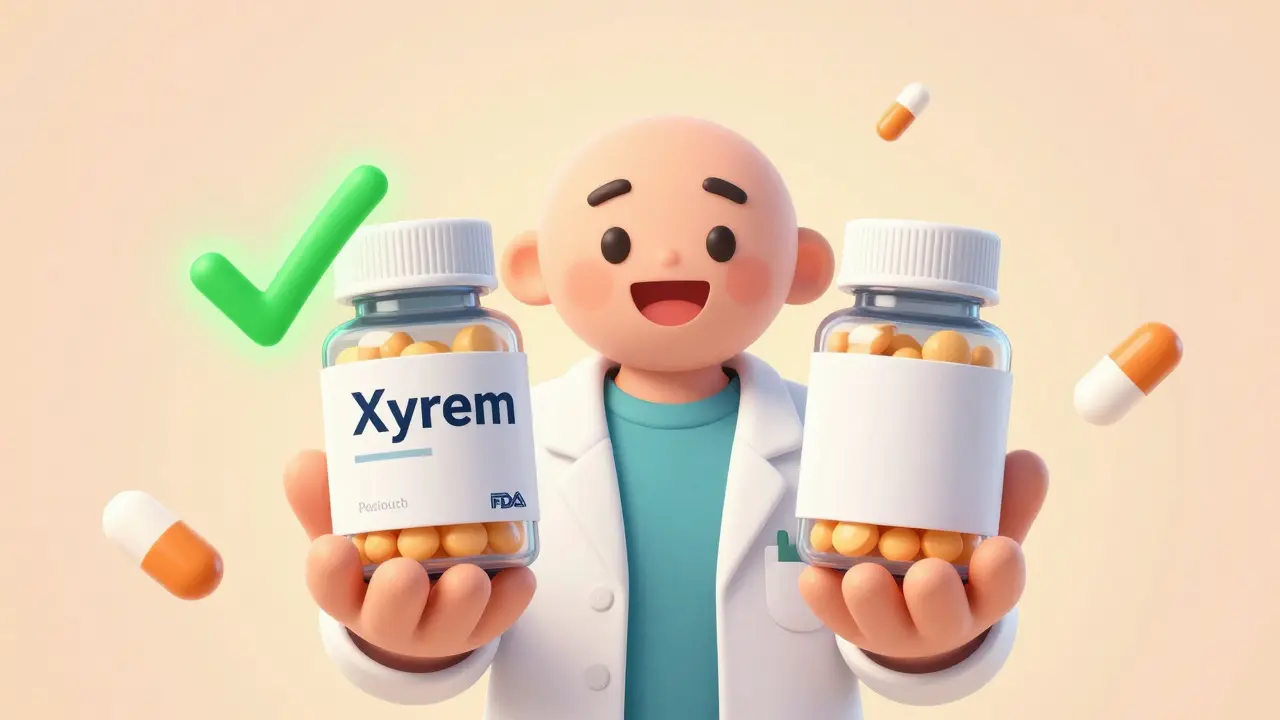
When you pick up a prescription, you might not realize there are different kinds of generics on the shelf. One type-authorized generics-isn’t like the rest. These aren’t just cheaper copies made by a different company. They’re the exact same pills, capsules, or injections as the brand-name drug, made by the original manufacturer, just sold under a different label. That’s not a marketing trick. It’s a regulatory reality approved by the FDA.
What Exactly Is an Authorized Generic?
The FDA defines an authorized generic as a drug that’s identical in every way to the brand-name product: same active ingredients, same inactive ingredients, same manufacturing process, same quality controls. The only differences? The label, the packaging, and sometimes the name on the bottle. You won’t find a different chemical structure, a different tablet shape, or a different filler. It’s the same medicine, just cheaper.
Unlike traditional generics, which must prove they work the same through bioequivalence studies (ANDA applications), authorized generics skip that step entirely. Why? Because they’re made by the same company that makes the brand. Think of it like a car manufacturer selling the same model under two different dealership names. The vehicle doesn’t change-only the badge.
The FDA maintains a public list of authorized generics, updated quarterly. As of October 2025, there are 1,247 authorized generic products on record. That’s about 7% of all generic drugs listed in the Orange Book. The most common categories? Cardiovascular drugs (22%), central nervous system medications (18%), and metabolic treatments like diabetes drugs (15%).
Recent Approvals in 2025
2025 saw a sharp drop in new authorized generics. Only 12 were approved last year, compared to 37 in 2022. That’s not because the market disappeared-it’s because regulatory pressure changed the game.
The two most recent authorized generics approved in October 2025 were:
- Sodium oxybate (marketed as Xyrem) by Jazz Pharmaceuticals-now available under a different label and at a lower price.
- Plecanatide (Trulance) from Ironwood Pharmaceuticals, repackaged under a generic label after patent expiry.
These are exceptions. Most brand companies stopped launching authorized generics after 2020. Why? The Federal Trade Commission cracked down on "pay-for-delay" deals where brand manufacturers would pay generic companies to delay entering the market. In 2023, Teva paid $1.2 billion to settle allegations tied to its authorized generic strategy for Copaxone. Since then, companies have shifted tactics.
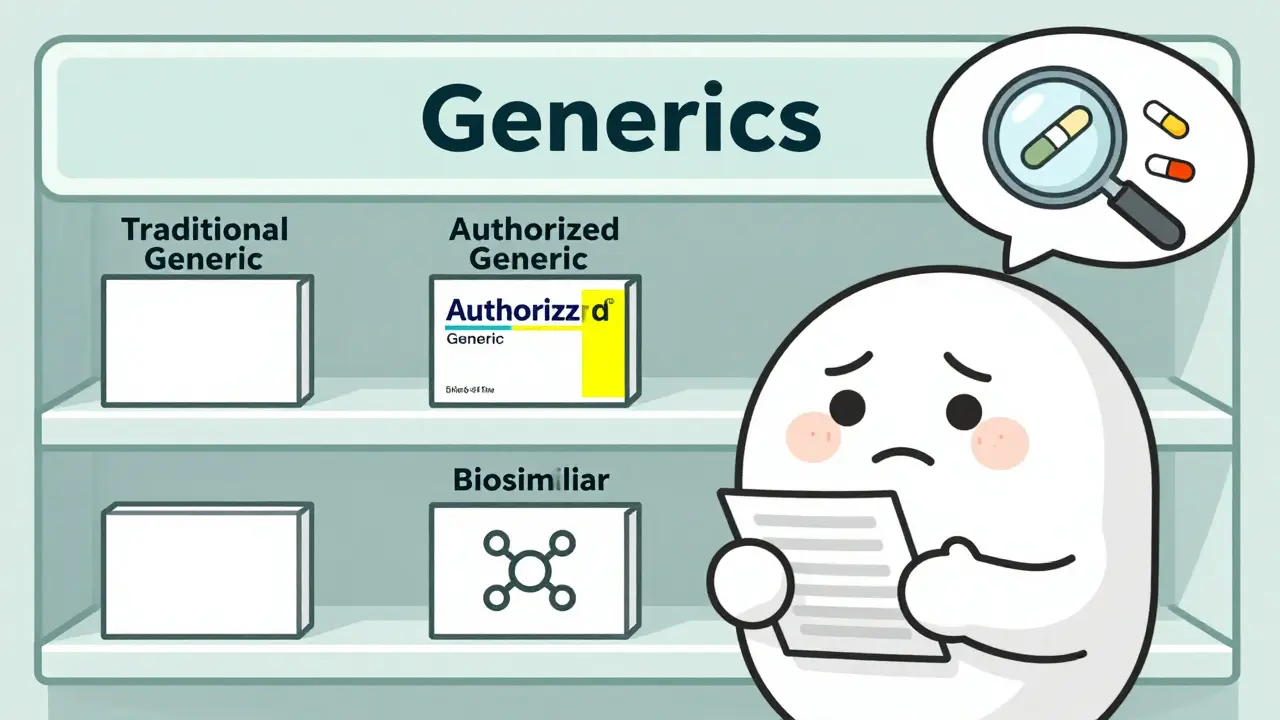
Authorized Generic vs. Traditional Generic vs. Biosimilar
It’s easy to confuse these three types of alternatives to brand-name drugs. Here’s how they differ:
| Feature | Authorized Generic | Traditional Generic | Biosimilar |
|---|---|---|---|
| Manufacturer | Same as brand-name maker | Different company | Different company |
| Active Ingredients | Identical | Identical | Highly similar |
| Inactive Ingredients | Identical | May differ | May differ |
| Approval Path | None-same as brand NDA | ANDA (bioequivalence) | Biosimilar pathway (clinical studies) |
| Therapeutic Equivalence Rating | A (exact match) | A (usually) | B (similar, not identical) |
| Price Reduction | 10-15% below brand | Up to 80% below brand | 15-35% below brand |
For drugs with narrow therapeutic indexes-like warfarin, levothyroxine, or seizure medications-authorized generics are often the safest switch. A 2024 JAMA study found patients switching from brand to authorized generic had fewer side effects than those switching to traditional generics. Why? Because inactive ingredients (fillers, dyes, coatings) can affect absorption. If you’ve ever been told, "This generic didn’t work like the brand," it’s likely because of those differences.
Why Aren’t More Authorized Generics Available?
There’s a simple reason: they don’t make enough money for manufacturers.
Traditional generics can undercut brand drugs by 80% because they’re made by low-cost producers. Authorized generics? They’re still made by the brand company. Their production costs are high. So they price them just 10-15% below the brand. That’s not enough to win over most insurers or patients.
Worse, pharmacy benefit managers (PBMs) often favor traditional generics because they get bigger rebates. In 2025, Blue Cross Blue Shield removed coverage for the authorized generic of Jardiance-even though it was chemically identical-because their PBM had a better deal on the traditional version. Patients ended up paying more for the exact same medicine.
And here’s the irony: many pharmacists can’t tell the difference. A 2025 survey of over 2,300 pharmacists found 63% couldn’t reliably identify authorized generics without checking the FDA’s Orange Book. That means patients often get counseling they don’t need-or worse, get switched to a different generic without realizing the authorized version exists.
What This Means for Patients
If you’re on a drug like sertraline, pregabalin, or metformin, ask your pharmacist: "Is there an authorized generic?" It might be sitting on the shelf, labeled with a different name, and priced only slightly lower than the brand. You might not save much money-but you’ll know you’re getting the exact same drug your doctor prescribed.
For drugs like insulin, thyroid meds, or blood thinners, where small differences can have big consequences, authorized generics are the safest option. A Reddit user in the r/pharmacy community shared: "I’ve seen patients stabilized on brand-name sertraline get dizzy or nauseous with traditional generics. Never with Pfizer’s authorized version. Same pills. Same results."
But here’s the catch: you won’t see ads for authorized generics. No billboards. No TV spots. Manufacturers don’t promote them. They’re not trying to compete-they’re just trying to avoid losing the whole market to cheaper generics.
The Future: Declining but Still Relevant
The number of authorized generics is expected to keep falling. The FDA’s 2025 report shows a 35% drop since 2020. Why? Two big reasons:
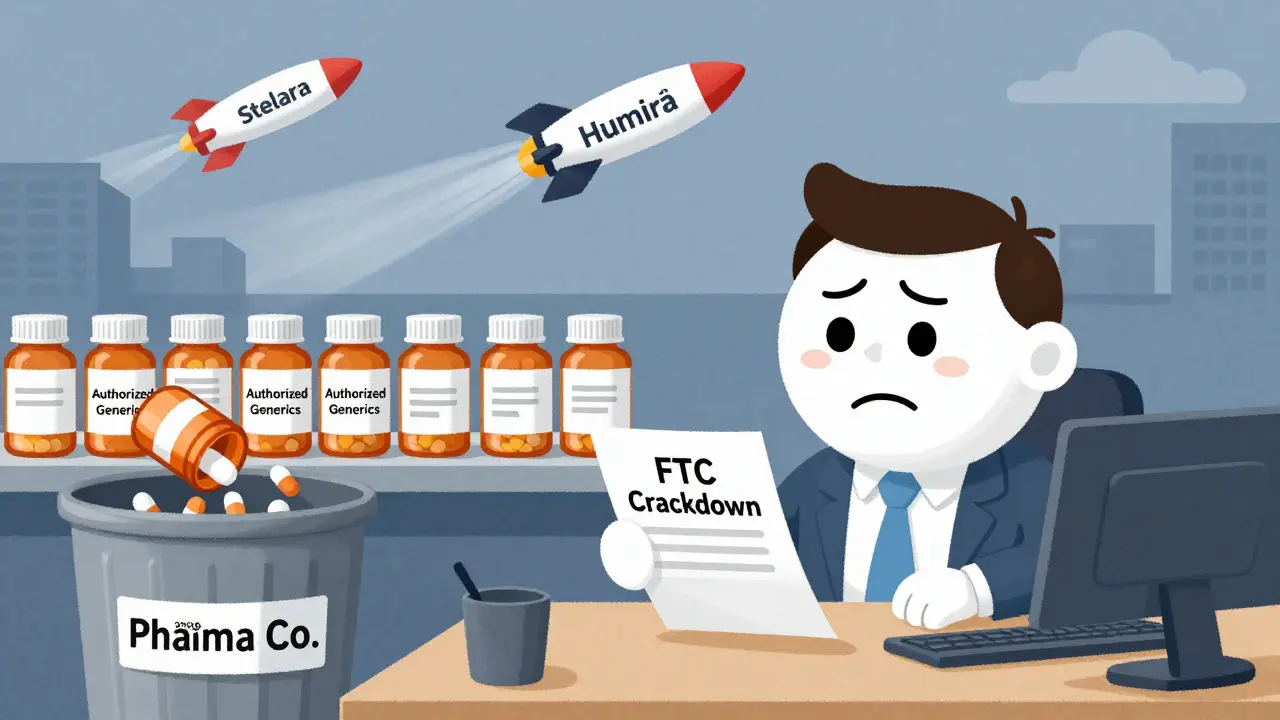
- FTC crackdowns on anti-competitive behavior have made brand companies wary of using authorized generics as a market-blocking tool.
- Biosimilars are taking over. For biologics like Stelara or Humira, biosimilars are now the go-to alternative. They’re not identical-but they’re close enough, and they’re priced lower than authorized generics.
There’s also a new bill in Congress: the RELIEF Act (H.R. 4086). If passed, it would force authorized generics to be priced the same as traditional generics. That would remove the last financial incentive for brand companies to produce them.
Still, experts like Dr. Aaron Kesselheim of Harvard Medical School argue they’re an underused safety tool. "For patients on critical medications, authorized generics offer the closest thing to the brand-without the brand price," he said in a recent NEJM perspective.
What You Can Do
- Ask your pharmacist: "Is there an authorized generic for this drug?"
- Check the FDA’s List of Authorized Generics (updated October 2025) for your medication.
- If you’re switching from brand to generic and notice side effects, ask if the authorized version is available.
- Don’t assume "generic" means cheaper. Sometimes the authorized version is the only one that’s truly identical.
The system isn’t perfect. But if you know what to look for, you can make smarter choices-and maybe get the exact same medicine your doctor intended, at a lower cost.
Are authorized generics the same as brand-name drugs?
Yes. Authorized generics are chemically and therapeutically identical to the brand-name drug. They contain the same active and inactive ingredients, are made in the same facility, and follow the same manufacturing standards. The only differences are the label, packaging, and sometimes the name on the bottle.
Why are authorized generics more expensive than regular generics?
Because they’re made by the original brand manufacturer, not a low-cost generic producer. Since production costs are higher, they’re priced only 10-15% below the brand, compared to 80% lower for traditional generics. Insurance companies often prefer traditional generics because they get bigger rebates, even if the authorized version is identical.
How do I know if my prescription is an authorized generic?
Check the label. Authorized generics are often labeled with the manufacturer’s name (e.g., "Made by Pfizer") and a different product code than the brand. You can also search the FDA’s official list of authorized generics, updated quarterly. Pharmacists can help you identify them using the Orange Book.
Are authorized generics safer than traditional generics?
For drugs with narrow therapeutic indexes-like warfarin, levothyroxine, or seizure medications-yes. Because authorized generics have identical inactive ingredients, they’re less likely to cause absorption issues or side effects compared to traditional generics, which may use different fillers or coatings.
Why are there so few authorized generics now?
The FTC has cracked down on brand companies using authorized generics to delay competition. Since 2020, approvals have dropped by 35%. Companies now prefer to let traditional generics enter the market or pursue biosimilars instead. The upcoming RELIEF Act may further reduce their use by requiring price parity with traditional generics.
15 Comments
This is wild 😮 I had no idea authorized generics were literally the same pills as the brand! My pharmacist just swaps anything labeled 'generic' and I never asked. Now I'm gonna start checking the label like a hawk. Thanks for the clarity!
Hmm... so let me get this straight... the same company that charges $500 for a brand-name drug... makes the EXACT SAME pill... and sells it for $450 under a different label? And we're supposed to believe this isn't a calculated maneuver to siphon off price-sensitive customers while keeping the premium brand alive for the gullible? The FDA is just a rubber stamp for Big Pharma's profit theater. I smell a monopoly disguised as compliance.
This is one of those topics that should be taught in high school health classes. The difference between authorized generics and traditional ones isn't just financial-it's clinical. I work with diabetic patients who switch generics and end up with erratic glucose levels. The authorized version? Consistent. Predictable. No surprises. It's not about saving money-it's about stability. And yet, insurers push the cheaper generics because of rebates, not because they're better. The system is broken, but knowledge is power.
So you're telling me I paid $120 for my brand-name drug last year... and the exact same pills were sitting on the shelf for $105? And no one told me? This is fraud. Pure and simple. Pharmacists are supposed to be trusted professionals. Instead, they're just cashiers for a broken system. I'm done.
I don't understand why this even needs to be explained. If it's the same drug, why does it matter who made it? The label doesn't change the chemistry. People overthink this. Just take the generic. It works.
I've been on levothyroxine for 12 years. Switched from brand to generic once... woke up with heart palpitations for three days. Went back to brand. Fine. Then I found out the authorized generic from Mylan was identical to the brand-same fillers, same coating, same everything. Took it. No issues. No cost spike. It's not about being fancy. It's about your body not throwing a tantrum because some filler changed from cornstarch to lactose monohydrate. The fact that 63% of pharmacists can't tell the difference? That's terrifying. We're trusting our health to people who are just as confused as we are.
I love how this post just quietly drops the bomb that you might be paying MORE for a drug because your insurance got a better deal on a different generic. Like... we're all just pawns in a game no one told us was being played. I asked my pharmacist about authorized generics last month and she looked at me like I asked if aliens were behind the FDA. But then she checked the Orange Book... and yeah. Same pills. $15 cheaper. I'm switching. Also-why isn't this on TV? Why isn't this on every pharmacy receipt? We need a billboard that says: 'YOUR DRUG IS A COPY. ASK WHICH COPY.'
Good info. I'll start asking my pharmacist next time. Simple as that.
The fact that we need a federal database to know if our medicine is the same as what we paid $200 for last year... is a national disgrace. This isn't healthcare. It's a labyrinth of profit motives disguised as medical decisions. And patients? We're the ones left guessing whether our heart medication is safe-or just a cheap knockoff with a different dye.
So authorized generics are just a way for big pharma to keep their monopoly alive while pretending to be fair? Classic. They make the same pill, slap a new label on it, and call it a 'generic' so they can say they're 'supporting competition' while still making bank. Meanwhile, real generics get shafted because PBMs want bigger kickbacks. The whole system is rigged. And no one talks about it because the media is owned by the same companies. #BigPharma
Let me break this down like you're five: Brand drug = $150. Traditional generic = $30. Authorized generic = $135. Why? Because it's made by the same company. So why does it exist? Because if they didn't offer it, someone else would make a real generic and cut them out completely. It's not generosity. It's damage control. And yeah, for drugs like warfarin? Go with the authorized one. For metformin? Honestly, who cares. But if you're on a narrow-therapeutic-index med? Don't gamble. Ask. Check. Know. Your body isn't a lab rat.
You're not alone if you didn't know this. I didn't either until my mom had a bad reaction to a generic and we dug deeper. Turns out, the authorized version saved her. Now I check every prescription. It's a small thing, but it matters. Seriously-ask your pharmacist. It takes 30 seconds. And if they don't know? Tell them to check the FDA list. We're all just trying to stay healthy. Let's stop letting corporations decide what 'good enough' means.
USA is the only country where you pay more for the same medicine just because the label says 'Pfizer' instead of 'Pfizer Generic'. We got the best healthcare system in the world... said no one ever. I'm just glad I found out before I got scammed again. Time to start calling my reps.
How quaint. The FDA publishes a list. And we're supposed to be grateful? This isn't transparency-it's a public relations exercise. The fact that you need to cross-reference your prescription with a government database to know if your medicine is actually what your doctor prescribed speaks volumes. I'm not impressed. I'm disgusted. And yes, I've read the Orange Book. It's a graveyard of corporate loopholes.
I suppose the real tragedy here isn't the authorized generics... it's that we've been conditioned to believe that 'same' means 'good enough'. We've lost the ability to demand identical quality. We settle. We accept. We don't ask. And that's why this system thrives. Because we're too tired to fight. But if you're on a critical med? Don't be tired. Ask. Push. Demand. The difference between 'identical' and 'similar' isn't academic-it's existential.