
Statins and Exercise: How to Prevent Muscle Injury While Staying Active
Safe Exercise Intensity Calculator for Statin Users
Calculate your safe exercise intensity range based on your age, statin type, and vitamin D levels. This tool is designed to help you stay active while minimizing muscle soreness risk.
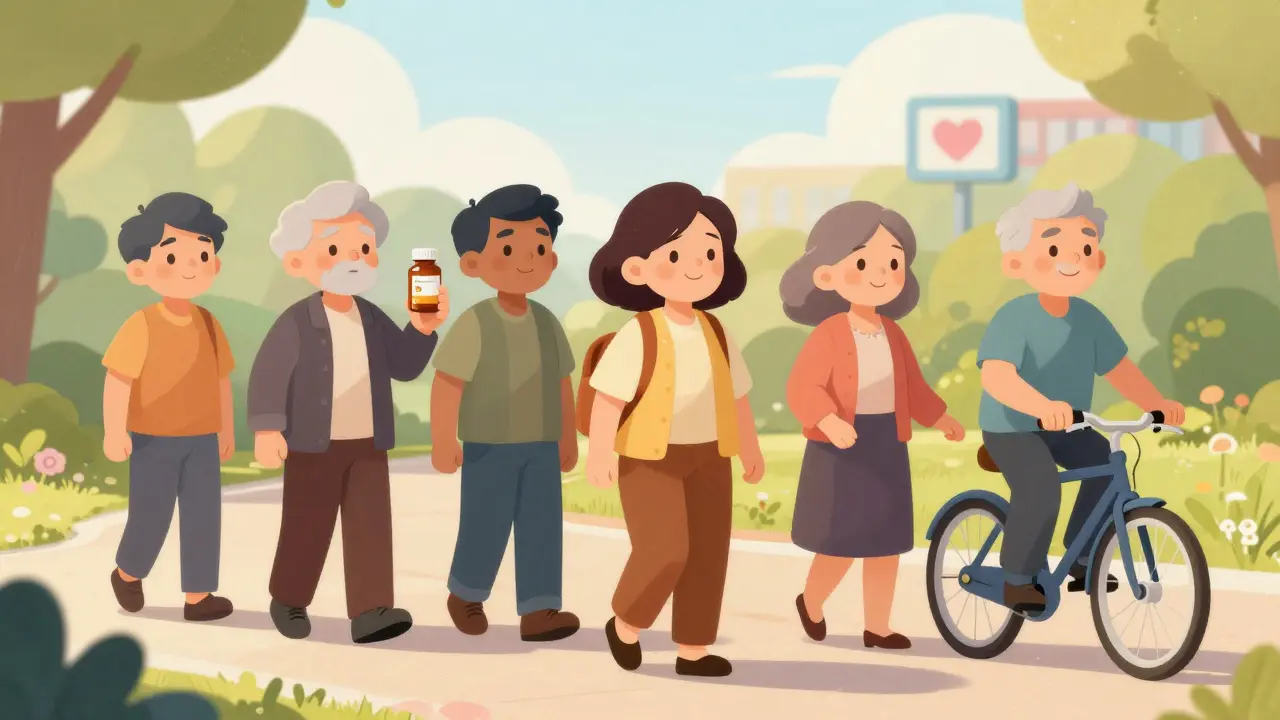
More than 38 million Americans take statins to lower cholesterol and protect their hearts. But many of them stop moving - not because they can’t, but because they’re afraid. Afraid that working out will wreck their muscles. Afraid that the soreness they feel isn’t just from a hard workout, but from the medicine they’re taking. The truth? Statins and exercise can coexist safely - if you know how.
Statins Don’t Automatically Mean Muscle Damage
It’s easy to assume that if you’re on a statin and your legs ache after a walk, the drug is to blame. But research shows that’s not always the case. A 2023 study in the Journal of the American College of Cardiology tracked 100 people aged 55 to 73 who took statins and did 45 minutes of moderate cycling. Those who complained of muscle pain before the workout? Their pain didn’t get worse after exercise. Those who didn’t have pain? Still didn’t. And here’s the kicker: their muscle strength stayed the same. No drop. No decline.
What did change? One specific muscle recovery marker - half relaxation time - increased slightly in statin users. That’s a technical way of saying muscles took a bit longer to loosen up after contracting. But that didn’t translate to weakness, fatigue, or inability to move. It’s like your car’s brakes feel a little slower to release - but you can still drive fine.
Meanwhile, a separate study of marathon runners found higher levels of creatine kinase (CK), a muscle injury marker, in statin users after the race. But those runners were pushing hard - elite-level effort. Most of us aren’t running 26.2 miles. We’re walking, biking, swimming, or doing light strength training. For those activities? Statins aren’t the enemy.
Why Some People Feel More Sore Than Others
Not everyone reacts the same way. Some people on statins feel fine. Others feel like their muscles are constantly tight or sore. Why?
One reason is intensity. The more intense the exercise, the more stress you put on your muscles. Statins affect the mevalonate pathway - the same pathway your body uses to make CoQ10, a compound that helps your muscles produce energy. When you’re doing light to moderate activity, your body compensates. But during high-intensity efforts - like sprinting, heavy lifting, or long-distance running - your muscles demand more energy. That’s when the drop in CoQ10 might start to matter.
Age also plays a role. Older adults - especially those over 65 - are more likely to notice muscle discomfort. That’s not because statins suddenly become dangerous with age. It’s because older muscles are already working harder to recover. Add a statin on top, and the balance tips.
And then there’s vitamin D. If your levels are low (under 30 ng/mL), your risk of statin-related muscle symptoms jumps. Studies show people with low vitamin D are more likely to quit statins because of muscle pain. Fix the deficiency, and the pain often fades.
What Type of Exercise Is Safe?
You don’t need to give up the gym. You just need to adjust your approach.
Safe exercise for statin users looks like this:
- Walking 30 minutes a day, 5 days a week
- Cycling at a steady pace (you can talk but not sing)
- Swimming or water aerobics
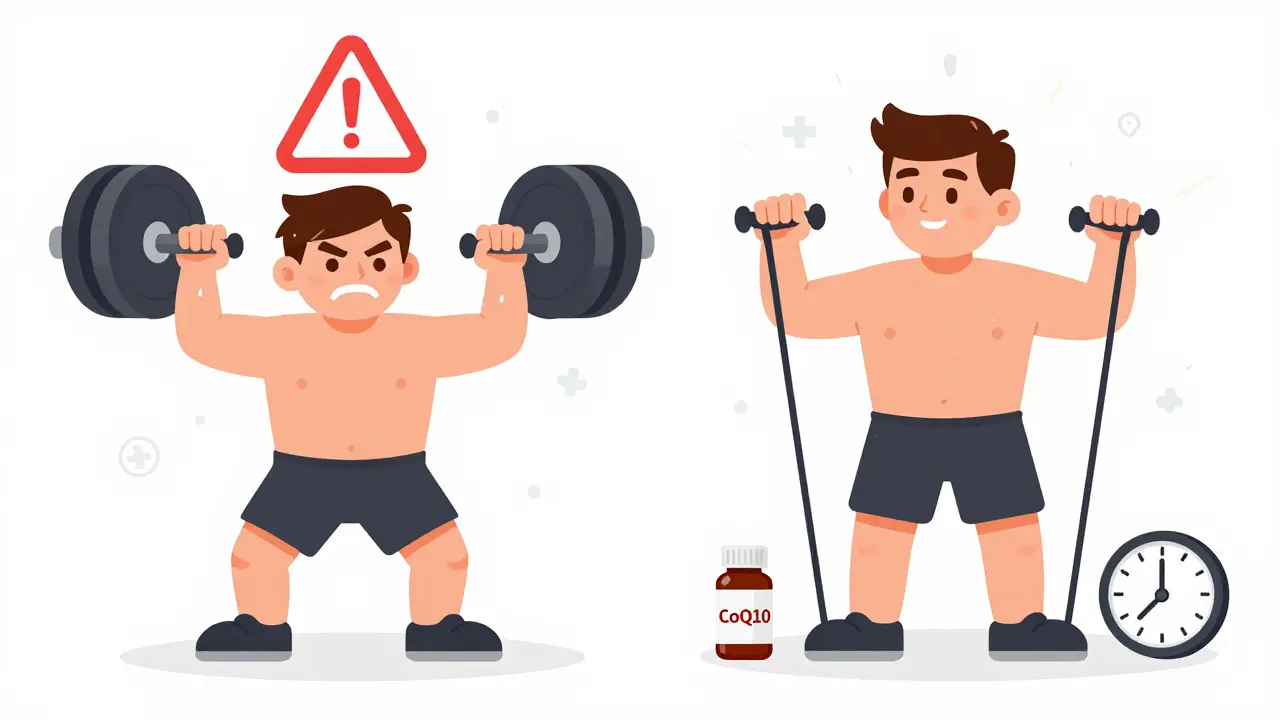
- Light resistance training with bands or dumbbells (12-15 reps, 1-2 sets)
- Yoga or tai chi for flexibility and balance
These are all moderate-intensity activities - around 5-6 on a 10-point scale. That means you’re working hard enough to break a light sweat, but you’re not gasping for air. If you’re unsure, use the “talk test”: if you can hold a conversation, you’re in the right zone.
What to avoid? High-intensity interval training (HIIT), heavy weightlifting to failure, or long-distance running unless you’ve built up to it slowly. One Reddit user summed it up: “I switched from CrossFit to daily walks. My muscle pain dropped by 60% in two months.”
How to Prevent Muscle Injury - 7 Practical Tips
Here’s what actually works, based on real studies and expert advice:
- Start slow and build up - If you’re new to exercise or restarting after a break, increase your time or intensity by no more than 10% per week. A 2010 mouse study showed that animals trained gradually didn’t lose muscle strength even on statins. Humans are no different.
- Time your workouts - Most statins peak in your bloodstream 2-4 hours after you take them. If you take your pill in the evening, try exercising in the morning. If you take it in the morning, wait until after lunch. This isn’t proven to help everyone, but it’s low-risk and worth trying.
- Check your vitamin D - Get a simple blood test. If your level is below 30 ng/mL, your doctor can prescribe a supplement. Many people see improvement in muscle symptoms within weeks.
- Choose the right statin - Not all statins are the same. Hydrophilic statins like pravastatin and rosuvastatin are less likely to enter muscle tissue than lipophilic ones like simvastatin and atorvastatin. If you’re having trouble, ask your doctor if switching could help. One study showed a 23% drop in muscle symptoms with hydrophilic statins during exercise.
- Avoid mixing with fibrates - If you’re also taking a fibrate (like fenofibrate) for triglycerides, your risk of serious muscle damage jumps 3 to 5 times. Talk to your doctor - there are safer alternatives.
- Listen to your body - Some soreness is normal. But if your muscles are sore for more than 72 hours, or if you notice dark, tea-colored urine, stop exercising and call your doctor. That could be rhabdomyolysis - rare, but serious.
- Don’t quit exercise - This is the most important one. The cardiovascular benefits of statins and exercise together are huge. Statins cut heart attack risk by 25-35%. Regular exercise cuts it by 20-30%. Together? You’re cutting your risk by nearly half. Quitting either one is far riskier than keeping both.
What About Statin Dosing?
Some people think taking statins every other day might reduce side effects. And it might. A 2021 study found that taking rosuvastatin 10 mg every other day still lowered cholesterol just as well as daily dosing - and muscle symptoms were lower. This isn’t for everyone. But if you’re struggling with muscle pain and your cholesterol is under control, ask your doctor about a reduced or alternate-day schedule. It’s not a hack. It’s a real option.
What the Experts Say
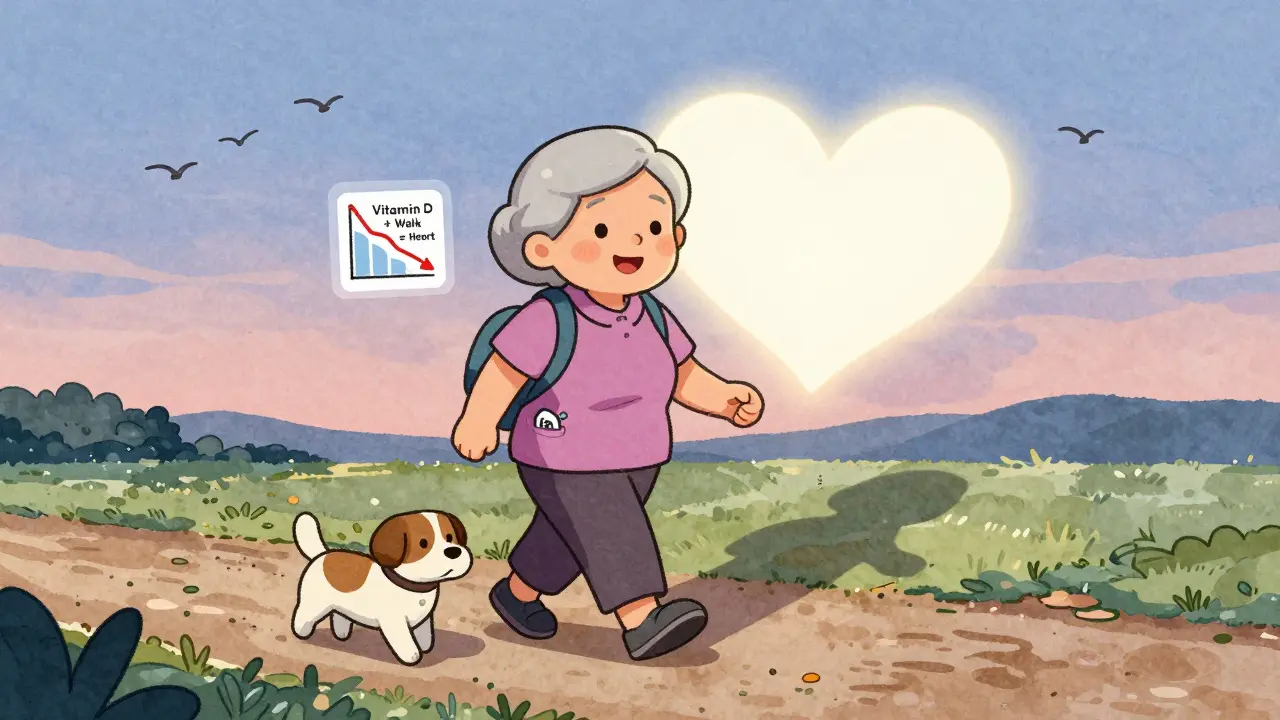
Dr. Neeltje Allard, who led the 2023 study on statins and exercise, put it plainly: “Prolonged moderate-intensity exercise is safe for statin users. You can and should keep moving.”
Dr. Paul D. Thompson, a top cardiologist, added: “Discontinuing exercise because of statin muscle complaints would be more harmful than continuing statin therapy.”
The American Heart Association and CDC both agree: statins save lives. Exercise saves lives. The combination? It’s the best protection you can give your heart.
And here’s the reality: 18.6% of people stop taking statins within the first year - often because they think muscle pain is the drug’s fault. But most of that pain isn’t from the statin. It’s from stopping movement.
Real People, Real Results
Take Maria, 68, from Texas. She started statins after a mild heart episode. Within weeks, her calves felt tight after walks. She stopped exercising. Six months later, her cholesterol was rising, and her blood pressure was worse. Her doctor suggested she try walking again - slowly, and with a vitamin D supplement. She started with 15 minutes a day. Then 20. Then 30. Within four months, her muscle tightness was gone. Her cholesterol dropped. And she’s walking 5 miles a week now.
Or James, 54, who used to run 5Ks. He started statins, then stopped running because his legs hurt. He switched to cycling on a stationary bike at a steady pace. No pain. He’s back to biking 30 miles on weekends.
You don’t have to be an athlete. You just have to keep moving - the right way.
Can statins cause permanent muscle damage?
No, statins don’t cause permanent muscle damage in the vast majority of cases. Muscle symptoms usually go away when you stop the statin or adjust your activity level. Rarely, severe muscle breakdown (rhabdomyolysis) can occur, but this is extremely uncommon - less than 1 in 10,000 people on statins. It’s far more likely that your discomfort is temporary and manageable with simple changes.
Should I take CoQ10 supplements with statins?
Some people report feeling better taking CoQ10, but studies haven’t proven it consistently reduces muscle pain. The body makes CoQ10, and statins lower its levels - so it makes sense theoretically. But clinical trials show mixed results. If you want to try it, 100-200 mg daily is a common dose. Talk to your doctor first, especially if you’re on blood thinners.
Is it safe to lift weights while on statins?
Yes - but keep it moderate. Avoid going to failure or doing heavy lifts with low reps. Stick to 12-15 reps per set, with light to moderate weights. Focus on form, not max strength. If your muscles feel unusually sore or weak the next day, scale back. Light resistance training helps maintain muscle mass as you age, which is especially important if you’re on statins.
How long does it take for muscle pain to go away after stopping statins?
Most people notice improvement within 2-4 weeks after stopping the statin. Full recovery can take up to 6-8 weeks. But don’t stop without talking to your doctor. There are other statins and dosing strategies that might work better for you. Stopping cold turkey increases your heart attack risk.
Can I still run if I’m on statins?
If you’re a regular runner and haven’t had issues, you can likely keep going. But if you’re new to running or over 65, start with walking and gradually build up. Avoid sudden spikes in distance or speed. Many runners on statins report fewer problems when they train consistently, avoid overtraining, and stay well-hydrated. Listen to your body - if your legs feel heavy or sore for more than 3 days, take a break.
What Comes Next?
If you’re on statins and worried about exercise, you’re not alone. But you’re also not powerless. Start with a simple walk. Get your vitamin D checked. Talk to your doctor about your statin type and dose. Don’t assume you have to choose between a healthy heart and pain-free movement. You can have both.
The science is clear: moderate exercise is safe. The real danger isn’t statins - it’s inactivity. Keep moving. Your heart will thank you.
15 Comments
I was scared to move after starting statins too. Then I just started walking around the block. Now I'm doing yoga and feeling better than I have in years. No magic, just movement. 🌱
This is exactly what I needed to hear. I quit swimming because I thought my statins were wrecking my shoulders. Started back last month-same routine, just slower. No pain. Just peace. Thank you for this.
Statins are just pharmaceutical nonsense and you people are falling for it. In India we use turmeric and fasting. Why do you need pills to live?
Americans always overthink everything. In my country we just lift weights and don't complain. Statins are fine. You're just weak.
It's funny how we fear the medicine but not the silence. The real danger isn't the statin-it's the quiet you fall into when you stop moving. Movement is the original medicine. We just forgot how to listen to it.
The mevalonate pathway inhibition is well-documented, but the compensatory upregulation of mitochondrial biogenesis in moderate exercisers is often overlooked. CoQ10 depletion is real, but not always clinically significant unless CK >5x ULN. Also, hydrophilic statins have lower muscle penetration-rosuvastatin > pravastatin > atorvastatin > simvastatin. Just saying.
I've been on statins for 8 years. I run 5Ks every weekend. No muscle pain. No issues. The key is consistency. Not fear. Don't let misinformation scare you out of living.
This article is a joke. Statins are dangerous. The pharmaceutical industry is poisoning us. And now they want us to believe exercise is safe? What next? They'll tell us smoking is good for the heart!
Ah yes, the American wellness industrial complex. How quaint. In the UK, we just take our medicine and get on with it. No yoga, no vitamin D obsession. Just discipline.
I'm from India too and we use neem and garlic. But honestly, this post made sense. I started walking 20 min after dinner, no pain. My dad is on statins too. He's walking now. Good stuff.
I started walking every morning after my coffee. At first I thought it was the statin. Turns out it was just me being out of shape. Slowly, I started to feel like myself again. Not perfect. But better.
I used to think I had to choose between feeling good and living longer. Turns out I didn't. I switched from CrossFit to daily walks. My legs stopped screaming. My cholesterol dropped. I didn't lose anything. I gained my life back.
I just needed to hear that it's okay to move slow. I've been sitting for months thinking I was broken. Turns out I just needed to start small. No rush. No pressure. Just feet on the ground.
The science is clear: moderate physical activity enhances statin efficacy by improving endothelial function, reducing systemic inflammation, and promoting mitochondrial resilience. Moreover, vitamin D repletion has been shown in RCTs to reduce myalgia incidence by up to 42% (JAMA Intern Med, 2021). The integration of lifestyle and pharmacotherapy is not merely synergistic-it is foundational to cardiovascular longevity. Please do not discontinue either without clinical guidance.
I appreciate the detailed breakdown. I was one of those who quit exercising because I thought the statins were to blame. I got my vitamin D checked-was at 21 ng/mL. Took 2000 IU daily for six weeks. My muscle tightness vanished. Now I hike every Sunday. I wish I’d known this sooner.