
Survivorship Plans: What You Need to Know About Follow-Up, Screening, and Late Effects After Cancer
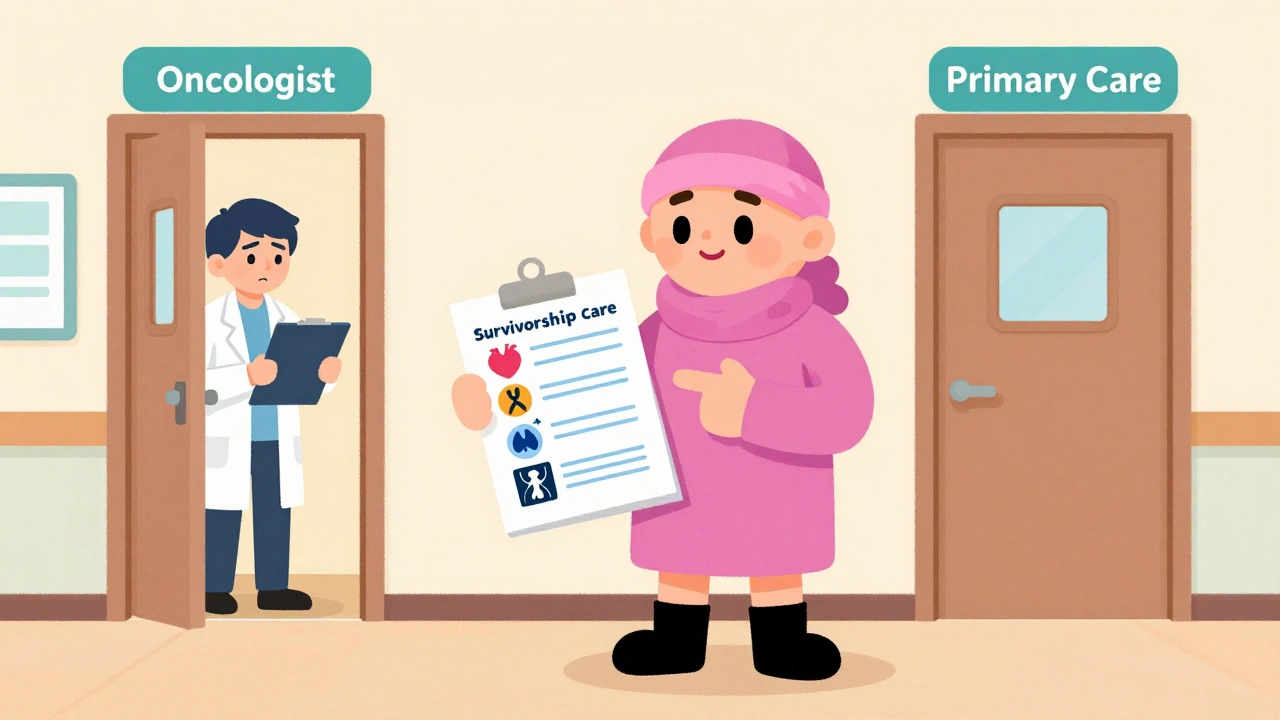
When cancer treatment ends, many survivors feel relief-but also confusion. Who do you see now? What tests do you still need? Why are you still tired, even after months of recovery? These aren’t just questions. They’re urgent needs that, if ignored, can lead to missed recurrences, preventable health problems, or even early death. That’s where a survivorship care plan comes in. It’s not a form you file away. It’s your roadmap for life after cancer.
What Exactly Is a Survivorship Care Plan?
A survivorship care plan is a written document that two things: it tells you what treatments you got, and it tells you what to do next. It’s not optional anymore. Since 2019, every cancer program accredited by the Commission on Cancer has been required to give one to every survivor. And 92% of top cancer centers now provide them. The plan has two main parts. First, the treatment summary. This lists every drug you took, the exact doses, the dates of radiation, the type of surgery you had, and even if you were in a clinical trial. It includes your diagnosis date, cancer type, stage, and the names and contact info of every doctor who treated you. Think of it as your medical history in one place-so you never have to repeat it again. The second part is the follow-up plan. This is where the real value kicks in. It tells you when to come back for scans, which blood tests to get, and what symptoms to watch for. It also includes advice on how to stay healthy-like quitting smoking, eating better, or starting exercise. This part is personalized. If you got doxorubicin (an anthracycline) at a high dose, you’ll need an echocardiogram every five years to check your heart. If you had chest radiation for Hodgkin lymphoma, you’ll need a mammogram every year starting eight years after treatment.Why Most Survivors Still Don’t Get What They Need
You might think, “I got a paper from my oncologist.” But here’s the problem: only 42% of survivors actually get a complete plan with both the treatment summary and the follow-up recommendations. Even worse, only 38% of survivors say they have a full plan that includes everything they need. Why? Because creating these plans takes time, money, and coordination. It can take up to 45 minutes per patient. Fewer than 61% of cancer centers have staff dedicated to making them. And even when they’re made, they’re often handed to you at the end of treatment-when you’re exhausted, overwhelmed, and just want to feel normal again. Another big issue? Primary care doctors aren’t prepared. A study found 68% of family doctors feel unprepared to manage cancer survivors without clear guidance. So you end up going to your regular doctor, who doesn’t know you got 12 cycles of chemo or had radiation to your chest. They don’t know to check your thyroid, your heart, or your bone density. That’s why survivors who use their care plan are 2.3 times more likely to get the right screening tests.What You Should Be Screened For-Based on Your Treatment
Not all survivors need the same follow-up. Your risks depend on what you were treated with. Here’s what the evidence says:- If you received anthracyclines (like doxorubicin) at doses over 250 mg/m²: get an echocardiogram every 5 years to monitor heart function.
- If you had chest radiation (especially for Hodgkin lymphoma): start annual mammograms 8 years after treatment-or earlier if you were under 30 when treated.
- If you got alkylating agents (like cyclophosphamide): monitor for early menopause, infertility, or increased risk of leukemia.
- If you had radiation to the head or neck: get annual thyroid function tests. You’re at higher risk for thyroid cancer and hypothyroidism.
- If you were treated for childhood cancer: follow the Children’s Oncology Group guidelines. They recommend screening for 112 late effects across 15 organ systems-everything from hearing loss to kidney damage to secondary cancers.
- If you took immune checkpoint inhibitors or CAR-T therapy: watch for autoimmune issues like colitis, thyroid dysfunction, or nerve damage. New guidelines added these in 2022.
Late Effects: They Don’t Always Show Up Right Away
Late effects are health problems that show up months or even years after treatment ends. They’re not the same as side effects, which happen during treatment. Late effects can be physical, emotional, or even financial. Common late effects include:- Heart disease-especially after radiation to the chest or certain chemo drugs.
- Secondary cancers-your treatment may have damaged DNA, increasing risk for new cancers later.
- Neuropathy-numbness or tingling in hands and feet from chemo like paclitaxel or vincristine.
- Hormone changes-early menopause, low testosterone, or thyroid problems.
- Bone loss-steroids and hormone therapies can weaken bones.
- Cognitive issues-often called “chemo brain”-memory lapses, trouble focusing.
- Chronic fatigue-lasting longer than six months after treatment ends.
How to Use Your Plan-And Why Most People Don’t
Here’s the hard truth: only 41% of survivors bring their care plan to their primary care visits. Why? Many don’t understand it. Others think their oncologist will handle everything. Some lose the paper. Others feel like they’re done with cancer-and don’t want to think about it anymore. But here’s what works: keep your plan in your phone. Take a photo of it. Save the digital version. Print a copy and keep it in your wallet. When you see a new doctor, say: “I’m a cancer survivor. Here’s my care plan. Can we go over it together?” Ask your oncologist to send a copy to your primary care provider. If they don’t have an electronic system, email it. If your plan doesn’t name who’s responsible for what-ask them to fix it. Who’s in charge of your heart check? Your bone density scan? Your mental health? Survivors who actively use their plan have 23% fewer emergency room visits and 18% fewer hospital stays in the first two years after treatment. That’s not just better health-it’s lower costs and less stress.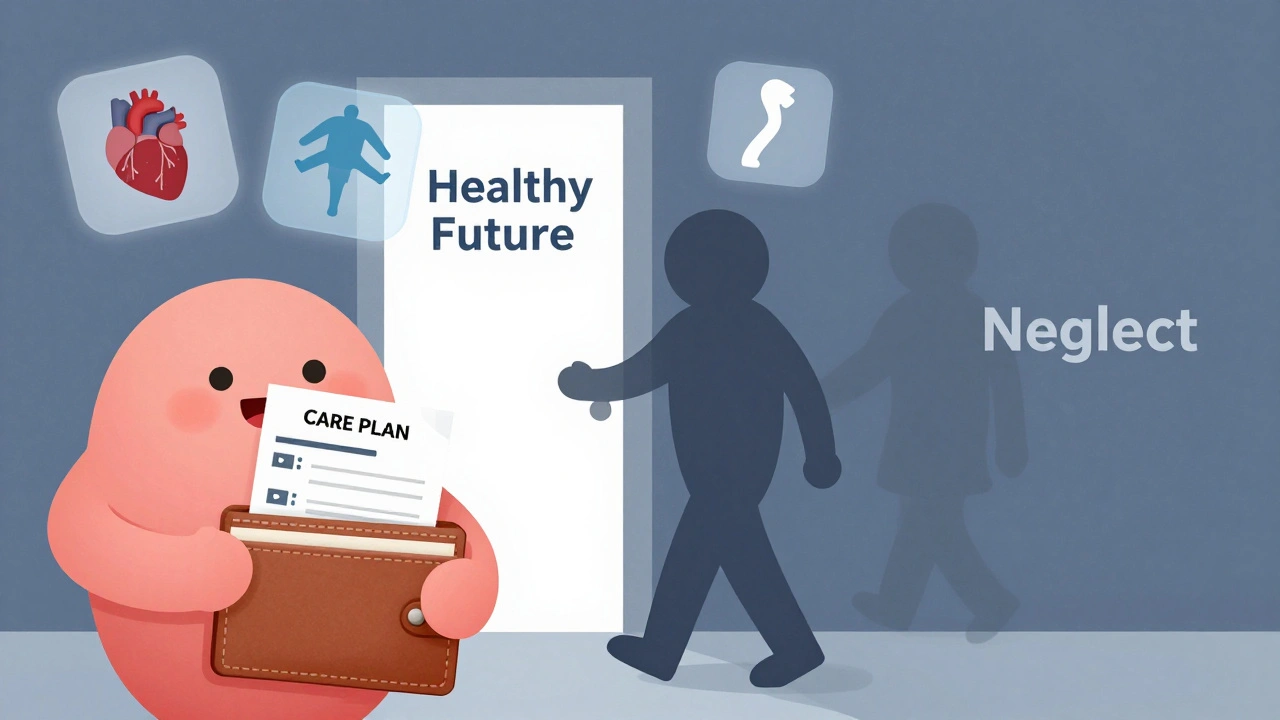
What’s Changing in Survivorship Care (2025)
The field is moving fast. In 2023, ASCO launched a digital builder that creates personalized plans in under 10 minutes. It uses 42 treatment variables and matches 95% of manual plans. AI models are now predicting your risk of heart damage after radiation with 84% accuracy. Some centers are using genomic data to personalize follow-up. If you have a high polygenic risk score for breast cancer, your screening might start earlier. If you have a genetic mutation like BRCA, your plan will reflect that. The big push now is integration. CancerLinQ, a national initiative, is testing how to share survivorship data between oncology and primary care systems using standardized tech. And the NCI’s SUSTAIN trial is testing whether automated reminders and alerts to doctors can boost plan use. But progress isn’t equal. Only 31% of safety-net hospitals provide full plans. If you’re uninsured or underinsured, ask if your hospital has a survivorship navigator. Many do.What to Do If You Don’t Have a Plan
If you finished treatment and never got a survivorship care plan, don’t wait. Here’s what to do now:- Call your oncology clinic and ask for your treatment summary and follow-up plan. Say: “I didn’t receive a survivorship care plan. Can you send me one?”
- If they say no, ask for your treatment records. You have a legal right to them.
- Use the free OncoLife tool at oncolife.org. Answer 35 questions about your treatment, and it generates a personalized plan based on COG guidelines.
- Take that plan to your primary care doctor. Highlight the screening tests and late effects.
- Ask: “Who will be responsible for each part of this plan?” Get names and numbers.
Do I still need to see my oncologist after treatment?
Yes, but less often. Most survivors see their oncologist every 3 to 6 months for the first 2 to 5 years, then once a year. But your follow-up schedule depends on your cancer type, treatment, and risk of recurrence. Your survivorship plan should list exact dates. After that, your primary care doctor usually takes over-with guidance from your oncologist.
What if my primary care doctor doesn’t know how to use my plan?
Bring the plan to your appointment and say: “This was made by my cancer team. Can we go over it together?” If they’re unsure, ask if they’ll call your oncologist. Many oncology offices have survivorship coordinators who can speak with your doctor. You’re not asking them to be experts-you’re asking them to follow a clear roadmap.
Are survivorship care plans covered by insurance?
Medicare pays $127.50 for creating a survivorship care plan, but that covers only about 38% of the actual cost. Most private insurers don’t have a specific code for it yet. However, since 2023, Medicare rewards providers with 5 quality points for offering these plans under their Merit-based Incentive Payment System. This means more doctors are starting to offer them-even if they’re not fully reimbursed.
Can I create my own survivorship care plan?
Yes. Tools like OncoLife (oncolife.org) and the American Cancer Society’s Survivorship Care Plan tool let you build one yourself. Just answer questions about your diagnosis, treatments, and current health. These tools use the same guidelines as top cancer centers. Once you have it, share it with your doctors. It’s not perfect-but it’s better than nothing.
How often should I update my survivorship care plan?
Update it every time you get a new diagnosis, start a new treatment, or change doctors. Also review it annually. Late effects can develop over time, and new screening guidelines come out every two years. Your plan should grow with you.
If you’ve survived cancer, you’ve already done the hardest part. Now it’s time to protect your future. Your survivorship care plan isn’t paperwork. It’s your right. And it’s your lifeline.
11 Comments
I got my plan after chemo and honestly didn't know what to do with it. Took me six months to even show it to my GP. Now I keep it on my phone. Simple. Life-changing.
Fascinating. The epistemic rupture between oncology and PCP ecosystems is staggering. I mean, the ontological burden placed on survivors to self-advocate is... frankly, neoliberal bio-power in action. 🤷♂️😂
You know what they don't tell you? That the 'survivorship plan' is just a marketing tool for hospitals to get Medicare reimbursement. The real agenda? Pushing you off their books. And don't get me started on how AI predicts heart damage-sounds like a data mining scheme to me. They're selling fear disguised as care.
This is spot on. I'm an oncology nurse and I've seen too many patients fall through the cracks. The key? Don't wait for the system to hand you the plan. Go in and say, 'I need my roadmap.' Most docs will help if you ask. And yes, OncoLife is legit. Saved my sister's life.
If you're not using OncoLife or demanding a plan from your oncologist you're being negligent. This isn't optional. It's basic healthcare hygiene. Stop waiting for someone to fix it for you. You survived cancer. Now fight for your future.
Survivorship care plans are not a luxury. They are a standard of care. The fact that only 38% of patients receive them reflects systemic failure, not patient apathy. I recommend printing two copies-one for your file, one for your primary care provider. Keep them in a waterproof sleeve.
I was done with hospitals. Thought I was done with cancer. Then I got heart palpitations at 3am. Turns out my doxorubicin dose meant I needed an echo every 5 years. I didn't know. I almost died because no one told me. Don't be me. Get your plan. Print it. Stick it on your fridge.
I just want to say thank you for writing this. My mom got her plan last year after breast cancer. She was terrified. We printed it, sat down with her PCP, and now she feels safe again. It's not magic. Just clarity. That's all we needed.
I used OncoLife after my lymphoma treatment. Took 20 mins. Got a PDF with my exact meds, doses, and what to watch for. Sent it to my doc. He called me back saying 'I didn't know this was a thing.' We got my thyroid checked next week. Thanks for the tool!
I survived. But now I'm tired all the time. My brain feels like it's wrapped in cotton. My bones ache. My insurance won't cover the physical therapy. My oncologist says 'it's normal.' But it's not normal to feel like this at 32. Nobody talks about the invisible wounds. And nobody pays for them.
It is a moral imperative that survivorship care be institutionalized, not merely incentivized. The commodification of post-treatment care through Medicare reimbursement codes is an ethical abdication. True healing requires structural justice, not algorithmic checklists. One must ask: who benefits when the burden of care is externalized onto the survivor? The answer is not the patient.