
Tentative Approval for Generics: Common Reasons for Delays
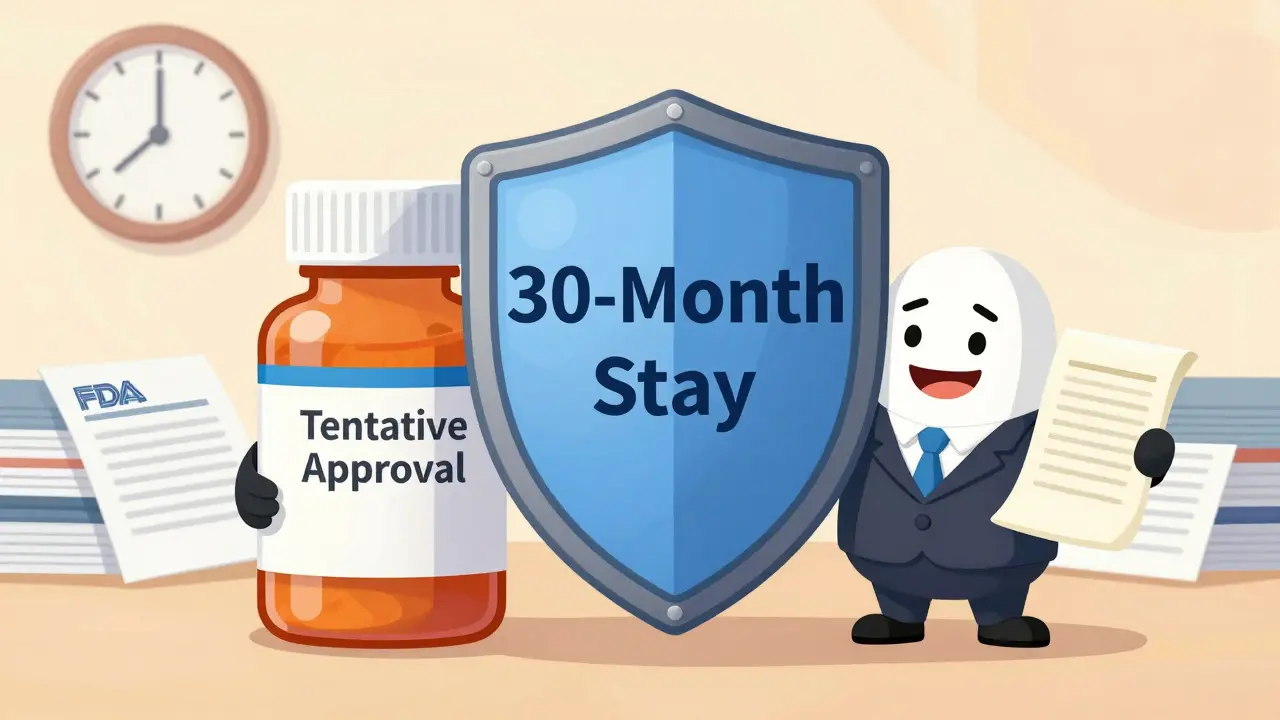
When a generic drug gets tentative approval from the FDA, it doesn’t mean it’s ready to hit pharmacy shelves. It means the agency has reviewed the application and found it scientifically sound-but something is still blocking it from being sold. This happens all the time. Over 2,500 generic drug applications have received tentative approval since the system started, but many never make it to market. Why? Because the road from approval to availability is full of legal, technical, and financial roadblocks.
Patent Litigation Is the Biggest Barrier
The most common reason a tentatively approved generic drug never launches is patent litigation. When a brand-name drug company files a lawsuit claiming the generic infringes on its patent, the FDA is legally required to delay final approval for up to 30 months. This is called the “30-month stay.” It doesn’t matter if the generic drug is identical in quality, safety, and effectiveness. If the lawsuit is active, the FDA can’t give final approval-even if the application has been tentatively approved for years. According to a 2017 analysis by the Commonwealth Fund, 68% of tentatively approved generics between 2010 and 2016 were stuck in this legal limbo. Some brand-name companies file these lawsuits even when the patent is weak or clearly doesn’t apply. The goal isn’t always to win in court-it’s to delay. The longer the delay, the more sales the brand-name drug keeps making. There’s also something called “product hopping,” where the original drugmaker makes a tiny change to the drug-like switching from a pill to a capsule-and files a new patent. This resets the clock on generic competition. A 2018 FTC study found this tactic affected 17% of top-selling drugs. And then there are “pay-for-delay” deals: brand-name companies pay generic makers to hold off on launching. Between 2009 and 2014, these deals blocked 987 generic entries, according to the FTC.Application Deficiencies Keep Coming Back
Even before patents get in the way, many generic applications are just incomplete or poorly prepared. The FDA doesn’t approve these on the first try. In fact, most go through multiple rounds of review. Before the Generic Drug User Fee Amendments (GDUFA) started in 2012, only about 1% of applications passed on the first try. Even by 2017, after years of reform, that number only rose to 9%. The most common problems? Chemistry, manufacturing, and controls (CMC) sections that are missing key details. That’s 35% of all deficiencies. Bioequivalence studies-the tests that prove the generic works the same way as the brand-are often flawed. That’s 28% of the issues. And analytical methods used to test the drug? If they’re not properly validated, the FDA will reject the application. That’s another 22%. Stability data is another big one. Generic makers have to prove the drug won’t break down over time under normal storage conditions. In 2022, 43% of deficiencies were related to inadequate stability testing. Container closure systems-how the drug is packaged-were missing or poorly described in 31% of cases. And if the application doesn’t clearly explain how the drug will be made at scale, the FDA will send it back.Manufacturing Problems Are a Major Hurdle
It’s not just the paperwork. The FDA has to inspect the factory where the generic drug will be made. And if that factory has issues, the approval stalls. In fiscal year 2022, 41% of complete response letters (CRLs)-the official FDA rejection notices-were due to manufacturing problems. The most common facility issues? Poor quality control systems. That’s 63% of manufacturing-related rejections. Think of it like a bakery that doesn’t check if the flour is fresh or if the oven temperature is accurate. If the system isn’t reliable, the FDA won’t approve it. Other big problems: environmental monitoring failures (29%), meaning the factory isn’t properly controlling dust, microbes, or contaminants. And equipment qualification issues (24%)-if the machines haven’t been tested to prove they work consistently, the FDA won’t sign off. Complex drugs make this worse. Inhalers, creams, injectables, and extended-release pills are harder to replicate than simple tablets. They require more testing, more validation, and more inspections. In 2022, complex generics had 2.3 times more review cycles than regular pills. And even when they get tentative approval, manufacturers often can’t scale up production fast enough. A 2020 FDA survey found 62% of complex generics faced launch delays of over a year after patent expiration.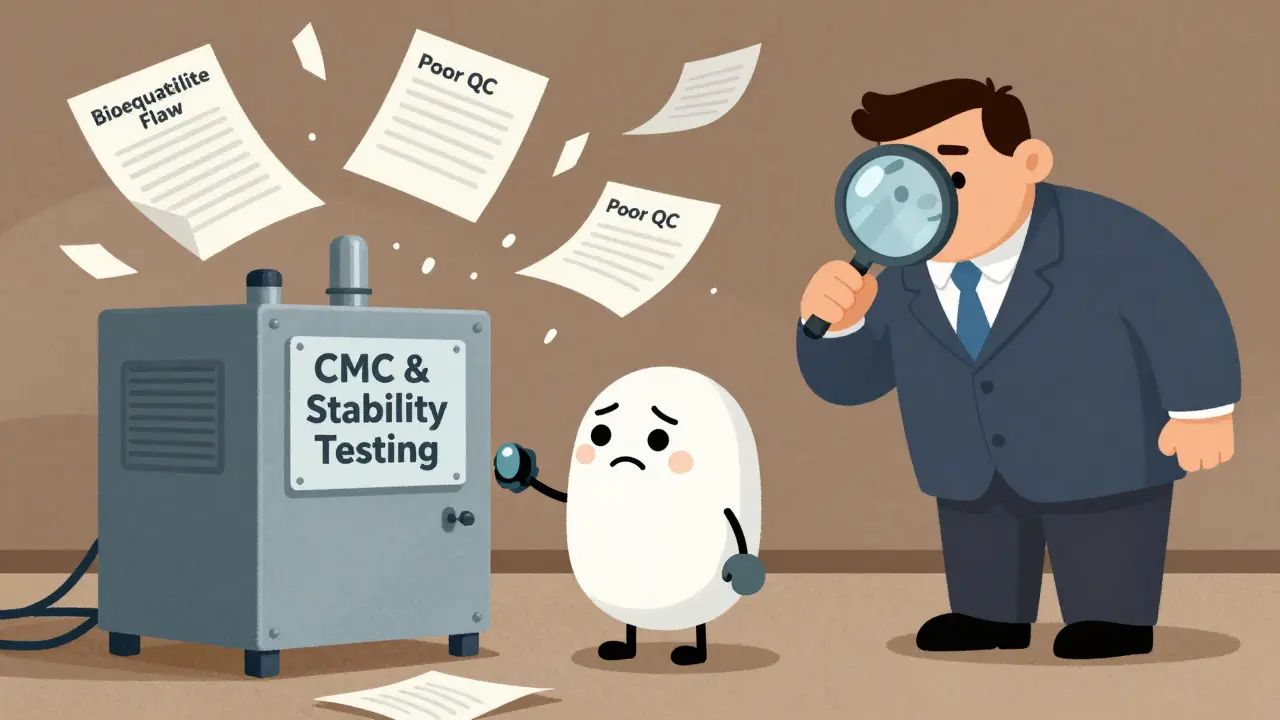
Slow Responses from Generic Companies
Sometimes the delay isn’t the FDA’s fault-it’s the applicant’s. When the FDA sends a deficiency letter, the generic company has to respond. The FDA recommends a 6-month turnaround. But in 2022, the average response time was 9.2 months. That’s over three extra months just waiting for a reply. Why the delay? Some companies are small and don’t have enough staff. Others are waiting to fix multiple issues at once instead of addressing them one at a time. Some are waiting to see if patent litigation will resolve first. Others just don’t prioritize the FDA response. Either way, every month of delay pushes back market entry.Market Economics Don’t Always Add Up
Even if a generic drug clears every legal and technical hurdle, the company might still decide not to launch it. Why? Because it doesn’t make financial sense. A 2022 analysis from DrugPatentWatch found that about 30% of tentatively approved generics never hit the market. That number jumps to 47% for drugs with annual U.S. sales under $50 million. If the potential profit is too low, the manufacturer won’t invest in production, packaging, and distribution. Even when generics do launch, prices stay high if there’s only one competitor. A 2019 JAMA study found that when just one generic version enters the market, it still sells for over 80% of the brand-name price for two full years. That means other companies see little incentive to enter. So the market stays uncompetitive, and patients keep paying more.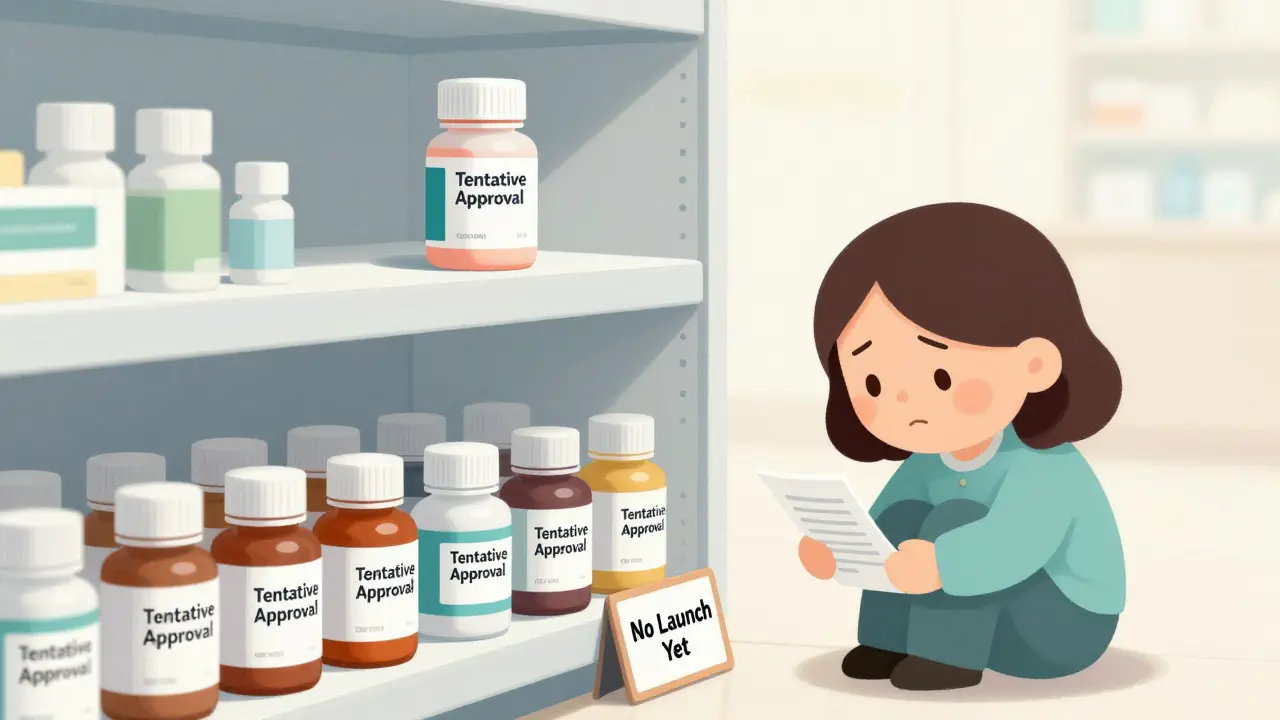
What’s Being Done to Fix It?
The FDA knows there’s a problem. Since 2012, the GDUFA program has been trying to speed things up. GDUFA II (2018-2022) aimed to cut the average number of review cycles from 3.9 to 2.5. It didn’t quite get there-2022 numbers showed 3.2 cycles-but it was progress. The Competitive Generic Therapy (CGT) pathway, created in 2017, gives priority review to drugs with little or no generic competition. Of the drugs designated as CGT, 78% got tentative approval in under 8 months-compared to the usual 18. In 2022, the FDA launched a targeted initiative to fast-track 102 high-priority tentatively approved drugs with no generic competition. By November 2023, 67% of those got final approval within 12 months. That’s more than double the rate of non-priority cases. The FDA’s new GDUFA III (2023-2027) sets even bigger goals: get 70% of applications approved on the first try by 2027. That’s up from 28% in 2022. They’re also pushing for an 8-month review time for priority drugs. But the biggest challenges-patent abuse, pay-for-delay deals, and low-profit markets-are outside the FDA’s control. That’s where Congress needs to act. Laws like the CREATES Act (2019) and the Affordable Drug Manufacturing Act (2023) aim to stop brand-name companies from blocking sample access and to encourage domestic manufacturing. But progress is slow.What This Means for Patients
The bottom line? Tentative approval doesn’t mean affordable medicine is coming soon. Even after years of waiting, patients may still be paying brand-name prices because the generic never launched. The system was designed to get cheaper drugs to market faster. But legal games, bureaucratic delays, and poor economics are keeping prices high. The FDA has made improvements. But until patent abuse is curbed and the economics of generic manufacturing improve, many tentatively approved drugs will sit on the shelf-approved, but not available.What does tentative approval mean for a generic drug?
Tentative approval means the FDA has reviewed the generic drug application and found it meets all scientific, safety, and quality standards. But the drug can’t be sold yet because of patent protections or regulatory exclusivity on the brand-name version. It’s a green light to prepare for launch, not to sell.
How long does it take for a tentatively approved generic to launch?
The median time from tentative approval to market launch is about 16.5 months, according to 2022 FDA data. But it can take much longer-sometimes years-if patent litigation is ongoing or if the manufacturer delays launching due to low profit potential.
Why do some tentatively approved generics never reach the market?
About 30% of tentatively approved generics never launch. The main reasons are patent litigation delays, low expected profits (especially for drugs under $50 million in annual sales), manufacturing scale-up issues, and strategic decisions by companies to wait for better market conditions.
Can the FDA approve a generic drug before the patent expires?
No. Even with tentative approval, the FDA cannot grant final approval until all patents and exclusivity periods on the brand-name drug have expired. The 30-month stay from patent lawsuits also blocks final approval, regardless of the FDA’s review status.
What is the CGT pathway and how does it help?
The Competitive Generic Therapy (CGT) pathway gives priority review to generic drugs that have little or no competition. Drugs in this pathway get tentative approval in about 8 months on average-much faster than the standard 18 months. This helps get affordable versions to market quicker for drugs where patients have few options.
Are complex generics harder to get approved?
Yes. Complex generics-like inhalers, topical creams, and extended-release tablets-require more testing and manufacturing precision. They average 3.7 review cycles compared to 2.9 for simple pills. Approval timelines are 14 months longer on average, and launch delays are more common due to scaling challenges.
9 Comments
The FDA is just a puppet for Big Pharma. They let patent trolls drag this out for years so insulin costs $300. Meanwhile, we’re sending generics to Africa while Americans starve for meds. This ain’t science-it’s corporate warfare.
It’s wild how we’ve built this entire system to optimize profit over people. The fact that a company can tweak a capsule shape and reset the clock? That’s not innovation-that’s legal loopholes dressed up as IP. We need to treat medicine like a public good, not a monopoly game.
My grandma’s blood pressure med took 4 years to go generic. She paid $120/month. When it finally dropped to $8, she cried. This system breaks people quietly.
Let’s be real-this isn’t just about patents or inspections. It’s about power. The brand-name companies don’t want you to have cheap medicine. They want you to believe that if it’s not expensive, it’s not effective. They’ve spent decades conditioning us to equate price with value, even when the science says otherwise. And now we’ve got a whole infrastructure built around delaying generics-lawyers, lobbyists, shell patents, pay-for-delay schemes-all while patients skip doses because they can’t afford the brand. The FDA’s doing what it can under broken laws, but until Congress stops treating pharmaceuticals like luxury cars and starts treating them like oxygen, we’re just rearranging deck chairs on the Titanic.
The data on stability testing deficiencies is particularly alarming-43% of rejections stem from inadequate shelf-life validation. This isn't a minor oversight; it’s a fundamental failure in quality assurance. If a drug degrades under normal storage conditions, it’s not just ineffective-it’s potentially dangerous. The FDA’s insistence on rigorous analytical method validation is not bureaucratic overreach; it’s patient protection.
Big Pharma’s got the system rigged, but there’s hope. The CGT pathway is a real win-78% of those get tentatively approved in under 8 months. That’s proof that when you prioritize access, you can move the needle. Let’s push for more of these fast-tracks and stop letting lawsuits hold patients hostage.
lol 30% never launch? dumbasses can’t even make a pill right.
It is imperative to underscore that the United States Food and Drug Administration operates under a meticulously codified statutory framework, wherein the integrity of public health is non-negotiable. To suggest that patent litigation constitutes an impediment is to fundamentally misunderstand the legal architecture governing pharmaceutical innovation. The agency’s adherence to due process is not delay-it is diligence.
yo, this whole system is like a Nigerian power grid-everything looks fine on paper, but when you plug in the real load, it just... falters. CMC issues? Stability data? Bro, if your factory can’t keep the dust out, how you expect to make medicine that don’t kill folks? And don’t even get me started on pay-for-delay-ain’t no justice in a system where the rich buy time with cash.