
Tricyclic Antidepressants and Antihistamines: How Their Combination Causes Anticholinergic Overload
Anticholinergic Burden Calculator
Medication Selection
Choose medications you're taking. Each has a specific anticholinergic burden score (ACB).
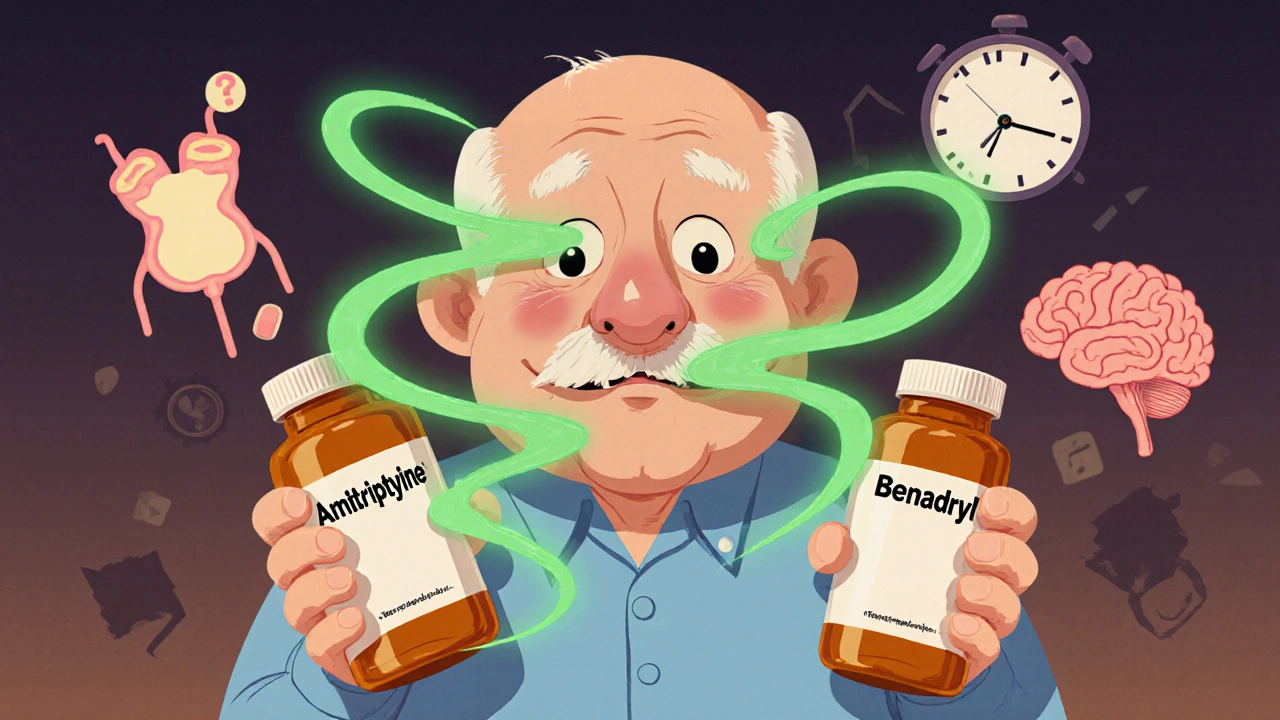
Combining tricyclic antidepressants (TCAs) with first-generation antihistamines like diphenhydramine (Benadryl) isn’t just a common mistake-it’s a quiet crisis in older adults and people managing chronic pain or insomnia. The problem isn’t one drug or the other. It’s what happens when their effects pile up. Both types of drugs block acetylcholine, a key brain chemical that controls memory, movement, bladder function, and alertness. When taken together, they don’t just add up-they multiply. This is called anticholinergic overload, and it’s one of the most underdiagnosed causes of confusion, falls, urinary retention, and even dementia in older patients.
What Exactly Is Anticholinergic Overload?
Anticholinergic overload happens when too many drugs block acetylcholine receptors in the brain and body. Acetylcholine is like the body’s internal messaging system. It tells your bladder to empty, your heart to beat steadily, your eyes to focus, and your mind to stay sharp. When these signals get interrupted, things start to break down. You might feel dizzy, forget where you are, struggle to urinate, or become unusually sleepy. In severe cases, it can lead to delirium-sudden, severe confusion that looks like dementia but can be reversed if caught early.TCAs like amitriptyline, imipramine, and clomipramine were developed in the 1950s and are still used today, especially for nerve pain, chronic headaches, and severe depression. They work by boosting serotonin and norepinephrine, but they also have a strong side effect: they block muscarinic receptors. Diphenhydramine, found in many over-the-counter sleep aids and allergy pills, was designed to stop histamine from causing sneezing and runny noses. But it also blocks acetylcholine receptors, especially in the brain. When you take both, your body gets hit with double the anticholinergic punch.
Why This Combination Is So Dangerous
The danger isn’t theoretical. A 2020 study in Elsevier tracked over 3,300 patients prescribed TCAs and found more than 6,800 high-risk drug interaction alerts-nearly half of them involved antihistamines. The most common pairing? Amitriptyline and diphenhydramine. Both are cheap, widely available, and often prescribed without thinking about their combined effect.Here’s how bad it gets: Amitriptyline scores a 3 on the Anticholinergic Cognitive Burden (ACB) scale-the highest possible. Diphenhydramine scores a 2. Together, that’s a score of 5. Research shows that a cumulative ACB score of 3 or higher doubles the risk of dementia over time. A 2015 JAMA Internal Medicine study found people who took medications with a total ACB score of 3+ for more than three years had a 54% higher chance of developing dementia. And it doesn’t take years-just 30 days of this combo can increase delirium risk by 200% in people over 65, according to preliminary data from the National Institute on Aging.
It’s not just about memory. In clinical settings, patients end up in the ER with urinary retention, blurred vision, rapid heartbeat, dry mouth so severe they can’t swallow, and sudden confusion. One Reddit user, a medical resident, reported seeing three elderly patients admitted with delirium-all traced back to their doctor adding Benadryl to their TCA for sleep. Another patient on a mental health forum described being rushed to the hospital after her doctor added diphenhydramine to her amitriptyline. She woke up unable to urinate and didn’t recognize her own daughter.
Who’s at Highest Risk?
Older adults are the most vulnerable-not because they’re frail, but because their bodies change. As we age, the liver and kidneys slow down. That means drugs stick around longer. A 50mg dose of diphenhydramine that’s fine for a 30-year-old can build up to toxic levels in someone over 65. Also, older brains have fewer acetylcholine receptors to begin with, so blocking even a few more has a bigger impact.People with existing cognitive issues, Parkinson’s, glaucoma, or an enlarged prostate are also at higher risk. Even if they’re not elderly, someone on multiple medications for chronic conditions can easily slip into anticholinergic overload. A 2021 survey by the American Geriatrics Society found that 37% of pharmacists see at least one case of anticholinergic overload every month. Nearly 30% of those cases involved TCAs and antihistamines.
Not All Antidepressants or Antihistamines Are Equal
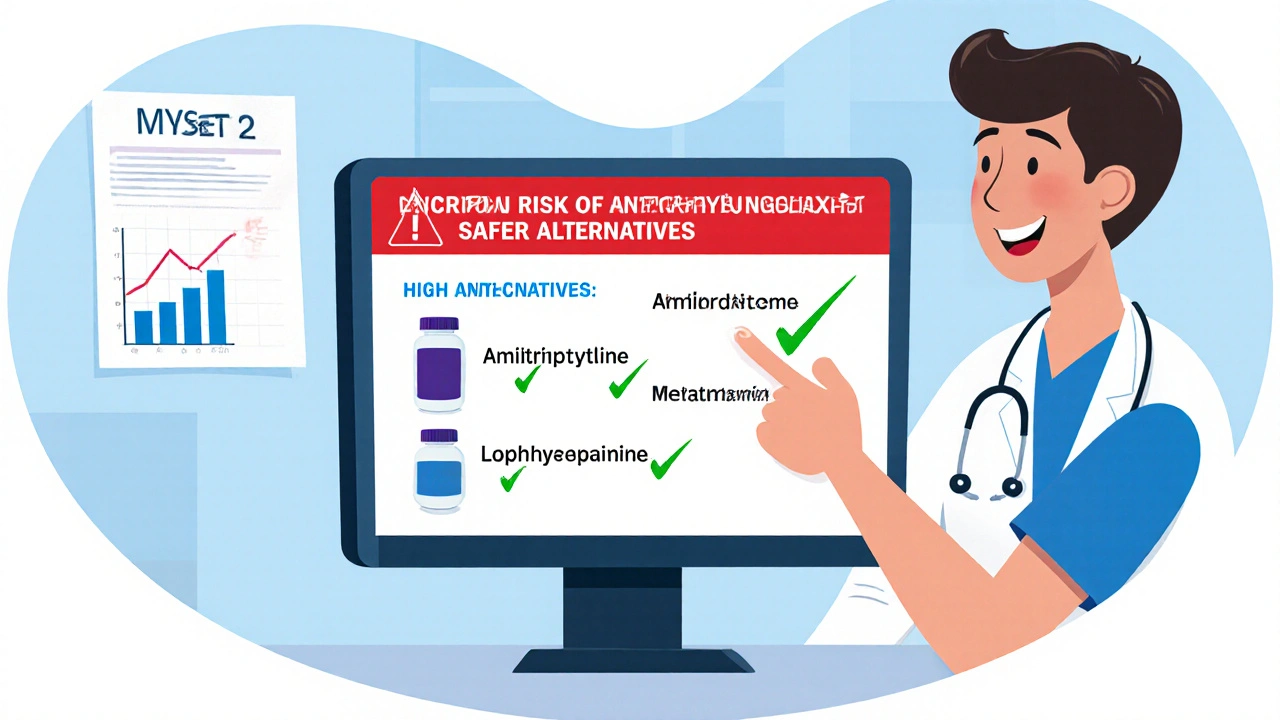
This isn’t about all antidepressants or all allergy meds. It’s about specific ones with strong anticholinergic effects.Among TCAs, amitriptyline and clomipramine are the worst offenders. Nortriptyline and desipramine are better choices-they still work for depression and nerve pain but have much lower anticholinergic activity. For antidepressants overall, SSRIs like sertraline or escitalopram have anticholinergic scores of 0 or 1. They’re far safer when you’re already on other medications.
Same goes for antihistamines. First-generation ones like diphenhydramine, hydroxyzine, and chlorpheniramine are high-risk. Second-generation antihistamines like loratadine (Claritin), cetirizine (Zyrtec), and fexofenadine (Allegra) have almost no effect on acetylcholine. They’re just as good for allergies and sleep, without the brain fog. In fact, their ACB score is 0. If you need something for sleep, melatonin (0.5-5mg) is a safer, non-anticholinergic alternative. It doesn’t cause next-day grogginess or confusion.
What Doctors Are Doing About It
Awareness is growing. In 2023, the American Psychiatric Association updated its treatment guidelines to include explicit warnings about cumulative anticholinergic burden. A survey in the Journal of Clinical Psychiatry found that 78% of psychiatrists now routinely check ACB scores before prescribing-up from just 32% in 2018.Electronic health records are catching on too. Systems like Epic now block prescriptions that combine TCAs with first-gen antihistamines. If a doctor tries to write both, the system pops up a hard stop: “High risk of anticholinergic toxicity. Consider alternatives.” A 2022 study in JAMIA found this feature stopped 92% of these dangerous combinations before they reached the pharmacy.
The FDA now requires updated labeling on all TCAs and first-generation antihistamines to include warnings about cumulative anticholinergic effects. And the American Geriatrics Society’s Beers Criteria (2023 update) says outright: “Avoid first-generation antihistamines in older adults taking TCAs.”
What You Can Do
If you’re taking a TCA and an over-the-counter sleep or allergy aid, stop assuming it’s safe. Ask your doctor or pharmacist:- What’s the anticholinergic burden of each medication I’m on?
- Can I switch to a second-generation antihistamine like loratadine or fexofenadine?
- Is melatonin a better option for sleep than diphenhydramine?
- Could I try nortriptyline instead of amitriptyline?
Don’t wait for symptoms. If you’re over 60 and taking any of these medications, ask for a cognitive screening. A simple Mini-Mental State Examination (MMSE) can catch early signs of delirium. A score below 24 out of 30 may signal anticholinergic overload.
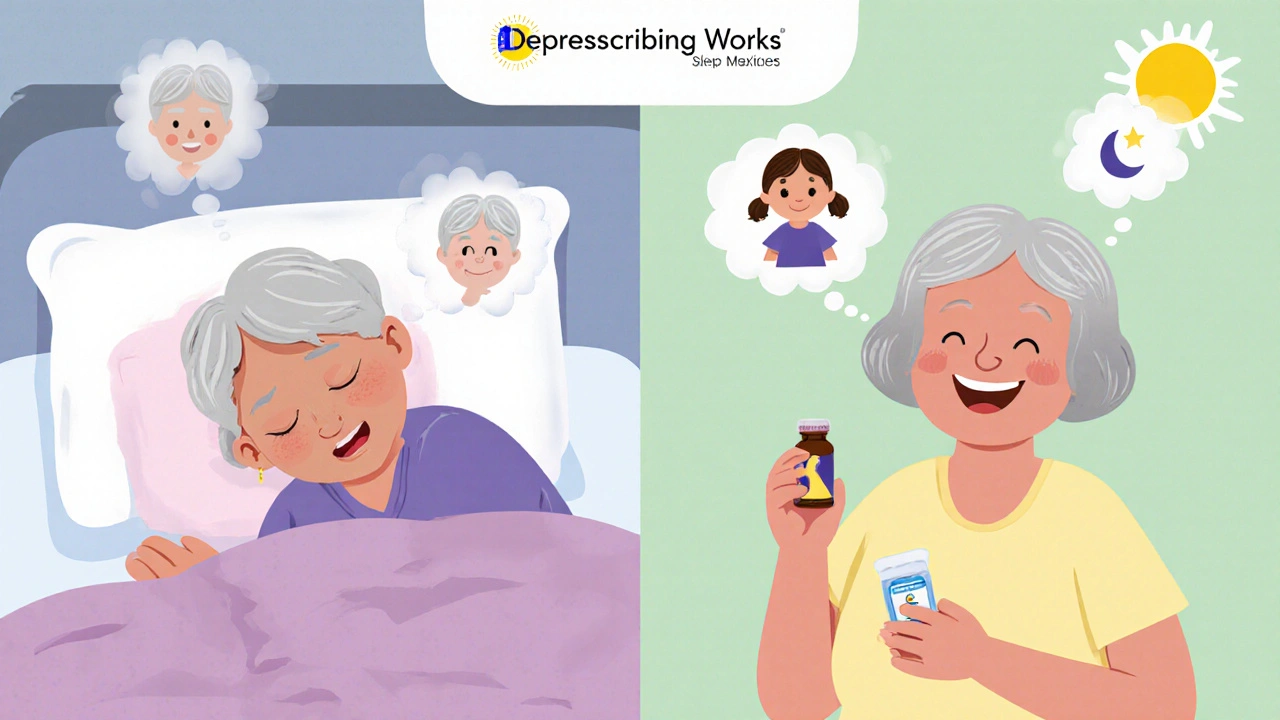
Deprescribing works. A 2023 study in the Journal of the American Geriatrics Society found that when older adults stopped high-burden anticholinergic drugs, their cognitive function improved by 34% over 18 months. That’s not a small gain-it’s life-changing.
Bottom Line
Tricyclic antidepressants and first-generation antihistamines are not inherently bad drugs. But together, they create a perfect storm. The risk isn’t rare-it’s common. The consequences aren’t mild-they’re serious. And the fix isn’t complicated. It’s just not being talked about enough.Switching to safer alternatives can mean the difference between staying independent and ending up in the hospital. Between remembering your grandchild’s name and wondering who they are. Between sleeping well and being too foggy to get out of bed.
If you’re on a TCA and an OTC sleep aid, don’t assume it’s fine. Ask. Check. Change. Your brain will thank you.
Can amitriptyline and Benadryl be taken together safely?
No, combining amitriptyline and diphenhydramine (Benadryl) is not safe. Both drugs strongly block acetylcholine, and together they create a high cumulative anticholinergic burden. This combination is linked to confusion, urinary retention, rapid heartbeat, delirium, and increased dementia risk-especially in older adults. Even short-term use can cause severe side effects. Always ask your doctor for alternatives.
What are safer alternatives to Benadryl for sleep?
Instead of diphenhydramine, use melatonin (0.5-5mg) taken 30-60 minutes before bed. It’s non-anticholinergic, doesn’t cause next-day grogginess, and has no interaction with tricyclic antidepressants. For allergy-related sleep issues, switch to a second-generation antihistamine like loratadine (Claritin) or fexofenadine (Allegra)-they don’t affect acetylcholine and are safe with TCAs.
Do all tricyclic antidepressants have the same risk?
No. Amitriptyline and clomipramine have the highest anticholinergic burden (ACB score of 3). Nortriptyline and desipramine are safer options with lower anticholinergic effects. If you’re on a TCA and need to reduce risk, talk to your doctor about switching to one of these alternatives. They still work for depression and nerve pain but are less likely to cause cognitive side effects.
Can anticholinergic overload cause permanent damage?
Long-term use of high-burden anticholinergic combinations increases the risk of permanent cognitive decline and dementia. A 2015 study found a 54% higher dementia risk with chronic use. But the good news: stopping these drugs can reverse some effects. One study showed a 34% improvement in cognitive function within 18 months after deprescribing. Early action matters.
How do I know if I’m experiencing anticholinergic overload?
Watch for sudden confusion, memory lapses, trouble urinating, dry mouth, blurred vision, constipation, rapid heartbeat, or extreme drowsiness. If you’re on a TCA and an OTC antihistamine and notice any of these, it could be anticholinergic overload. Don’t wait-contact your doctor. A simple MMSE test can confirm cognitive changes.
Are second-generation antihistamines safe with TCAs?
Yes. Loratadine (Claritin), cetirizine (Zyrtec), and fexofenadine (Allegra) have minimal to no anticholinergic activity. Their ACB score is 0, meaning they don’t add to the burden when taken with TCAs. They’re just as effective for allergies and are much safer for sleep or long-term use.
Is this interaction only a problem for older people?
While older adults are most at risk due to slower metabolism and fewer acetylcholine receptors, younger people on multiple medications or with certain health conditions (like prostate issues or glaucoma) can also experience symptoms. Anyone taking a TCA plus a first-gen antihistamine should be aware of the risks, regardless of age.
9 Comments
Bro this is why India’s elderly are dropping like flies in rural clinics - doctors just slap on Benadryl for sleep and call it a day. No one checks the combo. I saw my uncle go from sharp to confused in 3 weeks after his doc added diphenhydramine to his amitriptyline. He forgot his own birthday. No one even blinked.
Let me tell you something about the American medical system - it’s not broken, it’s *designed* this way. Cheap drugs. Easy prescriptions. No follow-up. We treat symptoms like they’re disposable socks. Diphenhydramine? $3. Amitriptyline? $4. Cognitive decline? $300K hospital bill later. The system doesn’t care until you’re in a nursing home screaming for your mother.
Been there. My mum was on amitriptyline for nerve pain and started taking Benadryl for allergies. She’d zone out mid-sentence, forget where she put her keys, and then blame it on ‘getting old.’ Took me six months to convince her to switch to Zyrtec. She’s been 100% more present since. Not a miracle, just common sense.
Just want to say thanks for laying this out so clearly. I’ve been on nortriptyline for years and was about to grab some Benadryl for my allergies. This post scared me enough to check with my pharmacist - turns out they’ve been flagging this combo for months. So glad I didn’t just assume it was fine. Small changes save lives.
okay so like i was just reading this and i think like wow this is so real because my cousin just got hospitalized last month and they said she had anticholinergic tox and she was on like amitriptyline and diphenhydramine and also some otc cold med and i was like wait what how did no one see this coming? like its not even hard to check the scores and i feel like doctors just dont care anymore its all about the next patient and the next script and no one is looking at the big picture like how do you even teach people this stuff??
My grandma took amitriptyline and Benadryl for years and we thought she was just getting forgetful but then we switched her to melatonin and Claritin and within 3 months she was remembering our names again. I wish we’d known sooner. This needs to be on every pharmacy shelf next to the sleep aids.
In many developing nations, including India, the issue is compounded by lack of pharmacist oversight and over-the-counter availability of potent anticholinergics. Patients self-medicate with diphenhydramine for insomnia without knowing the risks, while physicians, under pressure and lacking digital tools, prescribe TCAs without checking interactions. Education must begin at the community level - not just in hospitals.
I’ve seen this happen too many times. A quiet, slow-motion tragedy. No screams. No sirens. Just… fading. One day your loved one stops recognizing you. They don’t forget your face - they forget what it means to *be* with you. And no one ever says it was the medicine. They just say ‘she’s getting old.’
Stop.