
Warfarin and Generic Switching: INR Monitoring and Safety

Imagine you’re managing your blood thinner medication, and your pharmacy suddenly swaps your brand-name Coumadin for a generic version. It’s the same active ingredient, right? So why do some patients panic, while others don’t notice a thing? The answer lies in the delicate balance of INR levels and the concept of a narrow therapeutic index. For millions of Americans taking warfarin, this switch isn’t just a billing change-it’s a clinical event that demands attention.
If you or someone you care for is on warfarin, understanding how generic substitution affects your International Normalized Ratio (INR) is crucial. This article breaks down what happens when you switch formulations, why monitoring matters more than ever during transitions, and how to stay safe without unnecessary stress.
The Warfarin Reality: Why Precision Matters
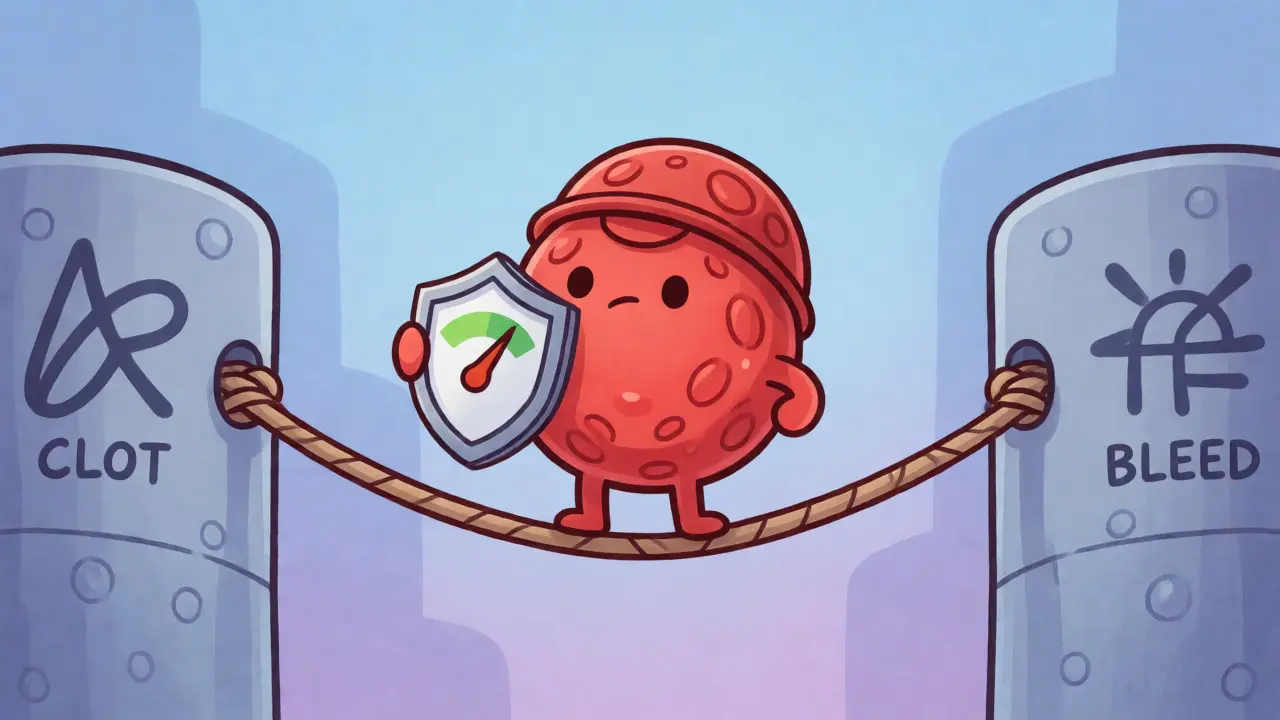
Warfarin is a vitamin K antagonist anticoagulant used to prevent blood clots in conditions like atrial fibrillation and venous thromboembolism. Unlike many drugs where a little more or less doesn’t matter much, warfarin has a narrow therapeutic index. This means the difference between an effective dose and a dangerous one is tiny. Your target INR range-usually 2.0 to 3.0 for most people-is a tightrope walk. Go too low, and you risk clots; go too high, and you risk bleeding.
Because of this sensitivity, even small variations in drug absorption can throw your INR off balance. That’s why the FDA requires generic warfarin to meet strict bioequivalence standards, ensuring it performs within 80-125% of the brand-name reference. But here’s the catch: those percentages represent averages across populations. Individual responses can vary significantly, especially when switching between different generic manufacturers.
Generic Switching: What Actually Changes?
When you switch from Coumadin to a generic, or from one generic manufacturer to another, the active ingredient remains identical. However, inactive ingredients-like fillers, binders, and dyes-can differ. These excipients might affect how quickly your body absorbs the drug. While studies show that most patients handle switches without issue, a subset experiences noticeable INR fluctuations.
A pivotal study by Dr. Daniel Witt tracked patients switching from Coumadin to Barr Laboratories’ generic. He found no significant differences in overall INR control or adverse events for the group as a whole. Yet, individual patients did report changes requiring dose adjustments. This highlights a key truth: population-level safety doesn’t guarantee individual stability. If you’ve been stable on one formulation for years, changing brands introduces a variable that warrants caution.
Monitoring Protocols During Transitions
So, what should you do if your pharmacy switches your warfarin? Don’t stop taking it. Instead, increase your vigilance. Standard practice for stable patients involves checking INR every four to six weeks. But during a switch, guidelines recommend tighter monitoring.
- First Week: Check INR daily or every other day. This helps catch any immediate shifts in absorption.
- Weeks Two to Four: Continue frequent checks until two consecutive results fall within your target range.
- Maintenance: Once stable, revert to standard intervals, but keep close watch for the first month.
This approach aligns with recommendations from the Cleveland Clinic and the American Family Physician. They suggest that if a patient requests a cheaper generic, clinicians should accommodate the request but intensify monitoring initially. Think of it as a safety net rather than a sign of trouble.
Factors Influencing INR Stability
Switching brands isn’t the only factor affecting your INR. Warfarin interacts with over 300 medications and dietary components. Understanding these interactions helps distinguish between a problematic switch and unrelated fluctuations.
| Factor | Impact on INR | Action Required |
|---|---|---|
| Vitamin K Intake | High intake lowers INR | Maintain consistent diet |
| Antibiotics | Can raise INR | Monitor closely during course |
| Alcohol Consumption | Acute use raises INR | Limit binge drinking |
| Missed Doses | Lowers INR | Take as prescribed |
| New Medications | Variable effect | Inform pharmacist immediately |
Dietary consistency is often overlooked. Vitamin K counteracts warfarin. If you suddenly start eating more leafy greens after switching pills, your INR might drop-not because of the pill, but because of your salad. Always consider lifestyle changes before blaming the medication switch.

Cost vs. Convenience: The DOAC Comparison
Why stick with warfarin at all? Direct Oral Anticoagulants (DOACs) like apixaban or rivaroxaban offer convenience without routine INR monitoring. However, they come with higher costs-often $300-$500 monthly versus $4-$10 for generic warfarin. Additionally, warfarin remains the gold standard for mechanical heart valves and severe renal impairment, where DOACs are either contraindicated or less studied.
For many patients, cost drives the decision to stay on warfarin. Generic availability makes long-term therapy affordable. But affordability shouldn’t compromise safety. If switching generics saves money but causes instability, the extra monitoring visits might offset savings. Discuss this trade-off with your healthcare provider.
Practical Tips for Safe Switching
Here’s how to navigate a generic switch confidently:
- Communicate Early: Tell your doctor and pharmacist about any upcoming formulary changes at your insurance level.
- Request Consistency: Ask your pharmacist to note the specific manufacturer and lot number in your records. If you experience issues, this data helps track patterns.
- Watch for Symptoms: Report unusual bruising, bleeding gums, or dark stools promptly. These could signal INR drift.
- Keep a Log: Record your INR results and any symptoms. Trends over time provide better insight than single readings.
Remember, most patients tolerate switches well. The goal isn’t to avoid generics but to manage the transition intelligently. With proper monitoring, generic warfarin offers the same protection as brand-name options at a fraction of the cost.
Is generic warfarin as safe as brand-name Coumadin?
Yes, generic warfarin is considered therapeutically equivalent to Coumadin by the FDA. Studies involving tens of thousands of patients show comparable efficacy and safety profiles. However, individual responses may vary, so closer monitoring during initial switches is recommended.
How often should I check my INR after switching brands?
During the first week after switching, check your INR daily or every other day. Once two consecutive results are within your target range, you can gradually extend the interval back to your normal schedule, typically every four to six weeks.
What if my INR goes out of range after a switch?
Your doctor will likely adjust your dose by 5-10%. They may also investigate other causes like dietary changes or new medications. If instability persists, they might consider switching back to the previous formulation or exploring alternative anticoagulants.
Can I switch between different generic manufacturers?
While possible, it’s best to stick with one manufacturer once stability is achieved. Switching between generics can introduce variability. If your pharmacy automatically substitutes based on stock, ask them to maintain consistency unless necessary.
Are there foods I should avoid when switching warfarin brands?
No specific foods need avoidance due to the switch itself. However, maintaining consistent vitamin K intake is critical regardless of brand. Sudden dietary changes can mimic or mask effects of the medication switch.
12 Comments
I think the article does a great job of balancing the fear factor with practical advice. It is easy to panic when your pharmacy changes your meds but staying calm and just increasing monitoring frequency seems like the smartest move for most people.
It also helps to remember that generic manufacturers have to meet strict FDA standards so we are not dealing with snake oil here.
The pharmacokinetic nuances regarding bioequivalence thresholds often get lost in layman discussions, yet they are paramount to understanding why individual variance occurs despite population-level safety data. The 80-125% confidence interval for AUC and Cmax is a statistical construct that assumes normal distribution across a large cohort, which fails to account for specific genetic polymorphisms affecting cytochrome P450 enzymes or variations in intestinal flora that might alter absorption rates in isolated cases. Therefore, while the regulatory framework provides a robust safety net for the general public, clinicians must exercise heightened vigilance during formulary substitutions because the therapeutic window for warfarin is exceptionally narrow compared to other anticoagulants. One cannot simply assume that equivalence in active ingredient concentration translates to identical clinical outcomes without empirical verification through INR monitoring. This distinction between statistical equivalence and individual biological response is critical for patient education and should be emphasized more frequently in primary care settings to prevent unnecessary anxiety while ensuring rigorous follow-up protocols are maintained during transition periods.
honestly this whole thing is overblown
i switched three times last year and my INR barely moved if at all stop treating generics like radioactive waste
Good points on diet consistency.
It is absolutely disgraceful how often patients are left to fend for themselves when insurance companies force these switches upon us without proper counseling. We deserve better than being treated as mere line items on a spreadsheet where cost savings trump patient safety and dignity. The emotional toll of constantly worrying about bleeding risks while trying to manage a chronic condition is underestimated by those who do not walk in our shoes every single day. Furthermore, the lack of standardized communication from pharmacies regarding manufacturer changes is a systemic failure that needs immediate rectification by healthcare administrators who clearly prioritize profit over people. I am tired of seeing friends suffer through unstable INR levels because their provider did not bother to explain the potential implications of a simple pill swap. We must demand accountability and transparency in this process because our lives are literally hanging in the balance and silence is no longer an acceptable option in modern medicine.
america cant even make its own drugs anymore so dont act suprised when the quality dips
we rely on foreign supply chains for everything now and then wonder why our healthcrare is messed up
generic swtiching is just another symptom of a broken system that cares more about money than actual results for patiens
if you want real safety stick to brand names or pay out of pocket for quality control
you lot are making a mountain out of a molehill again
its the same molecule mate
stop obsessing over tiny fluctuations that probably mean nothing clinically
just take the drug and check your blood work like everyone else does
no one cares about your specific excipient preferences unless you are allergic to them
get over it and move on with your life
Well isn't it fascinating how we can measure something as complex as blood clotting with such precision yet still struggle to predict human reaction to a simple pill change? It really highlights the beautiful unpredictability of biology doesn't it?
But hey look on the bright side at least we have options and knowledge to navigate these little bumps in the road together!
You're missing the point entirely.
The issue isn't just about the molecule it's about the variability in manufacturing processes that aren't fully transparent to the end user.
Just because it passes bioequivalence tests doesn't mean it behaves identically in every single person's unique physiological environment.
Dismissing patient concerns as hysteria ignores the very real data showing increased hospitalizations post-switch in vulnerable populations.
Very informative post! 👍
I had a similar experience when my pharmacy changed suppliers last month 😟
My doctor advised me to monitor closely for two weeks
It was stressful but turned out fine in the end 🙂
Thanks for sharing this important info!
Look I get it.
We all want cheap meds.
But let's be real here the difference between a $4 generic and a $10 branded version is negligible for most people when you factor in the time off work for extra INR checks.
Plus the stress of wondering if your pill is 'good enough' adds cortisol which messes with everything anyway.
Maybe we should just accept that medicine isn't perfect and focus on what we can control rather than fighting over pennies while risking stability.
It’s a tradeoff plain and simple.
Some people need the certainty of the brand name regardless of cost.
Others thrive on the affordability.
Neither group is wrong.
We just need to stop pretending there’s one right answer for everyone.
The system is flawed yes.
But blaming the generic pill itself is misdirected anger.
Blame the lack of communication and support structures instead.
@Stuart Lorne While I appreciate your straightforwardness I think dismissing patient concerns as obsession overlooks the genuine anxiety many feel.
It is not just about the molecule but the trust in the supply chain and the personal history some patients have with instability.
A little empathy goes a long way even for those of us who prefer to keep things calm.