
Why Medications Lose Potency Over Time and How It Happens
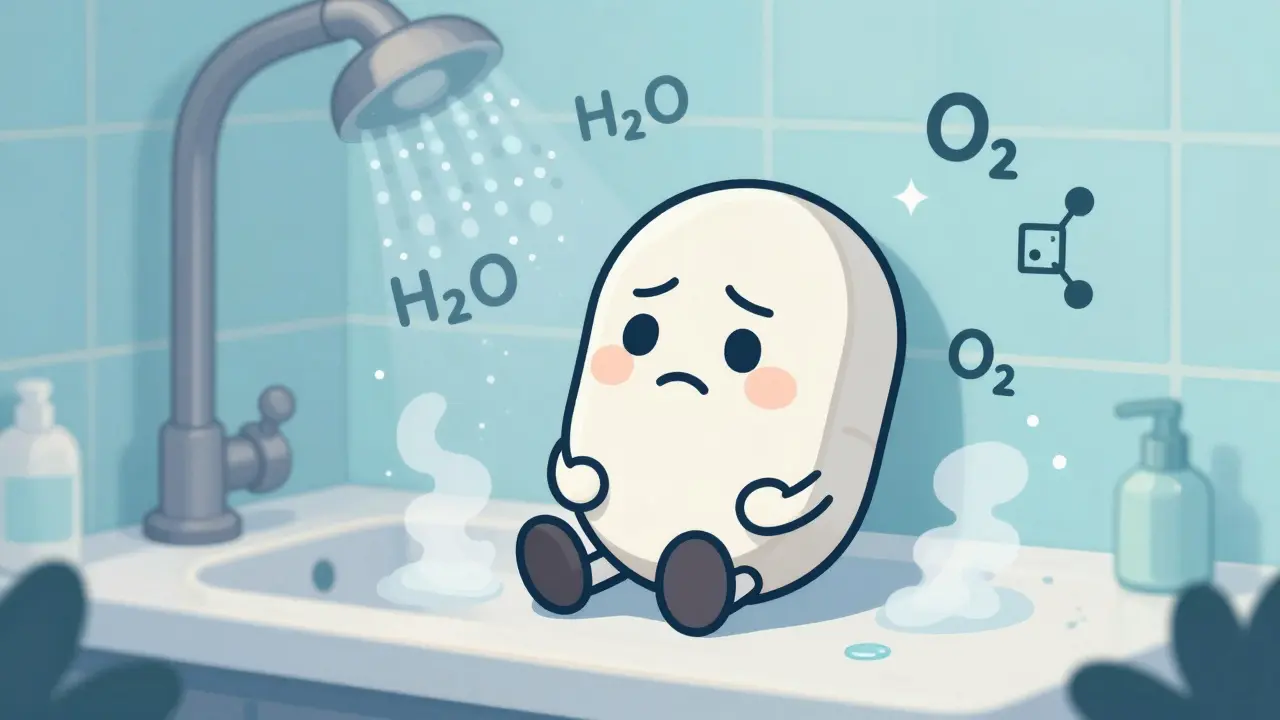
Most people think expiration dates on medications are like a sell-by date on milk-something that suddenly turns the pill into useless junk. But that’s not how it works. Medications don’t magically lose their power the day after the date printed on the bottle. The truth is, they’ve been slowly breaking down since the moment they were made. And that breakdown is influenced by what’s inside the pill, how it’s packaged, and where you store it.
How Medications Break Down Over Time
Every pill, capsule, or liquid contains active ingredients designed to treat a condition. But those ingredients aren’t stable forever. They react with air, moisture, heat, and light. These reactions are called chemical degradation. The most common types are hydrolysis (when water breaks down the molecule), oxidation (when oxygen changes its structure), and photolysis (when light damages it).
For example, ibuprofen is one of the most stable drugs out there. Studies show that even years after its expiration date, it often still contains more than 90% of its original strength-if stored properly. But other drugs aren’t so lucky. Epinephrine in EpiPens, for instance, degrades noticeably within months after expiration. Amoxicillin suspension, the liquid form of the antibiotic, can lose potency fast once mixed with water. Levothyroxine, used for thyroid conditions, is also known to degrade quickly, especially if exposed to humidity.
The reason some drugs last longer than others comes down to their chemical makeup and what’s mixed in with them. Inactive ingredients, called excipients, can actually speed up degradation. One study found that certain binders like hypromellose and polysorbate in ibuprofen tablets caused faster breakdown, even though the active ingredient was the same across brands. That’s why two bottles of ibuprofen with the same dosage can have different shelf lives.
What the Expiration Date Really Means
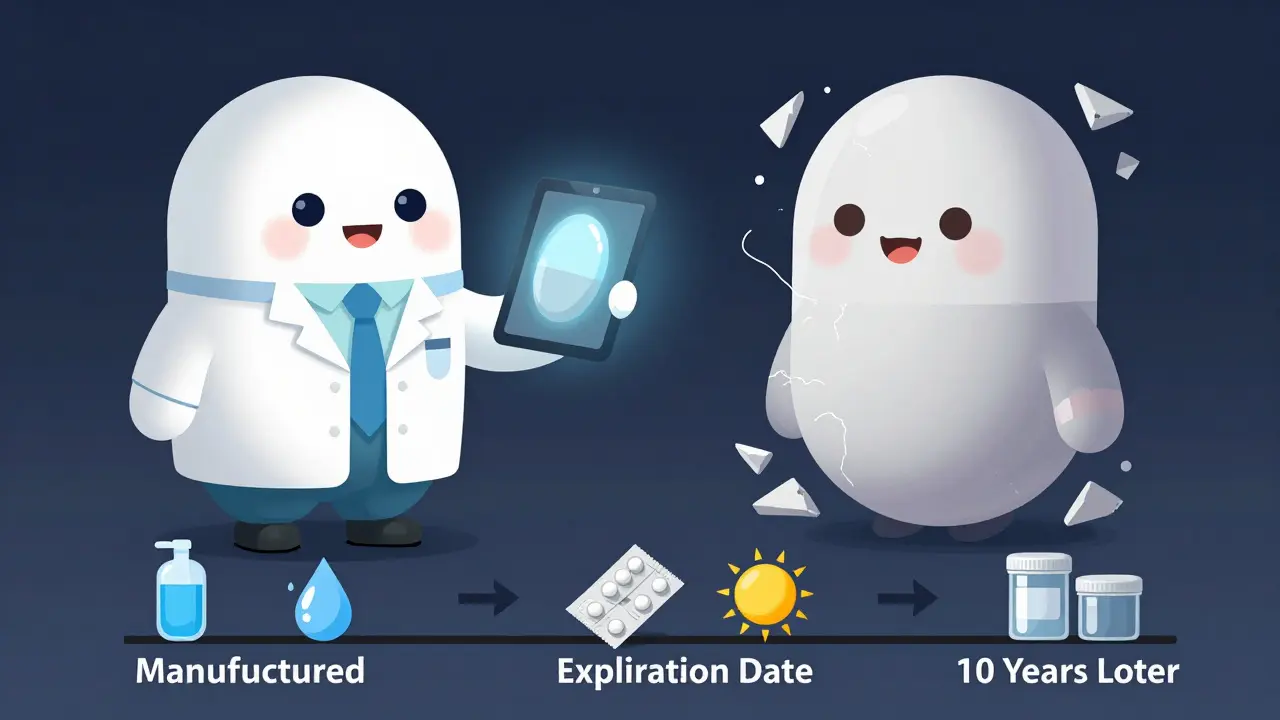
The expiration date isn’t a random guess. It’s the result of years of lab testing. Manufacturers put drugs through accelerated aging tests-keeping them at 40°C and 75% humidity for months to simulate years of real-world storage. Based on this, they set a date when the drug is guaranteed to still contain at least 90% of its labeled potency. That’s the standard set by the U.S. Pharmacopeia (USP).
So if your bottle says 200 mg of ibuprofen, by the expiration date, it must still have at least 180 mg. The rest? It’s either broken down into harmless byproducts or lost during manufacturing. The FDA started requiring these dates in 1979. Before that, many drugs had no clear shelf life, leading to inconsistent quality.
Here’s the surprising part: most solid medications-tablets and capsules-stay effective well beyond that date. A 2020 analysis by the National Institutes of Health found that under ideal conditions, many drugs retain usable potency for five to ten years past expiration. The military’s Shelf Life Extension Program, which has tested over 100 drugs since 1986, confirmed this. About 88% of the medications they tested could have had their expiration dates extended, some by over a decade.
Storage Is the Real Enemy
If you keep your meds in the bathroom, you’re speeding up their decay. Bathrooms are hot, steamy, and humid-perfect conditions for hydrolysis. One study showed that humidity and temperature swings in bathrooms can degrade drugs 30-50% faster than in a cool, dry bedroom drawer.
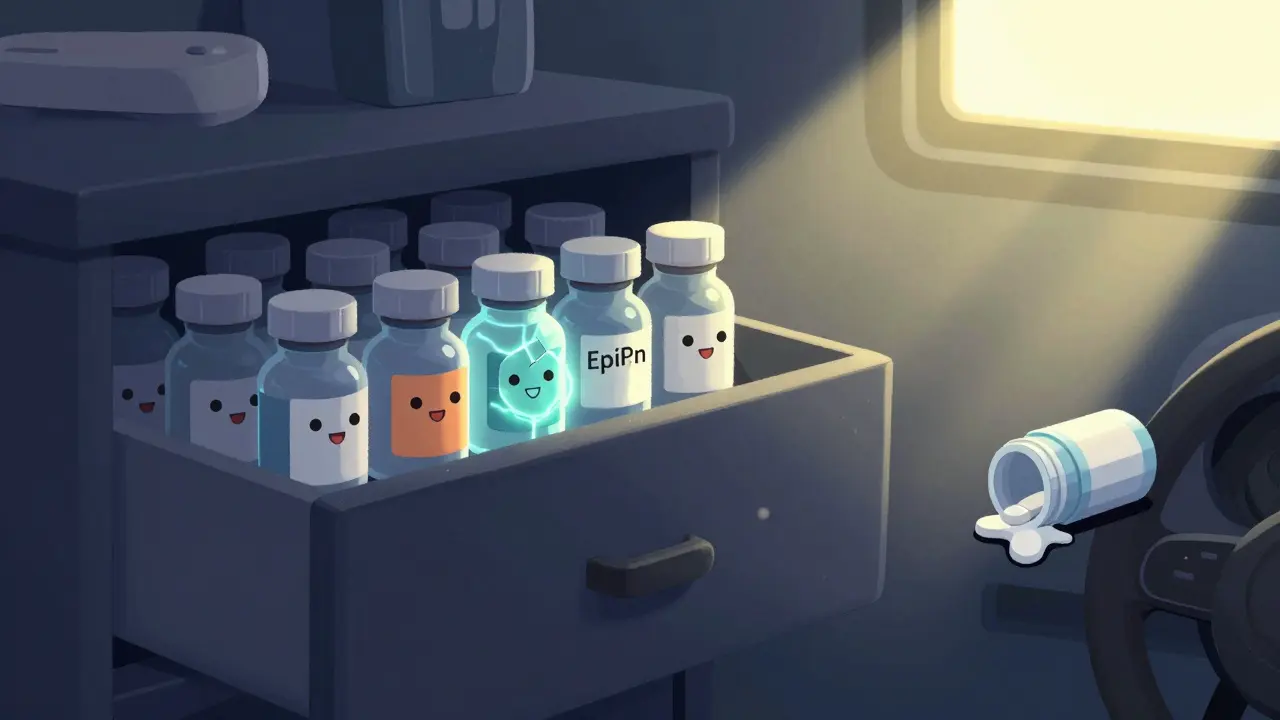
Heat is another killer. Leaving pills in a hot car or on a windowsill can break them down in weeks. Light does the same thing-especially for drugs like tetracycline or nitroglycerin. That’s why some medications come in dark bottles or blister packs with foil backing. Those aren’t just for looks; they’re shields.
Even the container matters. A bottle with a loose cap lets in moisture. A pillbox left open on the counter exposes drugs to air. The best place to store most medications is a cool, dry spot away from sunlight. A bedroom shelf or a closet drawer works better than any medicine cabinet.
Which Medications Are Riskiest to Use After Expiration?
Not all expired drugs are equally dangerous. Some are just less effective. Others can be harmful.
Antibiotics like amoxicillin and doxycycline are the biggest concern. If they’ve lost potency, they won’t kill all the bacteria. That leaves the toughest ones alive-and they can multiply, leading to stronger, harder-to-treat infections. This contributes to antibiotic resistance, one of the biggest public health threats today.
Emergency medications like EpiPens and nitroglycerin tablets are also high-risk. If an EpiPen doesn’t deliver full epinephrine during an allergic reaction, it could be life-threatening. Nitroglycerin, used for heart attacks, degrades rapidly when exposed to air and light. Even if it looks fine, you can’t trust it after expiration.
Thyroid meds like levothyroxine and blood thinners like warfarin have narrow therapeutic windows. That means the difference between the right dose and a dangerous one is tiny. Even a 10% drop in potency can throw your whole treatment off.
On the other hand, pain relievers like acetaminophen or ibuprofen, antihistamines like loratadine, and even some antidepressants tend to hold up well. But even then, there’s no way to know for sure without lab testing-which you can’t do at home.
Why Manufacturers Set Short Expiration Dates
It’s not just about science-it’s about business and liability. Companies test drugs for 12 to 36 months, then set the expiration date a few months beyond the last point where they’re sure the drug still meets standards. That’s conservative by design. Extending the date means more testing, more paperwork, and more risk if something goes wrong.
Plus, the FDA doesn’t require companies to prove a drug is still safe after the labeled date. So there’s no incentive to push it further. The system is built to protect patients from bad batches, not to maximize shelf life.
That’s why the military’s extension program can’t be copied for home use. Soldiers store drugs in climate-controlled warehouses. You don’t. Your meds might have spent time in a hot car, a humid bathroom, or a sunlit drawer. No one can guarantee their condition.
What Should You Do With Expired Medications?
If it’s a life-saving drug-epinephrine, insulin, seizure meds, or antibiotics-don’t use it past the date. Replace it. The risk isn’t worth it.
For common over-the-counter meds like pain relievers or allergy pills, the chance of harm is low. But you’re not getting the full benefit. If you’re using them for something serious, like chronic pain or high blood pressure, you’re better off with a fresh bottle.
Never flush pills down the toilet or toss them in the trash. Many communities have drug take-back programs. Pharmacies often collect expired meds for safe disposal. If that’s not available, mix them with coffee grounds or cat litter, seal them in a bag, and throw them away. That keeps them out of water supplies and away from kids or pets.
The Future of Medication Stability
Scientists are working on better ways to keep drugs stable longer. New packaging with oxygen and moisture barriers can extend shelf life by 25-40%. Some companies are testing smart labels that change color when the drug degrades. Others are developing real-time sensors that could tell you exactly how potent your pill is.
But for now, the safest rule is simple: if you’re not sure, don’t use it. Your health isn’t worth gambling on a guess.
Do all expired medications become dangerous?
No, not all expired medications become dangerous. Most solid drugs like ibuprofen or acetaminophen just lose some potency over time and become less effective. But certain medications-like epinephrine, antibiotics, insulin, and thyroid drugs-can become unsafe or ineffective, which can lead to serious health risks. It’s not about the date alone; it’s about the type of drug and how it was stored.
Can I still use an expired EpiPen in an emergency?
If you have no other option during a life-threatening allergic reaction, using an expired EpiPen is better than using nothing. But don’t rely on it. Studies show epinephrine levels drop significantly after expiration, and you may not get the full dose needed to stop anaphylaxis. Always replace your EpiPen before it expires, and carry two in case one fails.
Why do some drugs expire faster than others?
It depends on the chemical structure of the active ingredient and the inactive ingredients used in the formula. Liquid medications, especially those that need refrigeration, break down faster than tablets. Drugs like epinephrine, levothyroxine, and antibiotics are chemically unstable and degrade more easily. Excipients like certain binders or preservatives can also speed up breakdown. That’s why two brands of the same drug might have different expiration dates.
Is it safe to store medications in the bathroom?
No, the bathroom is one of the worst places to store medications. The heat and humidity from showers and baths can cause pills to break down faster. Moisture triggers hydrolysis, which breaks down many active ingredients. Store medicines in a cool, dry place like a bedroom drawer or closet instead.
Can I extend the life of my medications by refrigerating them?
Only if the label says to. Refrigeration helps some medications-like liquid antibiotics or insulin-stay stable longer. But for most pills, cold temperatures aren’t necessary and can even cause condensation inside the bottle, which introduces moisture and speeds up degradation. Always follow the storage instructions on the label.
8 Comments
So let me get this straight-pharma companies are LYING to us? They know these pills last 10+ years but they set short dates so we keep buying? I’ve been duped my whole life. My ibuprofen from 2018? Still kickin’. They’re profit monsters. And don’t even get me started on how they test in perfect labs while we store meds in hot bathrooms because we’re poor and have no choice. This is systemic exploitation. I’m never buying another bottle again. #BigPharmaLies
The U.S. Pharmacopeia standards are legally binding and scientifically rigorous. To suggest that expiration dates are arbitrary is not only inaccurate but dangerous. Medications are not consumer goods. Their efficacy and safety are regulated by federal law. Disregarding expiration dates undermines public health infrastructure and endangers lives. This is not a matter of opinion.
Okay but can we just take a second to appreciate how wild it is that we’ve been conditioned to think of medicine like milk? 🤯 I used to panic every time my allergy pills got close to expiration-now I know they’re probably chillin’ in my drawer like they own the place. My grandma kept her blood pressure meds for 8 years and she’s still hiking at 82. Maybe we just need to chill, store them right, and stop letting corporations scare us into buying new bottles every 6 months. Life’s too short to stress over pills.
I’m a pharmacist and I see this all the time. People throw out perfectly good meds because they’re scared. The truth? Most tablets last years past expiration if kept dry and cool. But I also see people hoarding antibiotics and using them wrong-that’s the real danger. Don’t use expired EpiPens. Don’t risk it with insulin. But your Advil from 2021? Probably fine. Just don’t store it next to your shower. And if you’re unsure? Ask your pharmacist. We’re here to help, not judge.
Wait, so you’re telling me the military has been stockpiling expired meds for decades and they’re still good? But regular people are told to toss them? That’s not a policy gap-that’s a class divide. Why do soldiers get to use decade-old pills while I have to pay $40 for a new bottle of levothyroxine? This system is rigged. And don’t give me that ‘they store it in climate-controlled warehouses’ excuse. My apartment has AC too. They’re just protecting profits. I’m starting a petition to make the FDA extend all expiration dates based on the military’s data. Someone help me start this.
Anyone who uses expired meds is a dumbass. Period. I don’t care if your ibuprofen is ‘probably fine.’ What if it doesn’t work and you get a heart attack? You think the ER is gonna care that you were cheap? You’re not saving money-you’re gambling with your life. And if you’re storing pills in your bathroom? You’re literally a public health hazard. Stop being a liability.
Stability data is based on worst-case storage. The 90% potency threshold is conservative by design. The military program confirms that under controlled conditions, most solid dosage forms retain efficacy for many years. However, real-world conditions vary. For critical medications-epinephrine, insulin, anticoagulants-the margin of error is too small. For non-critical analgesics or antihistamines, the risk is low but not zero. Always prioritize manufacturer guidance. When in doubt, consult a pharmacist. Your health is not a gamble.
My dad used his nitroglycerin past the date once. Didn’t work. Got rushed to the hospital. He’s fine now but that was a wake-up call. Some meds you don’t mess with. I keep my EpiPen in the fridge just in case. I know it’s not recommended but the label says ‘avoid extreme temps’-and my kitchen is always cool. I’m not risking it. Better safe than sorry.