
Workplace Wellness: How to Educate Employees About Generic Benefits
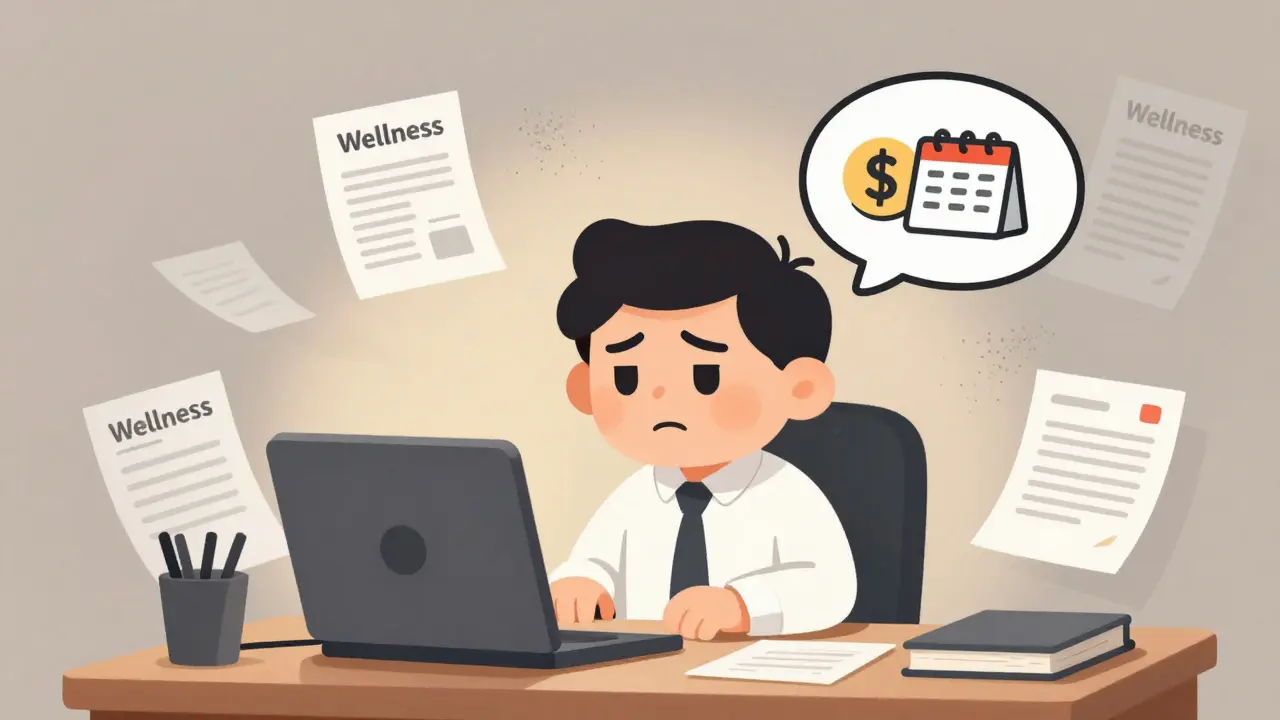
Imagine sending out an email about your company’s new gym membership discount. You hit send. Then... silence. Most employees ignore it. Why? Because they don’t see how a gym membership helps them pay their bills or get home earlier. This is the core problem with workplace wellness today. Companies spend billions on workplace wellness programs designed to improve employee health and reduce healthcare costs, but participation often stalls because staff simply do not understand the value.
The issue isn’t that people don’t want to be healthy. It’s that they are overwhelmed by "generic" benefit messaging. When you tell an employee, "Wellness is good for you," it falls flat. But when you explain, "This program can lower your premium by $50 a month and give you two extra days of paid leave if you meet these simple goals," suddenly, they listen. Educating employees about these tangible, often overlooked benefits is no longer optional-it’s the difference between a failed initiative and a thriving culture.
Why Generic Messaging Fails
We need to talk about why most wellness communications fail. For years, HR departments relied on broad, one-size-fits-all messages. They sent flyers about stress management or posted signs about taking breaks. The result? Low engagement. According to data from Harvard Business Review, generic wellness messaging produces only a 19% engagement rate. That means four out of five employees tune it out.
Why does this happen? Because "health" is abstract. "Savings" is concrete. When companies focus solely on vague health improvements without connecting them to daily life, employees feel skeptical. A study by Dr. Laura Putnam, CEO of Motion Infusion, highlights this starkly: personalized benefit communication tailored to employee demographics achieves a 68% participation rate, compared to just 19% for generic blasts. The gap is massive. If you are still using the same email template you used in 2015, you are leaving money and morale on the table.
Furthermore, trust is eroding. Many employees view wellness programs as surveillance tools rather than support systems. Without clear, transparent education about what the program actually offers-and what it demands-they assume the worst. Effective education builds trust by showing exactly how the program works, who pays for what, and what the real-world outcomes look like.
The Business Case: Beyond Feel-Good Metrics
To get buy-in from leadership and employees alike, you must speak the language of business. Workplace wellness is not just a perk; it is a financial strategy. The Centers for Disease Control and Prevention (CDC) launched its Work@Health Program to help employers establish frameworks that prove this point. Their research shows that for every $1 invested in workplace wellness, businesses save an average of $3.27 in reduced healthcare costs and improved productivity.
Let’s break down those "generic" benefits into specific categories that matter to different stakeholders:
- Financial Savings: Employees care about their take-home pay. Programs that offer premium differentials-where participating employees pay less for insurance-directly impact wallets. Under the Affordable Care Act (ACA), employers can offer up to 30% premium incentives for wellness participation. Explaining this clearly turns a wellness challenge into a financial opportunity.
- Productivity Gains: Presenteeism (working while sick) costs companies more than absenteeism. Educated employees who engage in wellness activities report 28% fewer sick days and 15% higher productivity metrics, according to the American College of Occupational and Environmental Medicine (ACOEM).
- Talent Retention: In a tight labor market, benefits are a key differentiator. Mercer’s 2023 survey found that employers prioritizing comprehensive wellness education saw 11% lower turnover. People stay where they feel cared for, not just where they are paid.
When you educate employees, you aren’t just telling them to exercise. You are showing them how the company is investing in their long-term stability and income potential.
Moving From Physical to Holistic: The 7 Dimensions
Traditional wellness focused almost exclusively on physical health: BMI checks, step counts, and biometric screenings. While important, this narrow view misses the bigger picture. Modern employees face stress from finances, caregiving, and job insecurity. Ignoring these factors makes wellness feel irrelevant.
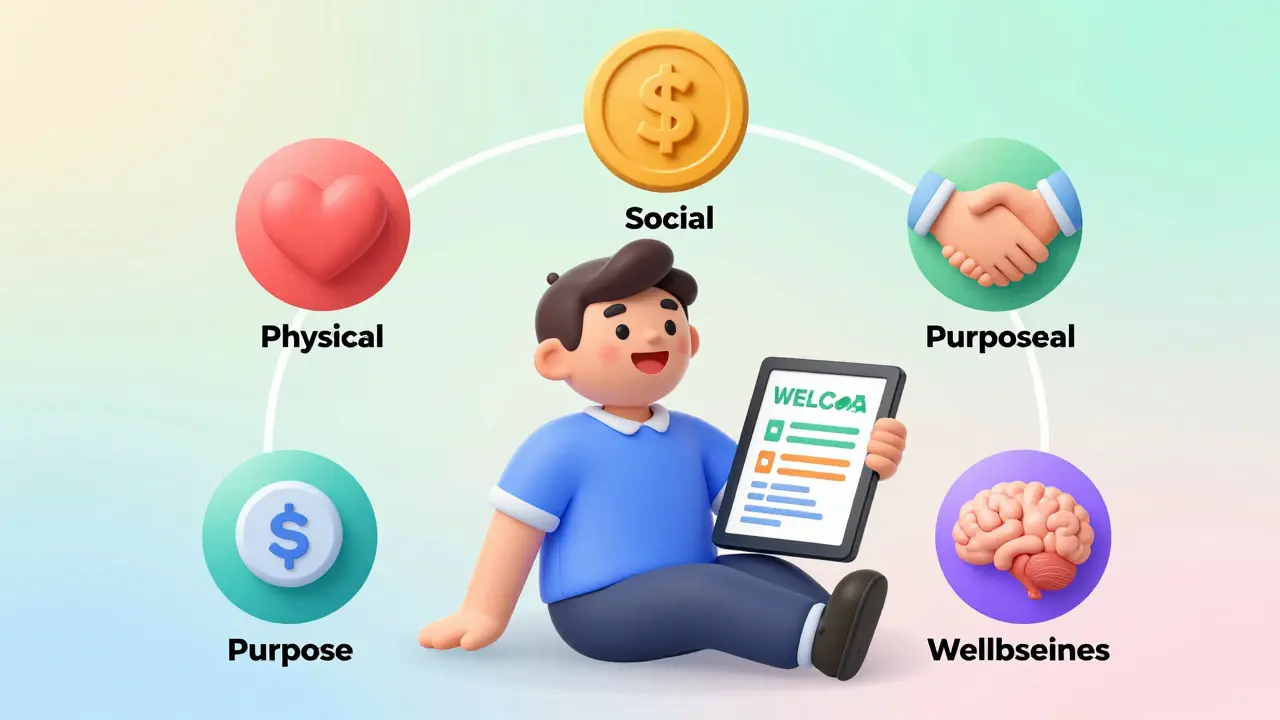
This is where the WELCOA 7 Dimensions Model a framework addressing physical, emotional, social, financial, community, purposeful, and professional wellbeing comes in. WELCOA (Wellness Council of America) found that programs addressing all seven dimensions see 34% higher participation rates compared to single-dimensional programs (which average only 18%).
| Feature | Traditional Approach | Holistic (7-Dimension) Approach |
|---|---|---|
| Focus Area | Physical health only | Physical, Emotional, Financial, Social, etc. |
| Participation Rate | ~18% | ~34% |
| Employee Perception | Surveillance/Punitive | Supportive/Empowering |
| Key Metric | BMI/Blood Pressure | Overall Wellbeing Score |
For example, financial stress is now the top concern for 68% of employees, according to PwC’s 2024 Employee Financial Wellness Survey. If your wellness education ignores financial literacy or retirement planning, you are ignoring your employees’ biggest pain point. Integrating financial wellness modules into your broader education strategy can dramatically increase relevance and engagement.
Compliance and Trust: Navigating Legal Risks
You cannot educate employees effectively if they are afraid of the program. Compliance is not just a legal checkbox; it is a trust builder. The landscape has become increasingly complex, with the Equal Employment Opportunity Commission (EEOC) reporting a 37% year-over-year increase in wellness-related complaints in 2023.
Two major laws govern this space:
- Americans with Disabilities Act (ADA): Ensures wellness programs are voluntary and do not discriminate against individuals with disabilities.
- Genetic Information Nondiscrimination Act (GINA): Prohibits employers from requesting or purchasing genetic information, including family medical history.
Employees often worry that sharing health data could jeopardize their jobs or insurance coverage. Your education materials must explicitly state how data is protected. For instance, clarify that health results are kept confidential and separate from HR files. Transparency here reduces fear. The EEOC requires that any incentive offered for participation must not exceed 30% of the total cost of self-only coverage. Communicating these limits clearly shows employees that the program is fair and legally sound.
Dr. John Howard, Director of the National Institute for Occupational Safety and Health (NIOSH), stated that effective communication of benefits is the single most significant predictor of program success. Part of that communication is assuring safety and privacy.
Personalization: The Key to Engagement
If there is one trend dominating workplace wellness in 2026, it is personalization. Generic emails die in the inbox. Personalized statements land on the desk. Strive Well-Being’s corporate wellness platform uses a 9-step educational roadmap that begins with administering needs and interest surveys. This allows companies to tailor messaging based on actual employee interests.
Consider this scenario: An employee receives a notification saying, "Based on your recent activity, you are eligible for a $100 rebate if you complete a mental health workshop." Another employee gets, "You’re close to earning a premium reduction by logging 10,000 steps this week." Both are true, but both are relevant only to the individual.
Personify Health’s 2023 case study showed a 53% higher engagement rate when combining multi-channel communication (email, intranet, manager talking points) with personalized benefit statements. The secret is meeting employees where they are. Use data to segment your audience. New parents might care about childcare resources. Older workers might prioritize preventive screenings. Tailor the message to the moment.

Implementation Roadmap for HR Leaders
How do you actually roll this out? The CDC Work@Health Program recommends a 12-month implementation timeline. Here is a simplified version for immediate action:
- Months 1-2: Leadership Buy-In. Ensure executives participate. Programs fail if leaders don’t model the behavior. Aim for at least 70% executive participation.
- Months 3-4: Needs Assessment. Survey employees. Ask what they want, not what you think they need. Identify barriers to participation.
- Months 5-8: Phased Rollout. Launch education campaigns in waves. Start with high-interest topics (like financial savings) to build momentum.
- Months 9-12: Evaluation. Measure participation, claims reduction, and employee satisfaction. Adjust based on feedback.
Budget wisely. WELCOA’s 2024 benchmarking data suggests dedicating 3-5% of your total wellness budget to education components. This includes creating materials, training managers, and potentially hiring certified specialists. Certified Corporate Wellness Specialists (CCWS) earn 22% higher salaries, reflecting the value of expertise in this field.
Overcoming Common Pitfalls
Even well-intentioned programs stumble. Here are three common pitfalls and how to avoid them:
Pitfall 1: Overpromising Savings. Some vendors claim massive annual savings that never materialize. A Trustpilot review noted a vendor promised $1,200 savings but delivered only $217. Be realistic. Show conservative estimates and explain the variables. Honesty builds credibility.
Pitfall 2: One-Time Communication. Sending one email is not education. It’s notification. Wellness education is ongoing. Use multiple channels: Slack reminders, lunch-and-learns, intranet updates, and manager check-ins. Repetition reinforces value.
Pitfall 3: Ignoring Small Teams. Large companies have resources; small ones don’t. Only 38% of small businesses (under 50 employees) offer structured wellness education, compared to 83% of large employers. However, small teams can leverage low-cost digital tools and peer-led initiatives. Don’t let size dictate quality. Focus on connection over complexity.
What is the ROI of workplace wellness education?
Studies show an average return of $3.27 for every $1 invested. This comes from reduced healthcare claims, lower absenteeism, and increased productivity. However, accurate measurement requires tracking metrics over at least 12 months to see sustained effects.
How do I ensure my wellness program is compliant with ADA and GINA?
Ensure the program is voluntary, keep health data confidential, and do not request genetic information. Incentives must not exceed 30% of the cost of self-only coverage. Consult with legal counsel or a certified wellness specialist to review your materials before launch.
Why is personalized communication better than generic messaging?
Generic messaging yields only 19% engagement, while personalized communication tailored to demographics and risks achieves 68%. Personalization connects benefits to individual needs, making the value proposition clear and relevant to each employee.
What are the 7 Dimensions of Wellness?
The WELCOA model includes Physical, Emotional, Social, Financial, Community, Purposeful, and Professional wellbeing. Addressing all seven creates a holistic approach that resonates more deeply with employees than focusing solely on physical health.
How much should we budget for wellness education?
Experts recommend allocating 3-5% of your total wellness program budget to education. This covers content creation, training, and technology platforms needed to deliver personalized and compliant communications.