
NTI-Specific Substitution Laws: Which States Have Special Rules for Critical Medications
What Are NTI Drugs and Why Do They Matter?
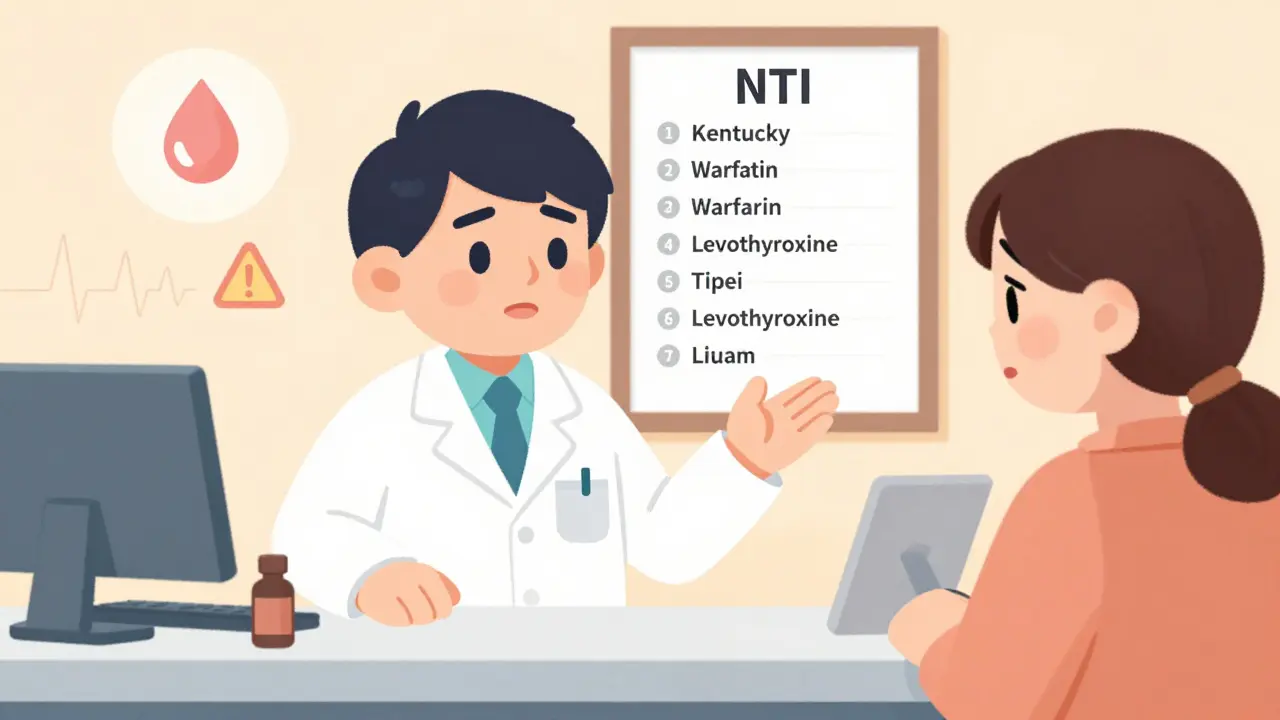
NTI stands for narrow therapeutic index. These are medications where even tiny changes in dose or blood levels can lead to serious harm - like a seizure, a blood clot, or dangerous bleeding. Think of it like walking a tightrope: one small slip, and things go wrong fast. Common NTI drugs include warfarin (a blood thinner), levothyroxine (for thyroid issues), lithium (for bipolar disorder), and certain anti-seizure medicines like phenytoin.
The FDA says approved generic versions of these drugs are just as safe and effective as the brand-name versions. They meet the same strict standards. But here’s the catch: 27 states don’t agree. They’ve passed their own rules to limit or block generic substitution for these drugs. Why? Because pharmacists, doctors, and patients have seen real-world cases where switching brands led to problems - even when the FDA says it shouldn’t happen.
How States Differ: Three Main Approaches
States aren’t all on the same page. There are three main ways they handle NTI drug substitution:
- Carve-out rules: These states just say ‘no substitution’ for certain NTI drugs. Kentucky, for example, has a list of 27 drugs where substitution is banned unless the doctor specifically writes ‘do not substitute’ on the prescription. That includes digoxin, levothyroxine, and warfarin tablets.
- Affirmative consent: In states like North Carolina and Connecticut, the pharmacist can’t switch the drug without written approval from both the patient and the prescribing doctor. In Connecticut, if they switch an anti-seizure drug, they must notify the doctor and patient within 72 hours - and if either objects within 14 days, the switch is canceled.
- Notification-only rules: Some states, like South Carolina, don’t ban substitution but require pharmacists to document it and inform the prescriber. It’s not mandatory to get approval - just to keep a paper trail.
States with the Strictest Rules
If you’re on a critical NTI drug, your state matters a lot. Here are the toughest ones:
- Kentucky: Has the most detailed list. No substitution for digoxin, levothyroxine, lithium, or warfarin unless the doctor writes ‘dispense as written’ on the prescription. Pharmacists say it adds 5-7 minutes per prescription just to check the list.
- North Carolina: Requires both the patient and prescriber to sign a consent form before any substitution. That form has to be kept for three years.
- Connecticut: Special rules for anti-epileptic drugs. Notification must happen fast, and objections can stop the switch. The Epilepsy Foundation says this helped reduce emergency room visits by nearly 20% after it started in 2016.
States That Follow the Federal Rule
Not every state has extra rules. In places like California, Texas, and Virginia, pharmacists can substitute generic NTI drugs the same way they do for any other medication - as long as it’s FDA-approved as therapeutically equivalent. No extra forms. No extra consent. No list to check.
Pharmacists in these states report fewer delays and lower rates of patient complaints. One chain pharmacy manager in Virginia said patient complaints about NTI substitutions were under 0.5%. That’s less than one complaint per 200 prescriptions.
The Real-World Impact on Pharmacists
These rules aren’t just paperwork - they change how pharmacies work. In states with NTI restrictions, pharmacists spend an average of 3.2 minutes per prescription just verifying substitution rules. In states without them? Less than one minute.
That adds up. Pharmacists in restrictive states report spending nearly 9 extra hours a month just on NTI compliance. Many pharmacies now use software that auto-checks state rules and flags restricted drugs. But smaller, independent pharmacies often still rely on printed lists and manual checks. It’s slow. It’s frustrating. And it can delay patients getting their meds.
Who’s Right? The FDA vs. the States
The FDA insists: ‘All approved generics are safe.’ They’ve reviewed thousands of studies and say there’s no reason to treat NTI drugs differently.
But doctors and pharmacists on the ground see something else. A 2021 study in the Journal of the American Pharmacists Association found that states with substitution bans had 28.7% fewer reports of NTI-related adverse events - like bleeding from warfarin or seizures from anti-epileptic switches. That doesn’t prove the rules caused the drop, but it’s hard to ignore.
Dr. Aaron Kesselheim from Harvard puts it simply: ‘For warfarin, even a 10% difference in absorption can mean the difference between a clot and a stroke.’
On the other side, the Generic Pharmaceutical Association argues that many drugs on state NTI lists aren’t even truly narrow therapeutic index drugs. They say only 12 out of 47 drugs on state lists have solid clinical proof of needing special handling. That means some rules are based on fear, not data.

What’s Changing? The Future of NTI Rules
Things are shifting. In 2023, the FDA released a draft guidance that gives a clearer, science-based way to define what counts as an NTI drug - using a ratio of toxic dose to effective dose. Nine states, including New York and Ohio, are now looking at updating their lists using this new standard.
California passed a law in 2022 that requires their pharmacy board to base NTI designations only on scientific evidence - not tradition. That’s a big deal. It could set a new national tone.
Meanwhile, the National Association of Boards of Pharmacy is working on a model law to bring more consistency across states. But don’t expect all 50 to agree anytime soon. States see this as a public health issue - and they’re not giving up their power to protect patients.
What This Means for You
If you take an NTI drug - whether it’s warfarin, levothyroxine, lithium, or an anti-seizure med - here’s what you need to do:
- Know your state’s rules. Look up your state’s board of pharmacy website.
- Ask your pharmacist: ‘Is this substitution allowed here?’
- Check your prescription label. If it says ‘dispense as written,’ that means substitution is blocked.
- Keep your doctor informed. If you switch brands and feel different - even slightly - call your doctor. Small changes in how you feel can matter.
- Don’t assume generics are always interchangeable. For NTI drugs, they might not be.
Bottom line: Your medication safety depends on more than just FDA approval. It depends on where you live, what your doctor writes, and whether your pharmacist knows the rules. Don’t let convenience override caution - especially when your life could depend on it.
Frequently Asked Questions
Are generic NTI drugs really as safe as brand-name ones?
The FDA says yes - all approved generics must meet the same bioequivalence standards as brand drugs. But in practice, some patients and doctors report differences in how they feel after switching - especially with drugs like warfarin or levothyroxine. While large studies haven’t proven a consistent safety gap, individual responses vary. That’s why some states require extra steps: to reduce the chance of a bad reaction.
Can my pharmacist substitute my NTI drug without telling me?
In most states, yes - unless your state has special rules. But in states like North Carolina or Connecticut, they must get your written consent before switching. Even in states without strict rules, you have the right to ask for the brand name. Always check your prescription label and ask if a substitution was made.
What should I do if I feel different after switching to a generic NTI drug?
Call your doctor right away. Don’t wait. For drugs like warfarin, even small changes in blood levels can be dangerous. Your doctor may need to run a blood test - like an INR for warfarin - to check if the new version is working the same way. Keep a log of how you feel: fatigue, dizziness, mood changes, or unusual bruising. These details help your doctor decide whether to switch back.
Why does Kentucky have so many drugs on its NTI list?
Kentucky’s list was built over decades based on clinical reports and pharmacist concerns. It includes drugs like digoxin, lithium, and levothyroxine because there have been documented cases where switching brands led to serious side effects. Even though the FDA doesn’t officially classify these as NTI, Kentucky’s board decided to err on the side of caution. It’s one of the most comprehensive lists in the country.
Will federal rules eventually override state NTI laws?
Probably not. States have long held the legal right to regulate pharmacy practice to protect public health. Even if the FDA creates a national NTI list, states can still choose to be stricter. The real trend is toward more science-based rules - not fewer. States like California are already moving to tie NTI designations to clinical evidence, which may lead to fewer, but better-defined, restrictions.
10 Comments
i just switched my levothyroxine last month and felt like a zombie for two weeks. my doc said it was 'just my imagination' but i knew better. now i always ask for the brand. worth the extra $15.
the fda is just a puppet for big pharma dont you see they want you dependent on expensive meds so they can sell you the same thing under a different name for 3x the price and youll take it because youre brainwashed
the bioequivalence thresholds for NTI drugs are fundamentally inadequate under current FDA guidelines. the 80-125% AUC/Cmax range was designed for non-critical therapeutics and fails to account for pharmacokinetic variability in sensitive populations. states implementing stricter substitution protocols are exercising legitimate public health prerogatives grounded in pharmacovigilance data.
you know what’s sad? people think this is about money. no. it’s about responsibility. if you’re too lazy to read your prescription label or ask your pharmacist, don’t blame the system when you end up in the ER. i’ve seen too many cases. just be careful.
so let me get this straight. you’re telling me i need to sign a form, wait 72 hours, and pray my doctor remembers my name just to get my thyroid med? and this is america?
this is one of those rare moments where bureaucracy actually serves a purpose. the difference between 0.98 and 1.02 mcg of levothyroxine might seem trivial on paper, but for someone whose body is finely tuned to that number, it’s the difference between feeling like yourself and feeling like a ghost. kudos to the states that protect that balance.
oh wow someone actually cares about patient safety? shocking. next you’ll tell me the moon landing was real. everyone knows generics are identical. if you can’t handle switching meds, maybe you shouldn’t be on anything at all.
we’re all just atoms in a machine, right? the pill, the state, the doctor, the pharmacist - they’re all just echoes of a system that wants you to believe you have control. but when you feel that shift in your chest after the generic kicks in… that’s not pharmacology. that’s your soul screaming. and no FDA report can silence that.
i got my warfarin switched and my leg swelled up like a balloon and no one cared. now i print out the kentucky list and hand it to every pharmacist. they hate me but i’m alive so who’s laughing now lol
what if the real issue isn’t the drug but the lack of standardized monitoring? maybe instead of 27 different state rules, we need nationwide protocols for blood testing after substitution. that way, safety isn’t dependent on where you live - just on science and follow-up.